
AAwipes 8-in-1 Aquarium Test Kit for Fish Tanks
4.3Editor score
Tests eight water parameters
Fast result in minutes
50 strip capacity
This guide compares the top aquarium pH testers available in 2026 to help you monitor water quality accurately and keep your fish healthy.
Maintaining stable water parameters is crucial for the health of your aquarium fish. pH levels directly impact biological processes and stress factors within your tank ecosystem. Using a reliable testing tool ensures you can detect fluctuations before they harm your aquatic life.
We have evaluated ten leading pH testers ranging from simple strips to advanced digital meters. Each product was assessed for accuracy, ease of use, and durability based on user feedback and technical specifications. This list covers diverse options for freshwater and saltwater setups.
Each pick highlights specific strengths such as budget-friendliness or professional precision. Note that product availability and pricing can change frequently on retailer sites. Always verify the latest details before purchasing to ensure you get the best value for your specific aquarium needs.
4.3Editor score

4.6Editor score

4.4Editor score
The following table provides a side-by-side overview of each tester to help you choose quickly. Compare specifications and features to find the model that fits your specific aquarium maintenance routine.



This API pH test kit is a staple for many freshwater aquarium hobbyists due to its reliability and extensive test count. With a rating of 4.6 stars, it consistently delivers precise readings within the critical 6.0 to 7.6 range. The liquid reagent method is preferred by experts over strips for higher accuracy.
We may earn a commission when you buy through this link, at no additional cost to you.
The kit includes a dedicated test tube and color card for easy monitoring. It helps detect pH fluctuations caused by fish waste or tap water changes before they become harmful. The large 250 test bottle ensures you can monitor your tank weekly for nearly two years.
While the liquid method requires careful handling to avoid spills, the trade-off is superior precision compared to strips. The color comparison can be subjective in low light, so consistent lighting conditions are recommended for best results.
Any freshwater fish owner seeking long-term reliability should choose this kit. It is the standard against which other pH testers are often measured in the hobbyist community.
The 250 test count provides exceptional value compared to kits offering fewer tests per bottle.
Targeting the 6.0 to 7.6 range covers the majority of common freshwater fish requirements.
We may earn a commission when you buy through this link, at no additional cost to you.
The AAwipes 8-in-1 kit offers a comprehensive water testing solution at an accessible price point. Rated 4.3 stars, it allows users to check pH along with ammonia, nitrate, and hardness in one quick step. The fiber paper strips are designed to prevent color bleeding for clearer reads.
We may earn a commission when you buy through this link, at no additional cost to you.
Users can test both freshwater and pond environments with this versatile kit. The process involves dipping the strip for two seconds and waiting thirty seconds for most pads. This speed is ideal for routine checks where quick data is needed.
Accuracy is generally good for hobbyist needs but may not match liquid kits for critical setups. The strip pads must be read at exactly the right time to avoid inaccurate color interpretation.
Budget conscious hobbyists or those needing multiple parameter checks will find this kit practical. It is especially useful for beginners setting up their first tank or pond.
Testing eight parameters simultaneously saves time compared to running separate tests for each value.
The sealed bottle packaging protects the strips from moisture ensuring they remain effective over time.
We may earn a commission when you buy through this link, at no additional cost to you.
The APERA AI209 is a robust digital option designed for accuracy and durability in various water environments. With a 4.4 rating, it features a waterproof body and automatic temperature compensation to ensure reliable readings. The unit comes with a rugged case and buffers for immediate use.
We may earn a commission when you buy through this link, at no additional cost to you.
Digital testing removes the guesswork of color charts allowing for precise numerical readings. The auto recognition of stable values means you do not have to manually hold the measurement which reduces user error.
While the price is higher than basic kits, the precision justifies the cost for sensitive aquarium setups. Regular calibration is needed to maintain accuracy but the included buffers make this process manageable.
Aquarium keepers who demand the highest accuracy should invest in this digital meter. It is particularly beneficial for breeding tanks or coral reefs where pH stability is critical.
The waterproof design protects the internal electronics from accidental splashes during testing.
ATC ensures that temperature variations do not skew the pH reading for accurate results.
We may earn a commission when you buy through this link, at no additional cost to you.
This API kit is specifically formulated for saltwater and high pH freshwater environments like African Cichlids. It offers a 7.4 to 8.8 range which covers the needs of most marine setups. The 4.6 star rating reflects its reliability in demanding aquatic conditions.
We may earn a commission when you buy through this link, at no additional cost to you.
The kit includes the essential testing bottle, tube, and color card. It helps monitor pH levels to prevent fish loss caused by invisible water problems. The 160 test capacity provides ample supply for regular weekly checks.
Users must ensure they select the high range version as the standard kit does not cover marine pH levels. The liquid method requires steady hands but delivers the accuracy needed for sensitive saltwater fish.
Saltwater hobbyists should prioritize this kit for accurate monitoring. It is designed to handle the specific chemistry of marine tanks effectively.
The test range is tailored for marine environments ensuring accurate readings where standard kits fail.
It is also ideal for freshwater fish that require higher pH levels such as Goldfish and Cichlids.
We may earn a commission when you buy through this link, at no additional cost to you.
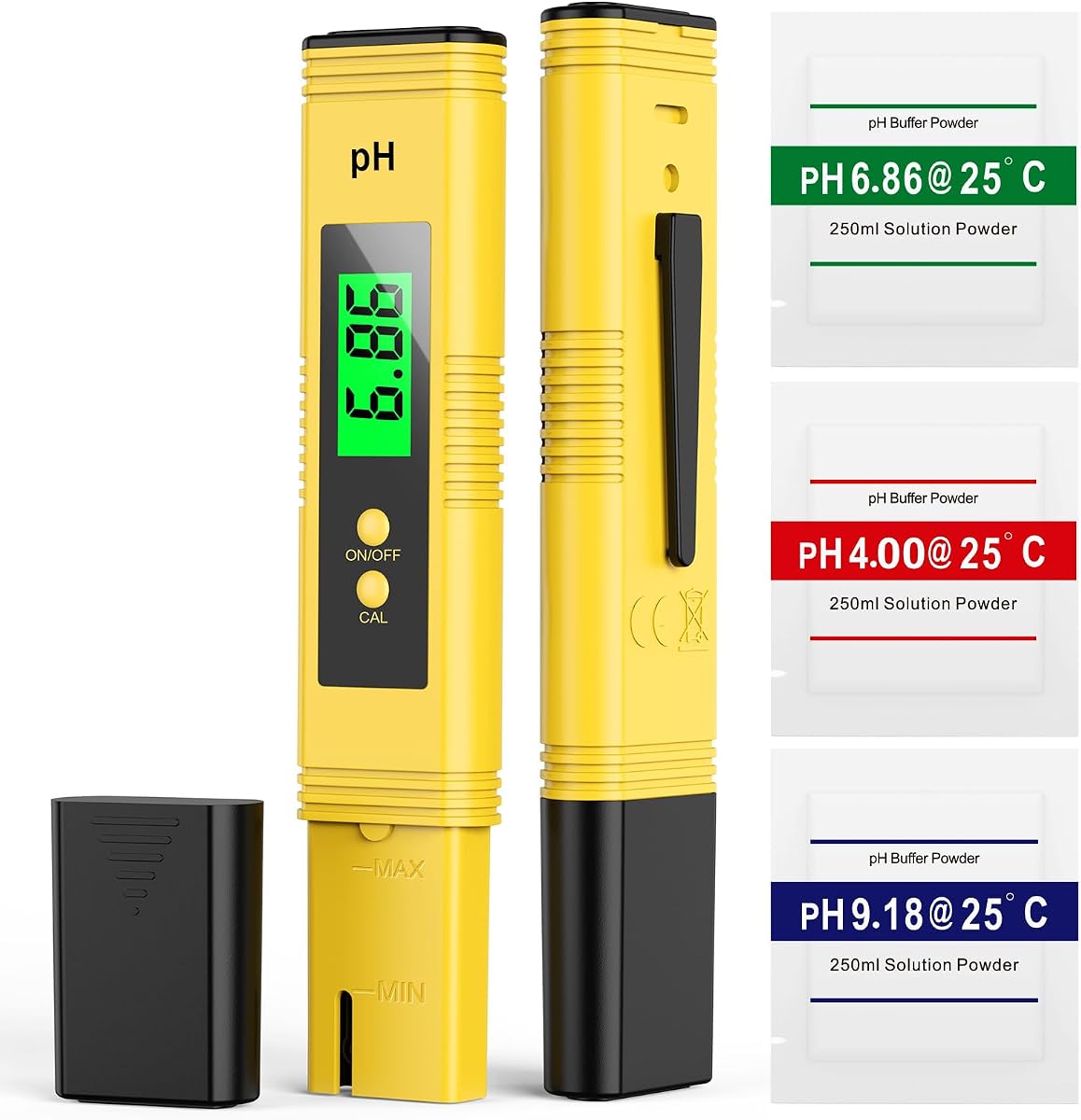
This digital pen offers high precision in a pocket sized package ideal for testing anywhere. It arrives pre-calibrated which allows immediate use without complex setup steps. The 3.9 rating indicates good functionality though some users report calibration drift over time.
We may earn a commission when you buy through this link, at no additional cost to you.
The 0 to 14 range makes it suitable for drinking water pools and aquariums. Users simply turn it on immerse the probe and wait for the reading to stabilize. The yellow color makes it easy to identify on a workbench.
Maintenance involves occasional recalibration using standard powders to maintain the 0.01 accuracy. The compact design is perfect for hobbyists who test water while on trips or at home.
Those seeking a balance between portability and precision will find this pen useful. It simplifies the testing process compared to liquid kits.
Pre-calibration means you can start testing right away without waiting for a setup process.
The broad range allows you to test various water types beyond just aquariums.
We may earn a commission when you buy through this link, at no additional cost to you.
This VIVOSUN meter is designed with automatic temperature compensation to ensure accuracy in varying conditions. It features a backlit LCD screen for clear readings in dim environments. The included buffer powders allow users to verify and adjust the meter easily.
We may earn a commission when you buy through this link, at no additional cost to you.
The device is lightweight and easy to carry for residential or commercial water testing. It is widely used in hydroponics but works well for aquariums where quick checks are needed. The 3.8 rating suggests it is reliable for general use.
Care of the probe is essential to maintain the 0.01 accuracy over time. Users should rinse the sensor after each use to prevent residue buildup.
Hydroponic gardeners and aquarium hobbyists needing a digital solution will appreciate its features. It simplifies monitoring water parameters significantly.
ATC technology ensures the reading remains accurate even if the water temperature fluctuates.
The backlit screen makes it easy to read values in low light conditions.
We may earn a commission when you buy through this link, at no additional cost to you.
This digital tester is marketed as an easy way to improve water quality in various environments. It arrives factory calibrated so you can use it out of the box. The mini size makes it convenient to store in a tackle box or drawer.
We may earn a commission when you buy through this link, at no additional cost to you.
The automatic temperature compensation function handles water temperature adjustments automatically. Users simply turn on the switch and place the probe into the water. The stable value reading ensures consistency without manual intervention.
While it lacks advanced features of premium models it provides a solid entry point for digital testing. The build quality is decent but the probe may need replacement after heavy use.
New hobbyists looking for a digital tool will find this model suitable. It offers a good balance of features and price for general water monitoring.
Factory calibration saves time and ensures accurate readings immediately upon purchase.
The mini design ensures the device fits easily in tight spaces or travel bags.
We may earn a commission when you buy through this link, at no additional cost to you.
This new meter includes UL certification which adds a layer of safety assurance for home testing. It offers 0.01 precision for detailed water quality monitoring. The package includes calibration powders to help maintain accuracy over time.
We may earn a commission when you buy through this link, at no additional cost to you.
Users should note that the electrode requires activation by soaking in the liquid for 30 minutes before first use. This ensures the sensor is fully ready for accurate readings. The device is designed for drinking water pools and aquariums.
Regular cleaning of the electrode is crucial to prevent contamination and unstable measurements. The manufacturer recommends using distilled water for cleaning to extend the life of the probe.
Safety conscious buyers who want precise readings will appreciate the UL certification. It is a versatile tool for various water quality needs.
The UL certification provides confidence in the safety and reliability of the testing device.
Proper soaking and cleaning protocols ensure the electrode remains accurate and responsive.
We may earn a commission when you buy through this link, at no additional cost to you.
The Seachem pH Alert is a unique device that monitors pH continuously without the need for test strips. It has a lifespan of up to 6 months which reduces waste. The sensor technology provides real time data that can be viewed at a glance.
We may earn a commission when you buy through this link, at no additional cost to you.
This device is ideal for those who want to track fluctuations over time rather than single point checks. It helps identify hidden water problems before they become critical for your fish. The 4.2 rating reflects its reliability in freshwater tanks.
Since it is designed for freshwater only it is not suitable for marine setups. The sensor must be replaced after 6 months which is a recurring cost to consider.
Aquarium keepers who want a hands-off monitoring solution will find this alert system beneficial. It simplifies water quality tracking significantly.
The device provides a constant readout allowing you to see trends in pH levels.
Unlike test strips this device eliminates waste by using a long lasting sensor.
We may earn a commission when you buy through this link, at no additional cost to you.
This APERA meter is a high reliability digital tester designed for accuracy and durability. It features a rugged case and waterproof body to withstand tough conditions. The auto temperature compensation ensures accurate readings across different environments.
We may earn a commission when you buy through this link, at no additional cost to you.
The unit offers 0.1 pH accuracy which is sufficient for most aquarium needs. It comes with buffers and a lanyard for convenient handling. The auto recognition of stable values improves consistency in readings.
Regular maintenance ensures the sensor remains responsive and accurate. The AAA batteries provide up to 2000 hours of operation which is a long lifespan.
Professionals and serious hobbyists requiring reliable data will appreciate this meter. It combines ease of use with robust build quality.
The waterproof and rugged design protects the meter from accidental damage during use.
Stable value recognition ensures you get consistent readings without manual intervention.
We may earn a commission when you buy through this link, at no additional cost to you.
Choosing the right tester depends on your needs for accuracy, convenience, and budget. Below are key factors to consider before buying a pH tester.
Accuracy is the most critical factor when selecting a pH tester. Digital meters generally offer higher precision such as 0.01 or 0.1 pH compared to test strips. High accuracy is vital for sensitive setups like reef tanks or breeding environments.
Look for testers with calibration features to maintain accuracy over time.
Testers come in three main types: liquid kits, test strips, and digital meters. Liquid kits use color indicators and are reliable but take more time. Test strips are fast and affordable but less accurate. Digital meters provide precise numerical readings but require maintenance.
Select the method that aligns with your frequency of testing and technical comfort.
Ensure the tester covers the pH range required for your fish species. Freshwater tanks typically range between 6.0 and 7.6 while saltwater needs higher ranges. Specialized kits exist for high pH environments like African Cichlids.
Check the range specifications before buying to ensure compatibility.
Durability varies significantly between types. Digital probes can degrade over time and may need replacement. Liquid reagents have a shelf life once opened. Test strips may lose potency if exposed to moisture.
Consider the long term cost of replacements when evaluating durability.
Ease of use impacts how consistently you test your water. Digital meters are simplest with just a probe and readout. Liquid kits require measuring and comparing colors which can be tricky for beginners.
Choose a device that fits your daily routine to ensure regular monitoring.
Prices vary from affordable strips to expensive digital meters. While digital meters cost more upfront they often provide better value per test due to precision. Budget kits are great for basic monitoring.
Balance your budget against the need for precise water data.
Some testers include features like automatic temperature compensation or waterproof designs. These features help reduce errors and increase the device lifespan. Extra accessories like cases or calibration buffers add value.
Look for features that address common pain points in testing.
Reputable brands like API and APERA often offer better quality control and support. Reading user reviews helps gauge real world performance and reliability. Trustworthy brands typically provide clear instructions and customer service.
Prioritize brands with a history of reliable aquarium products.
For digital meters always calibrate the device using buffer solutions before testing. Immerse the probe gently and stir slightly to remove air bubbles. Wait for the reading to stabilize before recording the value.
Test strips should be dipped into the tank water for the exact time specified on the packaging. Avoid shaking the strip to prevent color mixing. Compare the colors immediately under good lighting for accurate results.
Store your tester in a cool dry place to protect it from damage. Clean the probe with distilled water after each use to prevent contamination. Replace batteries or sensors as recommended to ensure consistent accuracy.
Testing once or twice a week is generally sufficient for stable aquariums. If you notice fish stress or have a new tank test more frequently. Consistent monitoring helps prevent dangerous swings in water parameters.
Digital meters offer higher accuracy and numerical readings which are easier to interpret. Test strips are more affordable but subject to human error in color comparison. Digital meters are recommended for precise water control.
Most freshwater fish thrive in a pH range between 6.5 and 7.5. Specific species may have different requirements so research your fish needs. Avoid rapid changes to the pH to prevent stress.
Place the probe in a calibration buffer solution and follow the device instructions to adjust the reading. Use fresh buffers and rinse the probe before and after calibration. Regular calibration ensures your readings remain accurate.
Unstable readings can be caused by temperature fluctuations or a dirty probe. Ensure the water temperature is stable and the probe is clean. If the device is old the sensor may need replacement.
Most testers work for both but specialized kits are available for high pH saltwater tanks. Ensure the range covers your tank type before testing. Using the correct kit prevents inaccurate readings.
Liquid kits typically last until the reagent expires or the bottle is full. Digital meters depend on battery and sensor life which vary by model. Store kits properly to extend their useful life.
This guide has highlighted the top pH testers ranging from budget friendly strips to professional digital meters. The API PH TEST KIT offers reliable accuracy for most freshwater setups.
Prioritize the feature that matters most to you whether it is precision or convenience. Consistent testing is the key to a healthy aquarium environment.
Always verify the current prices and availability before purchasing. Prices may fluctuate so check retailer listings to ensure you get the best value.