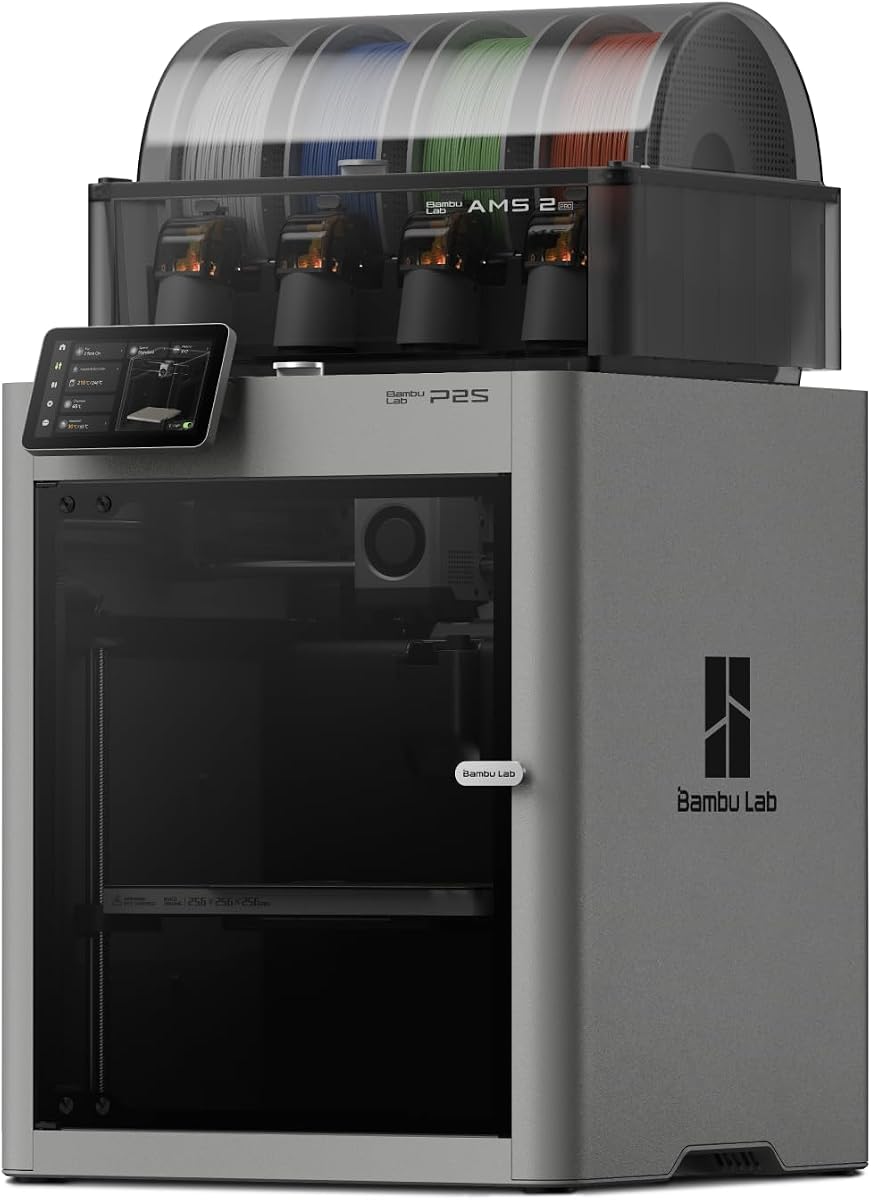
Bambu Lab P2S Combo, P2S 3D Printer & AMS 2 Pro, Multi-Color 3D Printing
4.7Editor score
High-speed precision
Ready in 15 min
Multi-color printing
This guide compares the top 3D printers for engineering prototypes, evaluating speed, material support, build volume, and multi-material capabilities for
Engineering teams require reliable tools to turn concepts into physical parts quickly. A 3D printer for engineering prototypes must offer precision, material versatility, and consistent results to support rigorous testing and development cycles effectively.
We analyzed ten leading models based on build volume, print speed, supported materials, and workflow efficiency. Each product was evaluated for its ability to handle complex geometries and industrial-grade filaments like ABS, PC, and carbon fiber composites.
Every selection highlights unique strengths such as multi-tool systems, heated chambers, or rapid calibration. Note that prices and availability change frequently, so verify current details before purchasing to ensure you get the best value for your needs.
4.7Editor score

3.5Editor score

4.4Editor score
This side-by-side comparison highlights key specifications across all ten selected printers to help you identify the right machine for your specific engineering prototype requirements.




The Original Prusa XL stands out as a top choice for engineering prototypes requiring large build volumes and multi-material capabilities. With a rating of 3.5, it offers robust industrial-grade performance for professional teams and advanced makers.
We may earn a commission when you buy through this link, at no additional cost to you.
Its dual tool system enables seamless switching between materials, crucial for functional prototypes and soluble support structures. The segmented heated bed system improves energy efficiency while reducing warping on large prints, ensuring reliable first-layer adhesion across the platform.
However, some parts arrive packed separately due to transportation needs, requiring initial installation. While the CoreXY motion system ensures speed and stability, the complexity of assembly might challenge beginners compared to plug-and-play models.
This printer suits engineering studios needing scalable, reliable output. Its integration with PrusaSlicer and lifetime technical assistance make it a strong investment for teams prioritizing precision and multi-material workflows in professional environments.
Intelligent tool switching minimizes purge waste while maintaining high-quality transitions between materials for efficient production.
Prusa Research offers lifetime technical assistance and 24-hour customer service to ensure uninterrupted printing operations.
We may earn a commission when you buy through this link, at no additional cost to you.
The Bambu Lab P2S Combo delivers exceptional speed and accuracy with a rating of 4.7. It prints up to 600 mm/s while maintaining sharp corners and consistent results, making it ideal for rapid prototyping and design iterations.
We may earn a commission when you buy through this link, at no additional cost to you.
Its AMS 2 Pro enables seamless multi-color and multi-material printing with built-in filament drying. The adaptive airflow system balances cooling and heat retention, ensuring overhangs stay crisp while maintaining chamber temperature for engineering-grade materials.
Users note that the standalone P2S printer does not support multi-color printing without the combo version. Additionally, the 50°C chamber may not suit all high-temperature industrial filaments compared to fully enclosed models.
This model is perfect for creators seeking high performance at a competitive price. Its AI failure detection and quick calibration reduce downtime, offering professional-grade results even for beginners entering the engineering field.
High-speed precision and active flowrate compensation ensure every layer stays sharp and smooth for detailed prototypes.
Built-in drying up to 65°C keeps every spool ready for flawless prints without external equipment.
We may earn a commission when you buy through this link, at no additional cost to you.
The QIDI Max4 Combo offers an ultra-large build volume, enabling engineers to print large industrial parts in one go. With a rating of 4.4, it balances speed and precision using closed-loop motors and a robust Z-axis design.
We may earn a commission when you buy through this link, at no additional cost to you.
Its 65°C active heated chamber and high-flow hotend support abrasive materials like carbon fiber-reinforced nylon. The 40mm³/s hotend ensures ideal conditions for high-temperature filaments, while the AI camera detects anomalies instantly to save time.
However, the Polar Cooler system is not included and must be purchased separately for optimal performance. While the 800mm/s speed is impressive, vibration compensation is key to maintaining surface quality at such high rates.
This printer suits teams needing large-format output without sacrificing material versatility. Its touch screen interface and filament management features streamline workflows for both professionals and enthusiasts working on complex prototypes.
Closed-loop motors on X/Y axes and lead screw Z-axis ensure smooth precise printing even at 800mm/s.
Hardened steel nozzle supports standard and industrial-grade abrasive materials for robust functional parts.
We may earn a commission when you buy through this link, at no additional cost to you.
Snapmaker U1 revolutionizes multi-color printing with four independent toolheads that swap in just five seconds. Rated 4.5, it minimizes filament waste by avoiding repeated purging, ideal for creating complex parts with varied material properties.
We may earn a commission when you buy through this link, at no additional cost to you.
Its SnapSwap system allows mixing rigid and flexible materials or soluble supports without manual intervention. The CoreXY motion system ensures stability at 500 mm/s while automatic calibration delivers dimensionally accurate prints with minimal adjustment needed.
The smaller 270mm build volume may limit larger prototypes. Additionally, the cost reflects advanced tooling features that may not be necessary for single-material printing tasks compared to simpler models.
This printer is perfect for detailed prototypes requiring material variety. Its intuitive interface and included Orca slicer simplify setup, making it a top choice for professional creators needing efficient multi-material workflows.
Automatic tool changer reduces change time from 2 minutes to 5 seconds without manual filament swaps.
Swapping toolheads instead of loading filaments reduces waste by up to 5X, lowering operating costs.
We may earn a commission when you buy through this link, at no additional cost to you.
The Bambu Lab A1 brings high-speed precision to beginners with a rating of 4.7. It delivers blazing-fast printing while maintaining exceptional accuracy and detail, supported by full-auto calibration for optimal performance on every print.
We may earn a commission when you buy through this link, at no additional cost to you.
Its active flow rate compensation ensures consistently smooth prints by adjusting flow based on real-time extruder readings. The quick-swap nozzle simplifies maintenance, while active noise canceling creates a quiet environment for focused work.
Multi-color printing requires the separate AMS lite accessory. While excellent for standard filaments like PLA and PETG, it lacks the heated chamber needed for more demanding engineering-grade materials like ABS or PC.
This printer is ideal for those entering the field needing reliability and speed. Its user-friendly interface and simplified touchscreen make it accessible for kids and beginners ready to start professional-quality projects.
Say goodbye to manual hassles as the A1 handles Z-offset and bed-leveling automatically for every print.
Algorithms actively compensate flow rate according to readings to ensure extrusion accuracy and flawless prints.
We may earn a commission when you buy through this link, at no additional cost to you.
The FLASHFORGE Creator 5 Pro eliminates massive purge waste with four independent toolheads that switch without flushing filament. Rated 4.0, it combines industrial engineering with near-zero waste technology, reducing operational overhead significantly for high-volume printing.
We may earn a commission when you buy through this link, at no additional cost to you.
Its 65°C active heated chamber prevents warping in advanced filaments like ABS and PC. The dual HEPA 13 and activated carbon system traps ultrafine particles, ensuring a safe workspace while maintaining thermal stability for robust industrial parts.
While the system slashes material costs, the setup complexity may deter casual users. The FlashSwap changer requires understanding the independent nozzle system to maximize efficiency compared to single-extruder models.
This printer suits professional workshops prioritizing safety and cost-efficiency. Its real-time progress monitoring and remote control make it a practical choice for industrial environments needing reliable multi-material output.
Switching nozzles without flushing filament eliminates massive purge waste and drastically slashes operational costs.
Dual HEPA 13 and activated carbon system traps ultrafine particles to maintain a safe, odorless environment.
We may earn a commission when you buy through this link, at no additional cost to you.
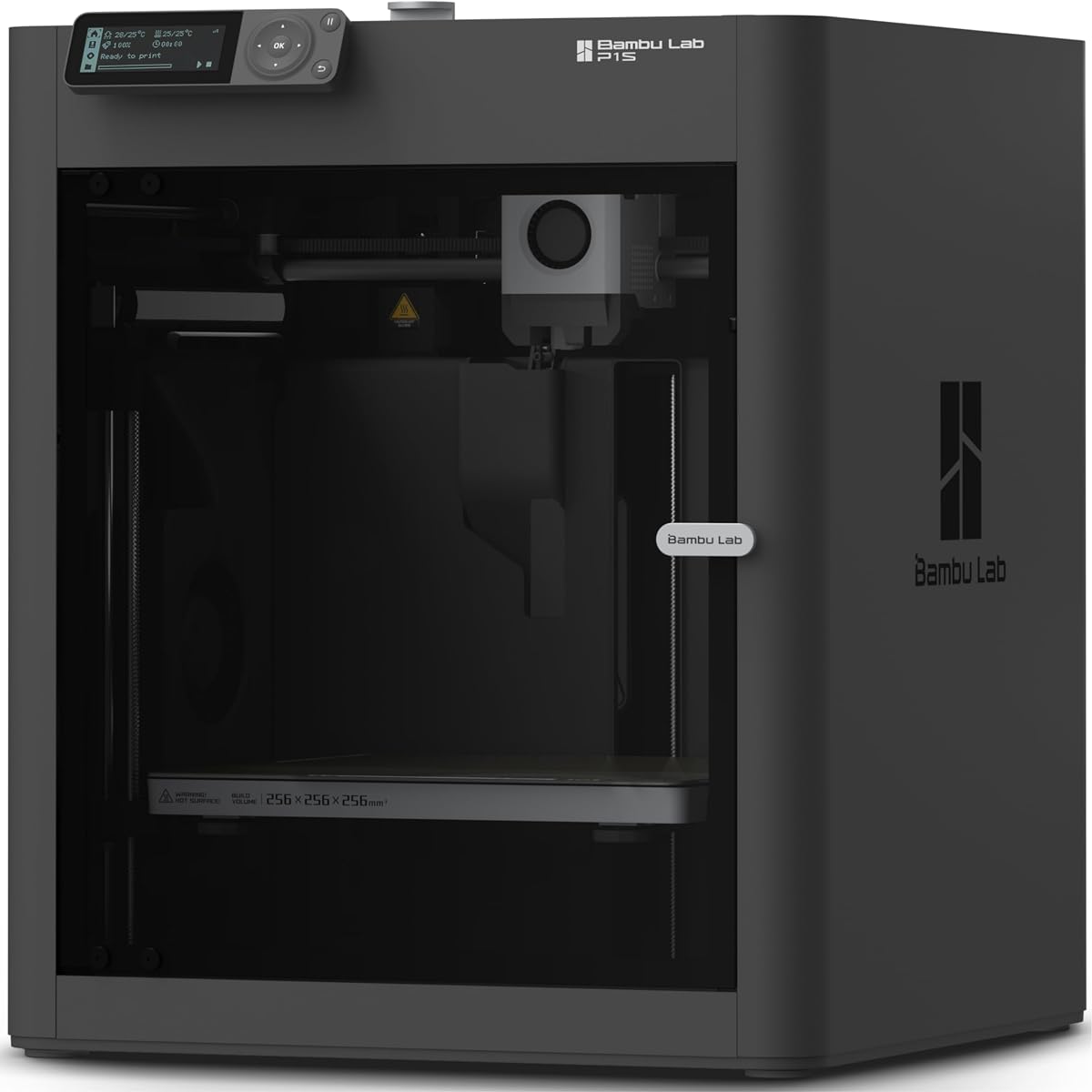
The Bambu Lab P1S delivers lightning-fast printing at 500mm/s with a fully enclosed design for advanced filaments. Rated 4.5, it offers professional-grade performance with automatic bed leveling to ensure high-quality successful prints every time.
We may earn a commission when you buy through this link, at no additional cost to you.
Its enclosed body improves performance for ABS and ASA while the auto bed leveling simplifies setup for all skill levels. Connecting the AMS system unlocks multi-color printing capabilities, expanding creative possibilities significantly.
However, the P1S is not recommended for carbon or glass fiber reinforced polymers. While excellent for standard engineering materials, users needing reinforced composites will need to look at models with hardened extruders.
This printer balances speed and quality for versatile prototyping. With user-friendly design and quick setup, it is ideal for teams needing rapid iterations without sacrificing build reliability in an enclosed environment.
500mm/s speed and 20000 mm/s² acceleration let you focus on creating instead of waiting for prints.
Set up in 15 minutes thanks to user-friendly design that ensures easy assembly for all skill levels.
We may earn a commission when you buy through this link, at no additional cost to you.
The FLASHFORGE Adventurer 5M Pro achieves 600mm/s speed using an all-metal CoreXY frame. Rated 4.0, it features a 3-second quick-swap nozzle and integrated vibration compensation to eliminate ghosting for smooth high-precision finishes.
We may earn a commission when you buy through this link, at no additional cost to you.
Its 280°C extruder and 110°C bed handle engineering materials like ABS and PETG-CF effectively. The built-in camera and mobile control allow real-time monitoring, while the dual filtration system keeps the environment clean and safe.
The lack of a heated chamber may limit consistent ABS prints compared to fully enclosed high-temp models. Users focused on standard PLA or PETG will find the tool-free maintenance highly convenient for daily use.
This printer is perfect for makers needing speed and easy maintenance. Its quiet operation under 50dB makes it suitable for office environments, balancing professional output with a user-friendly interface.
Tool-free quick-release mechanism enables effortless 3-second replacements across multiple nozzle sizes.
Built-in camera allows real-time monitoring and instant status alerts via Flash Studio for remote control.
We may earn a commission when you buy through this link, at no additional cost to you.
The Anycubic Kobra 3 Max Combo offers an industry-leading 420x420x500mm build volume. Rated 4.0, it achieves professional precision at 600mm/s using G-sensor vibration compensation to eliminate layer shifts on complex models.
We may earn a commission when you buy through this link, at no additional cost to you.
Its auto-leveling system and dual-sided PEI spring plate ensure reliable first-layer adhesion. The all-metal hotend with 300°C max temperature supports various high-temp filaments, providing versatility for functional prototype development.
While the large volume is advantageous, the initial setup can be complex compared to pre-assembled units. Additionally, filament runout detection helps prevent wasted time, but software support may lag behind premium brands.
This printer suits engineers needing massive build capacity on a budget. Its smart features and high-speed capabilities make it a strong contender for businesses requiring simultaneous prints of multiple parts.
Print life-size prototypes or furniture components with extra-large volume ideal for small businesses.
Filament runout sensor and offline mode pause printing automatically to prevent material waste.
We may earn a commission when you buy through this link, at no additional cost to you.
The FLASHFORGE Creator 5 Pro Industrial features active chamber heating up to 65°C for consistent interlayer adhesion. Rated 4.4, it ensures professional-grade results regardless of room temperature, essential for high-performance materials like ABS and PC.
We may earn a commission when you buy through this link, at no additional cost to you.
Its HEPA13 internal recirculation filter captures volatile particles and odors, creating a cleaner workspace. The four independent extruders switch colors instantly without purging, improving efficiency for multi-color projects while ensuring material purity.
While the build volume is moderate at 256mm³, the focus is on safety and precision. Comprehensive sensors monitor for filament runout and tangles, providing peace of mind during continuous professional production cycles.
This printer is ideal for offices needing safe, reliable engineering-grade output. Its intuitive UI and flexible PEI plate make operation easy, while independent extruders maximize efficiency for color-critical prototypes.
Active chamber heating maintains stable temperature up to 65°C for reliable high-performance material prints.
Four independent extruders eliminate color mixing by switching nozzles instantly without purging filament.
We may earn a commission when you buy through this link, at no additional cost to you.
Selecting the right 3D printer requires balancing several factors to ensure your prototypes meet engineering specifications. This guide outlines the most critical aspects to evaluate before making your final decision.
Your prototype size dictates the necessary build volume. Large industrial parts often need printers with dimensions exceeding 300mm in all axes to avoid splitting models, which compromises structural integrity. Always check the maximum printable size to accommodate your largest intended designs.
Prioritize printers offering 400mm+ build volume for flexibility in creating larger components without assembly overhead.
Engineering prototypes often demand high-performance materials like ABS, PC, or carbon fiber composites. Ensure the printer supports the required nozzle temperature and extruder flow rate for these robust materials. Limited temperature ranges restrict design versatility and part strength significantly.
Look for hardened nozzles and 280°C+ extruders to handle abrasive and high-temp filaments efficiently.
A heated chamber helps prevent warping on large parts by maintaining consistent ambient temperature. Without it, materials like ABS may warp easily during cooling. Active heating systems up to 65°C ensure reliable adhesion and dimensional stability across complex prints.
Choose printers with active heated chambers for consistent engineering-grade results in varying environments.
High-speed printing accelerates development cycles, allowing more iterations in less time. Look for machines offering 500mm/s+ speeds with high acceleration. However, verify that vibration compensation technologies are present to maintain accuracy at top speeds.
Focus on CoreXY systems with vibration damping to ensure speed does not compromise surface quality.
Functional prototypes may require soluble supports or multiple materials. Multi-tool systems or independent extruders enable true multi-material printing without manual swaps. This feature reduces waste and time significantly compared to single-extruder setups.
Select models with dual or quad toolheads for seamless multi-material and multi-color production workflows.
Automatic leveling and calibration save hours of setup time. Engineering environments need reliability without constant manual intervention. Features like auto Z-offset and flow rate compensation ensure consistent results for every print.
Prioritize printers with full-auto calibration systems to maintain continuous workflow reliability.
Smart filament monitoring detects runouts and prevents failed prints. In professional settings, wasted time and materials are costly. Look for runout sensors and pause/resume functions that protect long-duration prints.
Ensure models include built-in filament runout detection to safeguard production time and materials.
Printing engineering materials can release fumes requiring proper ventilation. HEPA filtration systems protect users and maintain workspace cleanliness. This is vital for offices or enclosed labs where air quality impacts safety.
Choose enclosed printers with HEPA filters to ensure safe, odorless printing environments.
Begin by leveling the build plate and checking nozzle height before any print. Proper calibration ensures first-layer adhesion which is critical for engineering accuracy. Regularly clean the bed to remove debris that might affect print quality.
Monitor filament quality and dry it when necessary to prevent clogging. High-performance materials absorb moisture, causing weak prints. Keep spare dryers or sealed containers ready for optimal material performance.
Perform routine maintenance on belts and motors to prevent mechanical issues. Lubricate guide rails and check toolhead alignment monthly. Consistent care extends machine life and maintains precision for your prototypes.
The best choice depends on your specific needs. For large industrial parts, the Original Prusa XL or QIDI Max4 offers significant build volume. For multi-material speed, Snapmaker U1 or FLASHFORGE Creator 5 Pro excels with independent toolheads.
Yes, a heated chamber is highly recommended for ABS. It prevents warping by maintaining consistent temperatures during cooling. Most professional models include active chambers up to 65°C to ensure reliable results with engineering-grade plastics.
Ideal speeds range from 500mm/s to 800mm/s with strong acceleration. Faster speeds reduce iteration time. Look for CoreXY systems with vibration compensation to maintain accuracy at high velocities without sacrificing surface finish.
Not all printers can handle abrasive carbon fiber. You need a hardened steel nozzle and high flow capacity. Models like QIDI Max4 or FLASHFORGE Creator 5 Pro support these materials natively without damaging standard extruders.
Large build volume allows printing full-scale prototypes without assembly. Splitting parts for smaller beds weakens them. Aim for 400mm+ in at least two dimensions to accommodate complex geometries and large functional components directly.
Multi-tool systems enable simultaneous printing of support materials and functional parts. This saves time and reduces waste. Independent extruders allow flexible combinations, essential for complex prototypes requiring soluble supports or multi-material properties.
We have reviewed ten top 3D printers tailored for engineering prototypes. The Original Prusa XL leads for large-format multi-material work. Bambu Lab P2S Combo offers exceptional budget-friendly speed, while QIDI Max4 dominates in industrial build volume.
Consider your specific needs: multi-tool flexibility, chamber temperature, or sheer speed. Prioritize models with automated calibration and filament management for consistent results. The right machine saves time and ensures prototypes meet professional standards reliably.
Always verify current availability and pricing as these models evolve quickly. Check warranties and support resources before purchase. Making an informed choice ensures your engineering workflow remains efficient and productive for future projects.