
Creality Otter Lite Basic
5.0Editor score
0.05mm high precision
Portable lightweight design
Full color texture mapping
This guide compares the best 3D scanner for reverse engineering to help you choose high precision tools for industrial measurement and design.
Reverse engineering requires precise tools to capture complex geometries. A reliable 3D scanner transforms physical objects into digital models. Professionals need accuracy and speed for successful outcomes.
We evaluated ten top scanners based on accuracy and speed. Each model offers unique features for different applications. This list highlights the best options for various budgets and needs.
Each pick shows key strengths and limitations. Prices change frequently so verify current offers. Choose the scanner that fits your specific reverse engineering workflow requirements.
5.0Editor score

4.8Editor score

4.8Editor score
We compare the top ten scanners side by side to highlight key differences in accuracy and speed. This overview helps you identify which model meets your reverse engineering standards.



The Revopoint MetroX Pro delivers industrial-grade precision for reverse engineering tasks. Its blue laser technology captures intricate details without needing sprays on reflective objects.
We may earn a commission when you buy through this link, at no additional cost to you.
With single-frame precision of up to 0.01 mm, this scanner is ideal for tight tolerance measurements. The Revo Mirror app allows real-time streaming to mobile devices, enhancing workflow flexibility significantly.
The software is intuitive but some advanced features like Revo Design require separate purchase. This trade-off ensures professional tools are available for serious engineering needs.
Buy this if you need high accuracy for industrial measurement. The combination of speed and precision makes it a top choice for reverse engineering professionals.
The MetroX Pro meets strict industrial standards with volumetric accuracy that ensures reliable data for manufacturing.
Real-time streaming allows engineers to monitor scans remotely, saving time during complex reverse engineering tasks.
We may earn a commission when you buy through this link, at no additional cost to you.
The MetroY Ultra is built for speed without sacrificing accuracy. Its 90 FPS scanning mode allows rapid capture of large industrial components for reverse engineering.
We may earn a commission when you buy through this link, at no additional cost to you.
Wireless freedom via Wi-Fi 6 enables moving freely around objects. The included battery grip ensures stable power for extended field inspections or outdoor use cases.
While expensive, the productivity gains from faster scanning times justify the investment. It handles harsh sunlight up to 100,000 lux effectively for outdoor tasks.
Choose this for high-volume reverse engineering projects. The speed and wireless features make it a powerful tool for modern industrial design teams.
Advanced blue laser technology maintains 0.015mm volumetric accuracy even at high speeds.
Scanning in direct sunlight is possible with this model, expanding reverse engineering possibilities.
We may earn a commission when you buy through this link, at no additional cost to you.
The EinScan Rigil is a fully standalone solution offering maximum portability. It processes data onboard so no external PC is needed for reverse engineering tasks.
We may earn a commission when you buy through this link, at no additional cost to you.
Its hybrid blue laser and IR VCSEL technology captures vibrant textures and precise geometry. The onboard 1TB SSD and 32GB RAM ensure smooth processing of complex point clouds.
The price reflects its premium build and self-contained design. While expensive, it saves costs on workstation hardware for teams needing high mobility in the field.
Invest in this if you need independence from computers. The onboard computing and high precision make it ideal for automotive and engineering applications requiring detail.
With a 2.4GHz CPU and 32GB RAM, the Rigil processes scans instantly without tethering to a PC.
Combining lasers with IR VCSEL allows scanning dark and reflective surfaces without any markers.
We may earn a commission when you buy through this link, at no additional cost to you.
This scanner offers a versatile set of features for reverse engineering tasks. The combination of crossed and parallel blue lasers handles both small parts and large car bodies effectively.
We may earn a commission when you buy through this link, at no additional cost to you.
It supports compatibility with major industry software like SolidWorks and Geomagic. This integration ensures your scan data translates smoothly into CAD models for production.
The all-weather algorithm provides stability in varying temperatures. While it requires a powerful PC, the performance justifies the hardware needs for industrial workflows.
Opt for this if you need a flexible tool for different object sizes. The compatibility with professional software makes it a strong choice for reverse engineering workflows.
Scan black and metal objects directly without powder, saving time in your reverse engineering prep.
High frame rates ensure smooth capture of complex geometries during critical reverse engineering phases.
We may earn a commission when you buy through this link, at no additional cost to you.
The INSPIRE 2 is a portable solution for reverse engineering on the go. Its lightweight design makes it easy to carry to different job sites without fatigue.
We may earn a commission when you buy through this link, at no additional cost to you.
Dual scanning modules allow handling different materials efficiently. The optical zoom helps focus on mixed-geometry surfaces to capture necessary details for reverse engineering.
While the precision is slightly lower than industrial models, it is sufficient for many prototyping needs. The price makes it accessible for smaller studios.
Choose this for lightweight reverse engineering applications. Its portability and affordability are excellent for designers needing mobility and reliable data.
Weighing only 190g, this scanner reduces fatigue during long reverse engineering sessions.
The ability to scan in outdoor environments expands where reverse engineering can happen.
We may earn a commission when you buy through this link, at no additional cost to you.
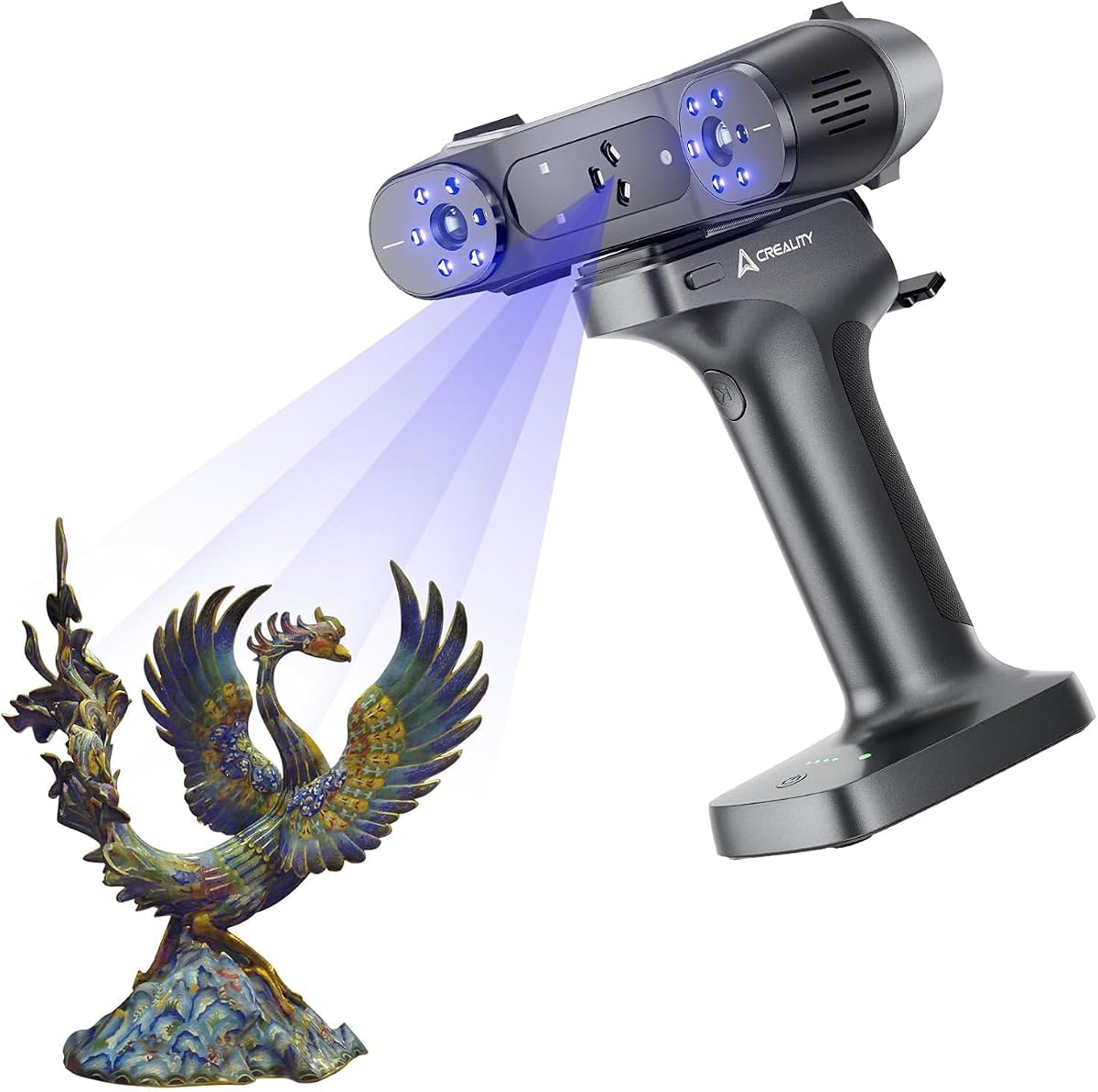
This device provides an accessible entry point for reverse engineering beginners. With 0.05mm resolution, it captures enough detail for many prototyping and design applications.
We may earn a commission when you buy through this link, at no additional cost to you.
The full-color texture mapping allows for realistic digital models. The kit includes everything needed to start scanning immediately with markers and calibration boards included.
It is slower than high-end tools but the ease of use compensates. The price makes it ideal for hobbyists or students learning reverse engineering concepts.
Pick this if you need an affordable tool to start. Its plug-and-play nature ensures you can begin capturing data without complex setup.
The comprehensive package ensures you have all markers and tools ready for immediate reverse engineering use.
Multi-color LED indicators guide optimal scanning distance making it easy to get good data.
We may earn a commission when you buy through this link, at no additional cost to you.
This standard model offers reliable performance for reverse engineering. The blue laser technology ensures consistent capture of details on various surfaces without needing spray.
We may earn a commission when you buy through this link, at no additional cost to you.
With single-frame accuracy of up to 0.02 mm, it meets many precision modeling needs. Real-time streaming allows you to verify data before processing saving time.
The tracking modes adapt to objects with rich surface details. While a turntable may be needed for full automation, the flexibility is useful for complex parts.
Buy this for consistent data quality in reverse engineering. It balances affordability with high precision making it suitable for general industrial tasks.
Feature and marker tracking modes ensure accuracy regardless of object shape in reverse engineering.
Scan data transfers seamlessly to other 3D software supporting smooth reverse engineering pipelines.
We may earn a commission when you buy through this link, at no additional cost to you.
The Raptor Pro delivers metrology-grade accuracy suitable for reverse engineering tasks. It scans intricate details on large objects like car bodies efficiently.
We may earn a commission when you buy through this link, at no additional cost to you.
The software suite is robust with tutorials for beginners. It supports body and face scanning which is useful for human-centric design projects.
While the software has a learning curve, the support resources help users adapt. The outdoor capabilities ensure you can work in varied lighting conditions.
Choose this for robust reverse engineering needs. Its combination of accuracy and outdoor readiness makes it reliable for field work and studio tasks.
The scanner withstands up to 100,000 lux allowing reverse engineering work in harsh sunlight.
From tiny parts to human bodies, this scanner adapts to diverse reverse engineering scopes.
We may earn a commission when you buy through this link, at no additional cost to you.
The Raptor X is designed for speed in reverse engineering. Its 60fps frame rate and 34 laser lines allow quick capture of medium to large objects.
We may earn a commission when you buy through this link, at no additional cost to you.
Wireless data transfer via Wi-Fi 6 keeps your workspace clutter-free. The large battery capacity ensures you can work for hours without finding an outlet.
It requires a powerful computer to process data quickly. However, the speed and wireless features make it a strong choice for modern reverse engineering.
Buy this if you need fast data capture. The combination of wireless tech and speed helps streamline the reverse engineering workflow significantly.
Lossless data compression allows quick transfer of large scans via Wi-Fi 6 to your computer.
The 35400mWh battery allows extensive reverse engineering sessions outdoors without power issues.
We may earn a commission when you buy through this link, at no additional cost to you.
This Raptor Pro version focuses on precision for reverse engineering. The upgraded dual blue laser mode ensures comprehensive coverage for medium and large objects.
We may earn a commission when you buy through this link, at no additional cost to you.
It supports professional software integration for seamless data export. The NIR structured light allows feature-rich scanning without needing extra markers.
System requirements are specific so check your computer before purchasing. This ensures you get the best performance from the scanning data in your workflow.
Select this for high-precision reverse engineering. Its metrology-grade accuracy and robust laser system make it a reliable tool for industrial design.
Upgraded dual laser lines provide comprehensive coverage for efficient reverse engineering of large parts.
Speckle matching technology eliminates the need for markers on feature-rich workpieces.
We may earn a commission when you buy through this link, at no additional cost to you.
Choosing the right scanner requires understanding your specific reverse engineering needs. This guide covers the critical factors to consider.
Accuracy defines how closely the digital model matches the physical object. For reverse engineering, look for single-frame precision of 0.01 mm to 0.05 mm to ensure reliable CAD data.
Prioritize scanners with high metrology-grade accuracy to avoid errors in production designs.
Blue lasers are generally better for shiny surfaces and dark colors without needing spray. Infrared structured light is useful for capturing textures but may be slower.
Select technology that handles the specific materials you reverse engineer most often.
Faster scanning speeds increase productivity. Look for frame rates above 30 FPS to capture objects quickly without motion blur affecting your reverse engineering data.
Higher speed reduces the time spent capturing complex parts in your workflow.
If you need to scan in the field, a handheld lightweight scanner is essential. Battery-powered models allow work outside without needing an outlet for reverse engineering tasks.
Choose a unit that balances weight with battery life for mobility.
Ensure the scanner works with CAD software like SolidWorks or Geomagic. Seamless data transfer is crucial for converting point clouds into usable 3D models for reverse engineering.
Check if software is included or if additional costs apply.
Verify the scanner covers your typical object sizes from small parts to large assemblies. Some scanners work best on tiny parts while others handle full-body or car scans.
Pick a range that matches your most common reverse engineering tasks.
Reverse engineering scanners range from affordable entry models to professional units. Determine your budget but remember that lower cost may mean less precision or slower speeds.
Invest in the best accuracy you can afford to avoid costly re-scans.
Consider if you will scan indoors or outdoors. Outdoor-capable scanners handle sunlight and varying temperatures better, which is vital for field reverse engineering work.
Look for weather resistance if you work in non-lab environments.
Calibrate your scanner before every reverse engineering session using the provided board. This ensures consistent accuracy for your digital models.
Clean the optical lenses regularly with a microfiber cloth. Dust or fingerprints can distort the laser light and affect reverse engineering data quality.
Store the device in a protective case when not in use. Keep it away from extreme temperatures to maintain the internal components for reverse engineering tasks.
Most modern scanners with blue laser technology do not require spray for shiny surfaces. This saves time and keeps your workspace clean during reverse engineering.
A powerful computer with a dedicated graphics card and ample RAM is recommended. Ensure your machine meets the software requirements for smooth processing of scans.
Yes, many models are designed to work outdoors. Check the lux rating of your scanner to ensure it handles the light conditions where you work.
Basic scanning skills can be learned in a few hours. Mastering reverse engineering workflows and software integration may take a few weeks of practice.
Most scanners support both Windows and macOS but check specific software compatibility. Some advanced features may be limited on certain operating systems for reverse engineering.
With proper care, these devices can last several years. Regular calibration and cleaning help extend their operational life for your reverse engineering projects.
The top picks cover a range of needs from precision to portability. Whether you need industrial accuracy or a budget-friendly option there is a scanner for your workflow.
Prioritize accuracy and software compatibility to ensure your reverse engineering results are reliable. These factors will impact your productivity and final product quality significantly.
Always check the current pricing and reviews before purchasing. The market changes quickly so verify the latest offers to get the best deal.