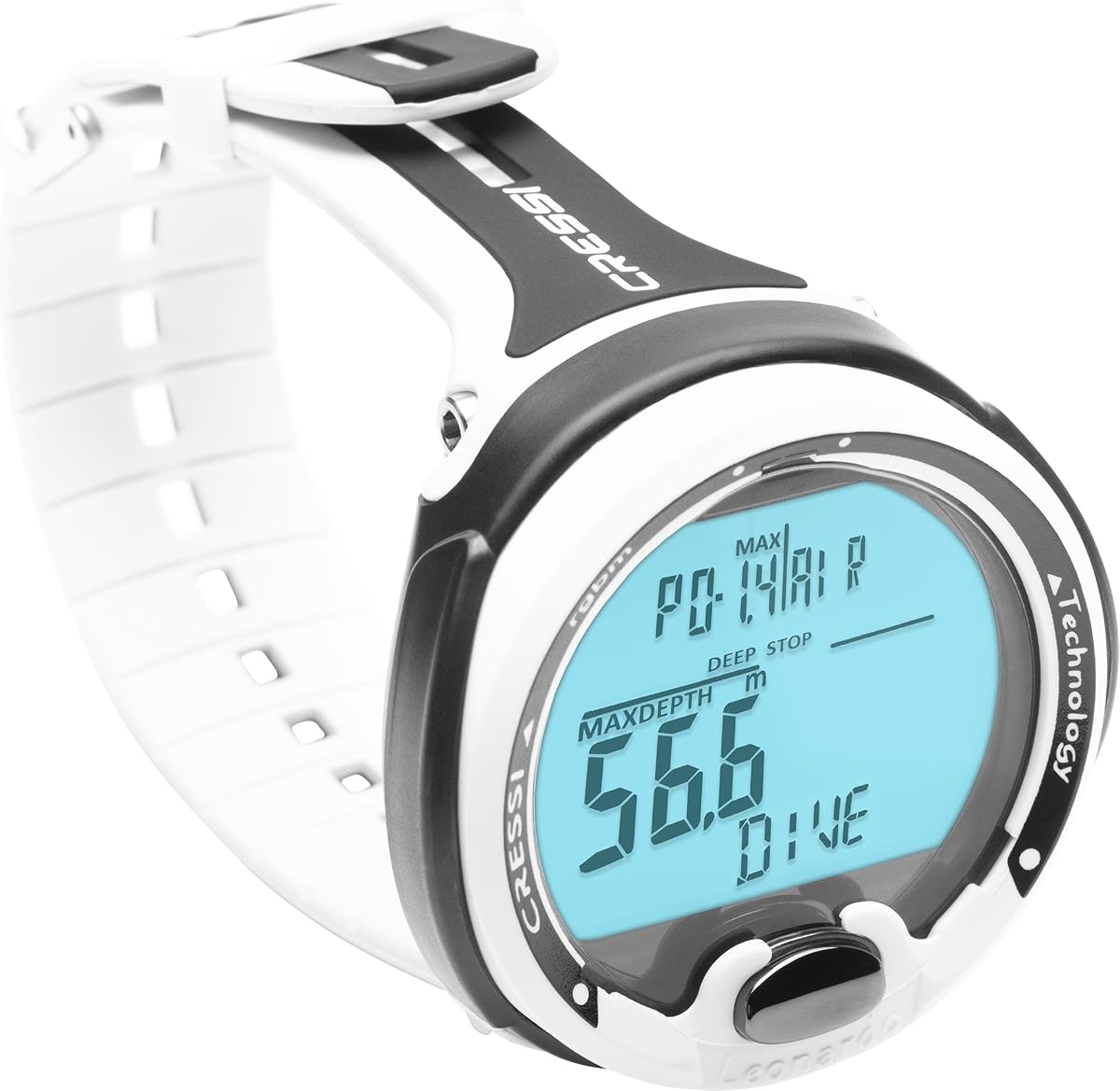
CRESSI Leonardo 2.0 G2 Dive Watch
4.2Editor score
Single-button interface
Air and Nitrox modes
Bluetooth connectivity
This guide compares the best dive computer for beginners, evaluating ease of use, safety features, and reliability to help new divers choose the perfect
Starting your scuba diving journey requires reliable equipment to ensure safety and confidence underwater. A dive computer is essential for monitoring depth, time, and decompression limits, making it a critical tool for newcomers exploring the ocean depths.
We evaluated ten top-rated models based on user feedback, feature sets, and ease of operation. Our comparison focuses on devices that simplify complex data into clear readings, ensuring beginners can navigate underwater environments safely without confusion.
Each selection highlights unique strengths suitable for different diving styles and budgets. While prices may fluctuate due to market conditions, these models represent the most reliable options currently available for those taking their first plunge into the world of scuba diving.
4.2Editor score

4.8Editor score

4.6Editor score
The following table provides a side-by-side comparison of key specifications across all ten selected models. Use this overview to quickly identify which device aligns best with your specific diving needs and technical requirements.


The Shearwater Research Peregrine stands out as a top-tier choice for divers seeking reliability and simplicity. With a 4.7 rating, it offers a robust feature set that caters to both new and experienced users without unnecessary complexity.
We may earn a commission when you buy through this link, at no additional cost to you.
Its two-button interface ensures easy navigation underwater, while the state-aware menu structure adapts to your current dive mode. The inclusion of a USB wireless charging station adds modern convenience to the package.
While the price is higher than entry-level models, the build quality and battery life justify the investment. The 30-hour battery life ensures it lasts through extended diving trips without frequent recharging needs.
This device is ideal for beginners who plan to grow into advanced diving. It provides a solid foundation for safe diving practices while offering room for skill development over time.
The two-button design allows for quick access to critical data without fumbling through complex menus underwater.
USB wireless charging ensures you can recharge the device easily using standard equipment found on dive boats or at home.
We may earn a commission when you buy through this link, at no additional cost to you.
The CRESSI Leonardo 2.0 G2 is an excellent entry point for divers on a budget. It combines Italian craftsmanship with user-friendly features that make underwater navigation straightforward for beginners.
We may earn a commission when you buy through this link, at no additional cost to you.
Its simplified control interface uses a single button to navigate menus, reducing the chance of error during dives. The ability to pair with iOS and Android devices allows for comprehensive dive tracking after your session.
While it lacks some advanced technical capabilities, it covers all essential needs for recreational diving. The quick critical alerts ensure you stay informed about important dive data instantly.
This watch is perfect for those just starting out who want a reliable device without overspending. It offers a balance of functionality and affordability that suits novice divers well.
The single-button interface reduces cognitive load underwater, allowing you to focus on your surroundings rather than device operation.
Pairing with smartphones enables easy upload and analysis of dive logs, helping you track progress over time effortlessly.
We may earn a commission when you buy through this link, at no additional cost to you.
The SUUNTO D5 Dive Computer brings premium features to the beginner market with its vibrant color display. It is designed to enhance visibility underwater, making data easier to read in various light conditions.
We may earn a commission when you buy through this link, at no additional cost to you.
Wireless tank pressure monitoring adds a layer of safety by keeping you informed of air supply without checking a separate gauge. Vibration alarms provide subtle notifications, ensuring you notice critical alerts even in noisy environments.
The digital compass integrated into the device simplifies navigation, removing the need for a separate tool. However, some users may find the menu structure slightly complex for absolute beginners.
This model is suitable for divers who want a blend of style and advanced functionality. It is a strong choice for those willing to invest in a high-end device for their diving adventures.
The color display ensures that all critical information stands out clearly, even in deep or murky water environments.
Built-in digital compass and wireless tank monitoring provide essential tools for safe navigation and air management.
We may earn a commission when you buy through this link, at no additional cost to you.
The Garmin Descent X30 is a rugged dive computer designed to handle the demands of various diving environments. Its 4.7 rating reflects its durability and advanced feature set that appeals to tech-savvy divers.
We may earn a commission when you buy through this link, at no additional cost to you.
Surface GPS allows you to navigate to dive sites and mark entry and exit points accurately. The large screen provides visibility for multiple data fields, enhancing situational awareness during complex dives.
Constructed with recycled ocean-bound plastics, this device aligns with environmental values without sacrificing performance. However, its size and weight might take time to get used to for smaller wrists.
Ideal for adventurers who want a multi-sport watch capable of diving and land activities. The NDL Aware metrics help manage bottom time effectively, making it a smart choice for safety-conscious divers.
Using surface GPS to navigate to dive sites ensures you can find your way back to entry points with precision.
The use of recycled materials in housing and bezel demonstrates a commitment to reducing ocean plastic waste.
We may earn a commission when you buy through this link, at no additional cost to you.
The Mares Puck Pro EZ offers exceptional clarity with its high-contrast screen, ensuring all dive data is legible at a glance. Its 4.8 rating highlights its popularity among users who value straightforward functionality.
We may earn a commission when you buy through this link, at no additional cost to you.
Supporting single gas Nitrox compatibility, this computer allows divers to tailor settings for enriched air mixtures safely. The Buhlmann ZH-L16C algorithm provides reliable decompression calculations for safer diving experiences.
Bluetooth connectivity enables seamless transfer of dive logs to smart devices, making post-dive analysis quick and easy. Despite its simple design, it delivers performance that rivals more expensive models.
This device is highly recommended for beginners who prioritize readability and ease of use. It strikes a perfect balance between advanced safety features and intuitive operation for new divers.
The bright, high-contrast screen ensures critical data like depth and no-deco limits are clearly visible in all conditions.
Industry-leading algorithms ensure accurate decompression calculations, minimizing risks associated with depth and time underwater.
We may earn a commission when you buy through this link, at no additional cost to you.
The Cressi Donatello Scuba Dive Computer is designed to support both scuba and freediving activities. With a 4.4 rating, it offers versatile modes that cater to a wide range of underwater experiences.
We may earn a commission when you buy through this link, at no additional cost to you.
Transitioning between air and nitrox modes is effortless, providing flexibility for different dive types. The freediving gauge mode makes it a versatile tool for those who enjoy breath-hold sessions alongside traditional scuba diving.
Customizable ascent planning allows users to tailor deep stops for personalized safety. This feature enhances precision during dives, ensuring a seamless journey in varying underwater conditions.
This computer is suitable for divers who want a single device for multiple activities. Its simple design and reliable performance make it a solid choice for beginners exploring different diving styles.
The ability to switch between scuba and freediving modes allows divers to explore various underwater activities with one device.
User-selectable deep stops give divers control over their ascent profile, improving safety during complex dives.
We may earn a commission when you buy through this link, at no additional cost to you.
The Cressi Raffaello Dive Computer features a built-in digital compass, eliminating the need for separate navigation tools. This innovative feature enhances the dive experience with precision and convenience for users.
We may earn a commission when you buy through this link, at no additional cost to you.
Its RGBM-based mixed-gas planning system allows for meticulous preparation for multiple gas mixes. This makes it a valuable tool for divers who want to push their limits safely with advanced gas planning.
Bluetooth and USB connectivity offer dual options for data transfer, ensuring compatibility with both smartphones and PCs. The replaceable battery offers an expected life of four years, reducing maintenance downtime.
This model is ideal for divers who prioritize navigation and advanced planning features. It provides the tools needed for confident underwater exploration without needing additional accessories.
The integrated digital compass allows for precise navigation underwater, ensuring you stay on course during long dives.
Dual connectivity options ensure you can transfer dive logs easily regardless of your preferred device platform.
We may earn a commission when you buy through this link, at no additional cost to you.
The Garmin Descent Mk3i is a high-end watch-style dive computer featuring a stunning AMOLED display and durable sapphire lens. Its 4.6 rating reflects its capability as a comprehensive tool for divers and everyday users alike.
We may earn a commission when you buy through this link, at no additional cost to you.
SubWave sonar technology enables diver-to-diver messaging and tank pressure monitoring, enhancing safety in group dives. The dive readiness tool helps assess lifestyle factors to ensure you are physically prepared for diving.
With advanced health monitoring features like heart rate and sleep tracking, this device bridges the gap between fitness and diving. Its multi-band GPS provides superior accuracy for surface navigation and mapping.
This premium option is best for tech enthusiasts who want a smartwatch capable of handling technical diving. It offers features that go beyond basic diving needs, making it a versatile companion.
SubWave sonar allows divers to exchange preset messages and monitor tank pressure for up to eight divers simultaneously.
Health tracking metrics provide insights into stress and recovery, ensuring you dive in peak physical condition.
We may earn a commission when you buy through this link, at no additional cost to you.
The Garmin Descent G2 offers a compact 46mm case with a rugged build designed for various diving types. Its 4.6 rating highlights its balance of diving functionality and smartwatch features for everyday wear.
We may earn a commission when you buy through this link, at no additional cost to you.
Constructed with 100% ocean-bound plastic, this watch demonstrates a commitment to environmental sustainability. Support for recreational to technical diving modes ensures versatility for different user needs.
Multi-GNSS support allows marking precise entry and exit points on the surface, while smart notifications keep you connected on land. The battery life provides up to 27 hours in dive mode, sufficient for extended trips.
This model is ideal for those wanting a smaller smartwatch that doubles as a powerful dive computer. It combines style and substance, appealing to divers who value aesthetics and functionality equally.
Using ocean-bound plastics reduces environmental impact without compromising the durability or performance of the device.
Seamless connection with smartphones provides notifications and apps that enhance the overall user experience beyond diving.
We may earn a commission when you buy through this link, at no additional cost to you.
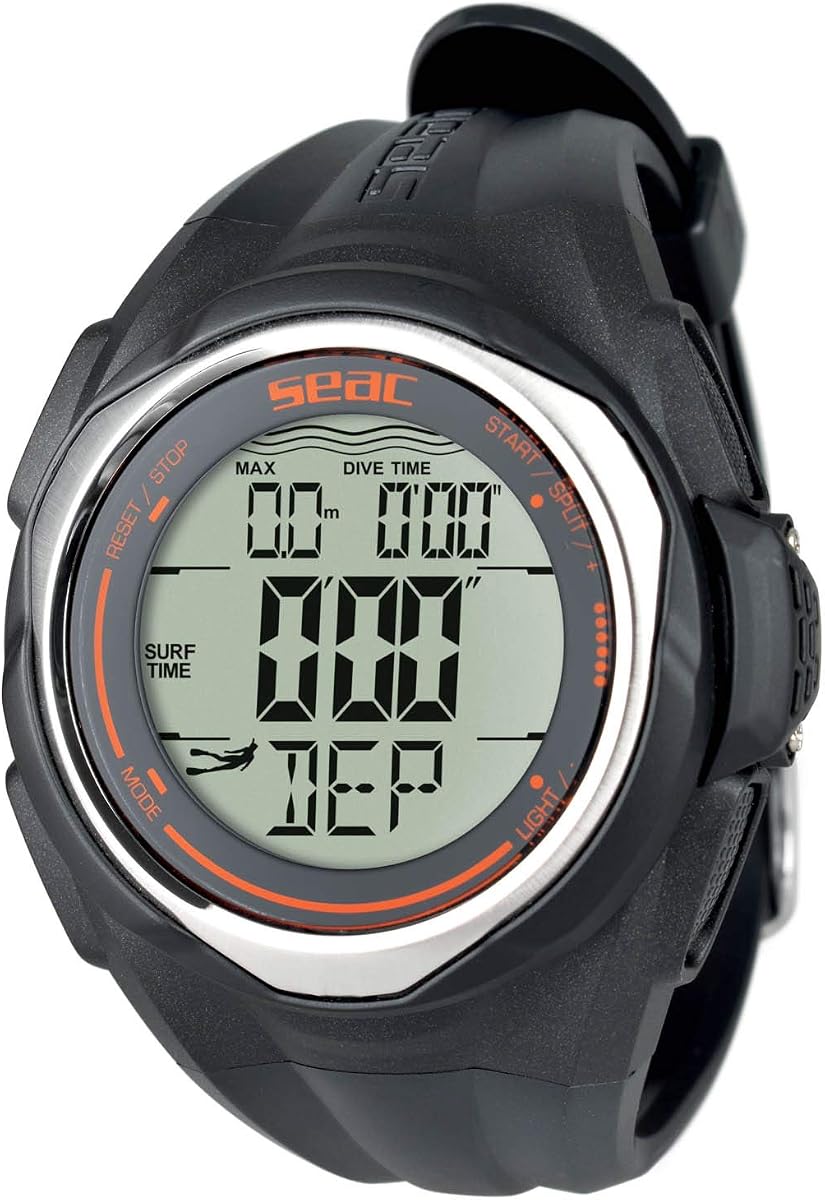
The SEAC Partner is a straightforward wrist-mount freediving computer designed for simplicity and affordability. With a 4.0 rating, it provides essential tracking for those beginning their journey in freediving or breath-hold diving.
We may earn a commission when you buy through this link, at no additional cost to you.
It records your freediving session up to 99 dives, offering a clear history of your progress. The built-in stopwatch and countdown function help manage intervals between dives effectively and safely.
While it lacks advanced scuba features, it serves its purpose well for recreational breath-hold diving. The backlit display ensures readability in low-light conditions, which is crucial for underwater sessions.
This device is best suited for freedivers who need a basic tracker without complex features. It is an accessible entry point for beginners looking to monitor their freediving performance.
Recording up to 99 dives allows you to review your performance history and track improvements over time.
A simple design ensures easy operation without overwhelming new users with unnecessary technical data.
We may earn a commission when you buy through this link, at no additional cost to you.
Selecting the right dive computer involves evaluating key features that impact safety, usability, and longevity. This section outlines the critical factors to consider before making your purchase to ensure you find a device that meets your needs.
A clear, high-contrast display is crucial for underwater navigation. Beginners should look for screens that offer bright backlighting and large text to ensure critical data like depth and time are visible in all lighting conditions.
Prioritize models with clear text and minimal glare for safe data viewing underwater.
Simpler interfaces with fewer buttons reduce the risk of errors underwater. Single-button designs are particularly beneficial for beginners who need to focus on the environment rather than device operation.
Choose devices with intuitive navigation structures that minimize cognitive load during dives.
Battery life determines how often you must recharge or replace power sources. Rechargeable batteries are convenient but may offer shorter run times per cycle compared to replaceable batteries.
Opt for long-lasting batteries or easy-recharge systems to minimize downtime between dives.
The decompression algorithm calculates safe ascent rates and no-decompression limits. Established algorithms like Buhlmann provide reliable safety margins that are critical for new divers learning the limits.
Ensure the device uses industry-standard algorithms for proven safety performance.
Bluetooth or USB connectivity allows you to log and analyze dive data on smartphones or computers. This feature helps beginners track their progress and understand patterns in their diving habits.
Select models with wireless connectivity to streamline post-dive data management.
A durable housing protects the device from impacts and pressure changes. Materials like reinforced plastics or metals can withstand the rigors of regular use without damage.
Check for robust construction that can handle rough handling and saltwater exposure.
Support for multiple modes like Air, Nitrox, or freediving allows flexibility for various activities. Beginners may start with Air but will appreciate a device that grows with their skills.
Verify that the device supports the specific gas mixes and modes you plan to use.
Audible and visual alarms provide critical warnings for depth limits and air supply. These alerts are essential for beginners to maintain safe diving practices without constant manual checking.
Ensure the device has clear and reliable alarms for all safety thresholds.
Before your first dive, familiarize yourself with the device settings and interface. Practice navigating the menus on land to reduce stress underwater during critical moments.
Always rinse your dive computer with fresh water after every dive to remove salt and debris. Salt buildup can damage buttons and seals over time, compromising the device's integrity.
Store the device in a cool, dry place away from direct sunlight. Extreme temperatures can damage the battery and internal electronics, shortening the lifespan of your computer.
Yes, a dive computer is essential for beginners to track depth and time safely. It automates decompression calculations, reducing the risk of errors associated with manual dive tables and ensuring safe ascents.
Battery life varies by model, typically ranging from a few dives to hundreds. Rechargeable units may last 30 to 50 hours per charge, while replaceable batteries can last years depending on usage frequency.
Many modern dive computers support dedicated freediving modes. Check if the device explicitly lists freediving as a supported mode to ensure accurate tracking of breath-hold sessions.
Air mode tracks dives using standard air, while Nitrox mode accounts for higher oxygen content. Beginners planning to use enriched air tanks must use a computer with a Nitrox mode for accurate safety data.
Updates should be performed when available to ensure safety algorithms and features remain current. Connect your device to a computer via USB to check for the latest manufacturer releases.
Yes, dive computers are designed to withstand saltwater. However, thorough rinsing with fresh water after every dive is required to prevent corrosion and prolong the device's functional life.
While not strictly necessary, wireless tank sensors offer convenience and safety by monitoring air supply electronically. Beginners may prefer simpler models initially but can upgrade for added peace of mind later.
Standard data includes depth, time, temperature, and no-decompression limits. Advanced models may track air supply, compass direction, and dive profiles to provide a comprehensive view of your underwater activity.
We have reviewed ten top models that cater to different needs and budgets. From the affordable CRESSI Leonardo to the premium Garmin Descent Mk3i, each device offers unique advantages for those starting their diving journey.
Prioritize readability, safety alerts, and battery life when making your final decision. A computer that is easy to use and reliable under pressure is far more valuable than one with unnecessary complex features.
Prices and availability may vary, so always check the current listings before purchasing. Investing in a quality dive computer is an investment in your safety and enjoyment underwater.