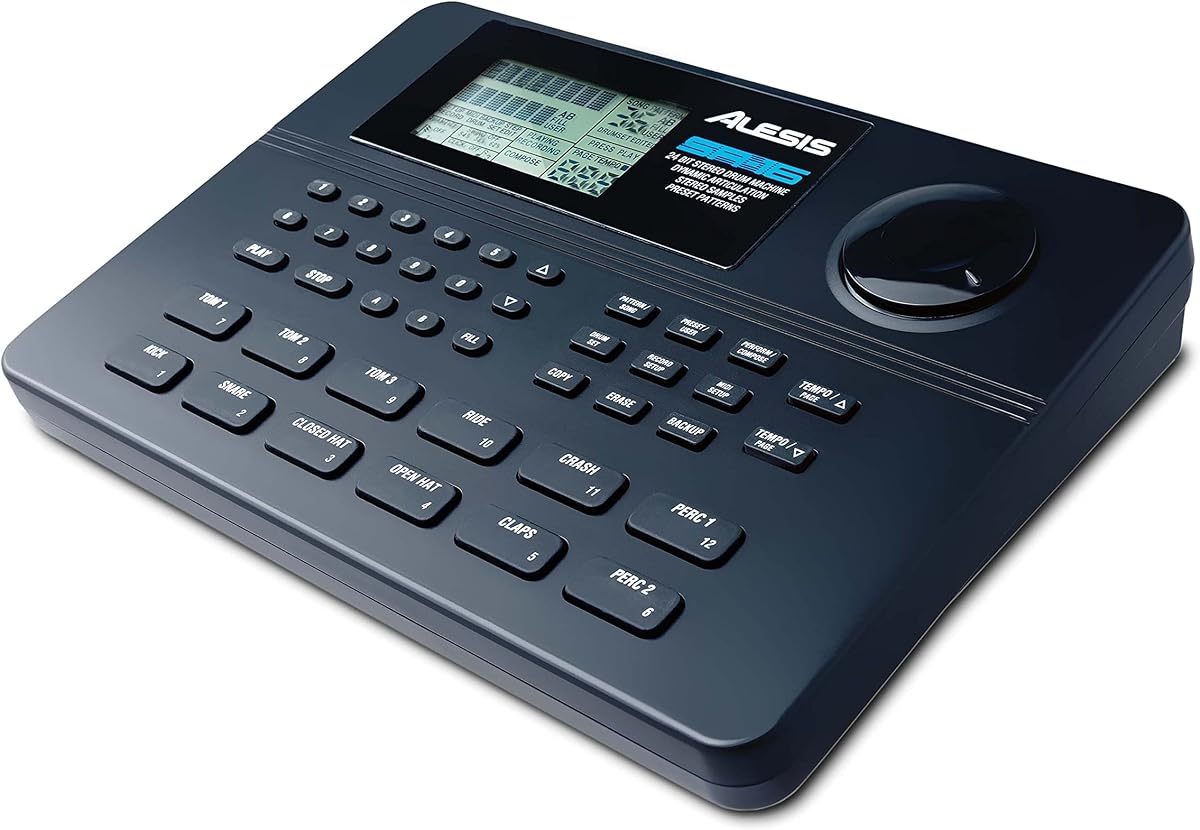
Alesis SR-16 Standalone Drum Machine
4.4Editor score
233 professional sounds
MIDI connectivity support
12 velocity sensitive pads
This guide compares the top 10 digital drum machines for 2026, covering budget, premium, and portable options to help you find the perfect rhythm tool.
Digital drum machines have revolutionized music creation by offering portable, versatile, and powerful tools for producers and performers. Whether you are crafting beats in a home studio or performing live on stage, choosing the right machine can significantly impact your workflow and sound quality. These devices range from simple beatmakers to complex synthesizers that define genres.
To compile this list, we evaluated ten top-rated digital drum machines based on sound quality, connectivity, ease of use, and overall value. We considered feedback from professional producers, live performers, and hobbyists to ensure our recommendations meet diverse needs. Each product was analyzed for its unique features, sound engine, and integration capabilities within modern music setups.
Each pick in this guide highlights specific strengths, such as portability, advanced sampling, or classic analog emulation, to help you make an informed decision. Please note that prices and availability may change frequently, so verify current details before purchasing. Our goal is to provide a comprehensive overview that saves you time and ensures you select a machine that fits your creative vision.
4.4Editor score

4.8Editor score

4.4Editor score
This comparison table outlines the key specifications and strengths of each top-rated digital drum machine to help you quickly identify the best fit for your needs.


The Roland TR-8S stands out as a top-tier digital drum machine, blending legendary heritage with modern production techniques. With a rating of 4.8 stars, it is praised for its authentic sound modeling and versatile design. This machine is ideal for producers seeking professional-grade sounds and flexible performance options.
We may earn a commission when you buy through this link, at no additional cost to you.
Its core strength lies in the detailed circuit models of classic TR drum machines like the 808 and 909. You can import your own samples via SD card, allowing for hybrid sound creation that defines unique genres. The advanced sound manipulation tools let you adjust decay, tuning, and start points for precise control over your rhythms.
While the TR-8S is powerful, it comes with a higher price point and a learning curve that might challenge absolute beginners. However, the included TR-EDITOR software simplifies workflow by providing a graphical interface for visual controls. This trade-off is acceptable for those who need deep customization and reliable performance in live settings.
This machine is best suited for professional producers and performers who need a robust toolkit for diverse genres. Whether you are designing new kits or performing live, the TR-8S delivers consistent results. We recommend it for anyone prioritizing sound quality and workflow flexibility in their digital drum setup.
Mix and match TR sounds with imported samples to create unique kits that demand attention in any genre.
The free TR-EDITOR software amplifies creative possibilities by offering expanded visual controls and organizational tools.
We may earn a commission when you buy through this link, at no additional cost to you.
The Alesis SR-16 is a legendary classic drum machine that remains popular for its affordability and reliability. With a rating of 4.4 stars, it is widely used by songwriters and remix engineers who need a straightforward tool for beat creation. Its 233 professional sounds provide a solid foundation for various musical styles.
We may earn a commission when you buy through this link, at no additional cost to you.
This machine excels in its seamless MIDI connectivity, allowing it to work with keyboards and computers effortlessly. The 12 velocity-sensitive pads offer expressive control over dynamics, while built-in digital effects add realism to your tracks. It is designed for users who want production-ready features without unnecessary complexity.
Although the SR-16 lacks deep sample editing capabilities and advanced effects found in newer models, it remains a powerful tool for quick idea generation. Its limitation in customization is balanced by its ease of use and robust sound set. This makes it an excellent choice for beginners or those focusing on live performance rather than sound design.
We recommend the SR-16 for anyone looking for a budget-friendly entry into digital drum machines. Its classic sounds and reliable connectivity make it a staple in many studios. If you value simplicity and proven performance, this machine is a dependable investment for your music production needs.
Access 233 professional sounds and 50 preset drum kits to get started immediately without extensive programming.
Complete MIDI support and multiple outputs ensure the SR-16 fits seamlessly into any existing studio setup.
We may earn a commission when you buy through this link, at no additional cost to you.
The Elektron Digitakt II is a powerful 16-track drum computer and sampler designed for serious electronic music producers. Rated 4.4 stars, it offers advanced sequencing features that allow for intricate rhythm programming and sound manipulation. Its precision and depth make it a favorite among those who want complete control over every note.
We may earn a commission when you buy through this link, at no additional cost to you.
Key strengths include its 128-step Elektron sequencer and swappable filters that provide unique tonal variations for each track. You can assign LFOs and effects per track, creating dynamic and evolving patterns. The song mode lets you build full compositions with ease, making it a standalone production powerhouse.
While the Digitakt II offers unparalleled control, it has a steep learning curve and limited sample memory compared to dedicated samplers. However, these trade-offs are acceptable for users prioritizing precise sequencing and modulation. Its robust build and intuitive parameter locks ensure that complex ideas can be executed efficiently during live performances.
This machine is best for producers who want deep integration into electronic music workflows. If you value precise timing and complex sequencing, the Digitakt II is a top choice. We recommend it for advanced users looking to expand their creative possibilities without relying on a computer.
Use the 128-step sequencer with parameter locks to create evolving patterns and intricate rhythms easily.
Swap between filters like Low pass 4, Comb, or EQ to shape your sound uniquely for each track.
We may earn a commission when you buy through this link, at no additional cost to you.
The Korg Volca Drum is a compact percussion synthesizer designed for on-the-go music creation. With a rating of 4.4 stars, it is appreciated for its portability and unique DSP engine that generates a wide range of drum sounds. Its built-in speaker allows you to create rhythms anywhere without needing external gear.
We may earn a commission when you buy through this link, at no additional cost to you.
Its 16-step sequencer is intuitive and flexible, featuring Active Step and Slice functions to add variety and intricate rhythms. The waveguide resonator adds rich resonance to sounds, making it stand out from typical drum machines. This device is perfect for sketching ideas quickly or performing live in intimate settings.
The Volca Drum's small form factor means limited polyphony and fewer controls than larger units, which can restrict complex arrangements. However, its affordability and flexibility make up for these limitations. It is an excellent tool for producers who want a secondary device for inspiration or travel.
We recommend the Volca Drum for hobbyists and professionals needing a portable beat maker. Its unique sound engine and sequencing features provide a lot of value in a small package. If you prioritize portability and creative flexibility, this unit is a compelling choice for your collection.
Replace steps for each part to add variety and unexpected changes to your patterns effortlessly.
Add rich resonances to your sounds using the waveguide resonator for more natural and dynamic tones.
We may earn a commission when you buy through this link, at no additional cost to you.
The Yamaha DTX Multi Pad is designed for live performers who need a reliable tool for triggering sounds on stage. With a rating of 4.3 stars, it offers over 1,000 drum and percussion sounds along with keyboard sounds for versatile performance options. Its focus is on triggering rather than complex sequencing.
We may earn a commission when you buy through this link, at no additional cost to you.
This pad allows you to mute or layer sounds, providing dynamic control during live sets. The sequencer and preset loops add structure to performances, while the 64MB Flash-ROM lets you load custom samples for personalization. It is built to withstand the rigors of touring and frequent use.
While it excels in live scenarios, the DTX Multi Pad is less focused on deep sequencing compared to drum machines. Its heavy design also makes it less portable than compact units. However, for drummers looking to expand their setup, it offers the reliability and sound variety needed for professional use.
We recommend this unit for drummers and live performers needing a sturdy and versatile sound source. Its extensive library and layering options make it a valuable addition to any stage setup. If you prioritize performance reliability and sound variety, the DTX Multi Pad is a strong contender.
Mute or layer sounds easily during performance to create dynamic and evolving rhythms on the fly.
Access preset loops to quickly add structure to your live performances without complex programming.
We may earn a commission when you buy through this link, at no additional cost to you.
The Akai Professional MPC Sample brings the iconic MPC workflow to a compact portable format. With a rating of 4.8 stars, it is highly praised for its standalone operation and battery-powered design. This makes it an ideal tool for beatmakers and finger drummers who want to work without a computer.
We may earn a commission when you buy through this link, at no additional cost to you.
It features 16 responsive pads and a built-in microphone for sampling directly into the unit. The onboard FX processors offer 60 types including vinyl emulation for character. Its microSD card storage and USB-C connectivity ensure flexible integration into various production setups.
While the display is smaller than desktop units, the intuitive controls make it easy to use. The battery life is strong, but users might miss the larger screen of full-sized MPCs for editing. However, for portable production, its workflow efficiency and sampling capabilities are unmatched in this class.
This device is perfect for producers who need a portable hub for sampling and beatmaking. Whether you are a beginner or professional, the MPC Sample offers the tools to create finished grooves anywhere. We recommend it for anyone seeking the iconic MPC experience in a pocket-sized device.
Experience the classic MPC workflow with 16 pads and intuitive controls for fast sampling and beatmaking.
Record sounds directly with the internal microphone for instant inspiration without external gear.
We may earn a commission when you buy through this link, at no additional cost to you.
The teenage engineering EP-133 K.O. II is a sampler and drum machine designed for fast idea-to-track workflows. With a rating of 4.7 stars, it offers double the memory of its predecessor and advanced sampling capabilities. The sequencer engine is built to help you build beats quickly and efficiently.
We may earn a commission when you buy through this link, at no additional cost to you.
Its sequencer supports 99 patterns per group, allowing you to swap patterns instantly for creative variation. You can sample via the built-in microphone or line-in and manipulate sounds with punch-in effects in real time. This flexibility makes it a powerful tool for experimental music and quick sketching.
While the menu system can be complex and output options are limited, the EP-133 excels in creativity and ease of use for live performance. The battery life and USB-C charging ensure you can play for long sessions. Its compact size makes it easy to carry anywhere you go.
This machine is ideal for creators who value speed and experimentation. If you want to explore new sounds and rhythms without deep technical barriers, the EP-133 is perfect. We recommend it for anyone seeking a unique and portable tool for beat creation and performance.
Use 99 patterns per group to instantly swap and experiment with different beat combinations.
Control stereo and punch-in effects on the fly using the multifunctional fader for dynamic performances.
We may earn a commission when you buy through this link, at no additional cost to you.
The KORG drumlogue is a hybrid drum machine combining analog, digital, and multi-engine sound sources. With a rating of 3.6 stars, it is noted for its open-source potential and front panel knobs for immediate control. This design allows users to instantly tune and mix sounds during live performance.
We may earn a commission when you buy through this link, at no additional cost to you.
It features 11 parts and a 64-step sequencer with loop and chain functions for varied performances. The ability to use third-party effects through the multi-engine gives it future-proof capabilities. Connectivity includes USB-C for loading samples and audio sync for integrating with other gear.
As a new platform, it may have software bugs or limitations in its current state. However, the flexibility of its hybrid engine and customization options make it attractive for advanced users. Those willing to explore its potential will find it a rewarding tool for unique sound design.
We recommend the drumlogue for producers interested in hybrid synthesis and open-source expansion. Its dedicated knobs and flexible architecture allow for a tactile workflow. If you value customization and are open to learning a new system, this machine offers exciting possibilities.
Access open-source user oscillators and effects for endless customization possibilities.
Use front panel knobs for instant control over tuning and attenuation of drum parts.
We may earn a commission when you buy through this link, at no additional cost to you.
The Behringer LM DRUM offers a classic hybrid sampling experience with excellent connectivity. With a rating of 5.0 stars, it delivers 16 voices of sampling and a powerful 64-step sequencer. The bundle includes headphones and a cable, making it ready for immediate creative exploration.
We may earn a commission when you buy through this link, at no additional cost to you.
Its sequencer supports poly-meter, step-repeat, and autofill for easy workflow streamlining. You get 16 independent analog outputs for multi-track recording, which is rare at this price point. The wave designer and dual-mode analog filter provide useful per-voice assignment options for shaping sounds.
While sample editing is basic compared to high-end units, the connectivity and value make it a strong contender. It is a robust unit designed for durability, suitable for both studio and live environments. For producers needing flexible routing, this machine provides essential tools without high cost.
We recommend the LM DRUM for budget-conscious producers wanting deep connectivity. Its analog outputs and MIDI support integrate well into complex setups. If you value versatility and robustness, this drum machine is a practical and effective choice for your studio.
Use 16 independent analog outputs to record rhythms as multi-track audio for greater control.
Connect seamlessly via MIDI, USB, and sync options for integration with any studio gear.
We may earn a commission when you buy through this link, at no additional cost to you.
The Singular Sound BeatBuddy is a unique drum machine in pedal format designed for live hands-free control. With a rating of 4.5 stars, it allows musicians to change beats and manage rhythms using physical foot controls. This makes it perfect for solo performers and guitarists who need a virtual drummer.
We may earn a commission when you buy through this link, at no additional cost to you.
It includes 200+ songs across genres and offers storage for 3.2 million songs. The analog feel sound quality mimics a real drummer, adding realism to your live sets. The visual metronome helps you master complex time signatures by showing tempo changes clearly.
While it lacks the deep editing capabilities of a studio drum machine, its performance features are unmatched. The low power consumption and durable design ensure it can withstand gigging conditions. For solo artists needing a reliable backing rhythm section, this pedal is a game changer.
We recommend the BeatBuddy for performers who need foot-controlled rhythm support. Its unique interface allows you to focus on your instrument while keeping perfect time. If you want a portable and realistic drummer for live shows, this is the best choice in its category.
Control beats and transitions live using physical foot switches for seamless performance.
Use the LCD visual metronome to improve rhythm and master time signatures effortlessly.
We may earn a commission when you buy through this link, at no additional cost to you.
Selecting the right digital drum machine requires considering your specific needs and workflow preferences. This guide outlines key factors to help you narrow down your options effectively.
The core of any drum machine is its sound engine. Look for machines that offer realistic samples or synthesis capabilities that fit your genre. Models with hybrid engines allow you to blend analog warmth with digital precision.
Prioritize machines with high-quality audio outputs and sound libraries that match your musical style.
Different drum machines offer unique sequencing approaches. Some focus on step-based programming while others emphasize real-time performance and pattern variations. Consider how you create beats to choose a workflow that supports your creativity.
Look for features like step editors, pattern chaining, and live performance controls that suit your style.
If you want to use your own sounds, check the sampling features and memory capacity. Machines with SD card slots or internal storage allow you to load custom samples easily. Sampling can expand your sonic palette significantly.
Ensure the machine supports the formats you use and provides enough memory for your projects.
Integration with other gear is crucial. Look for MIDI input/output, USB, and audio sync ports that allow you to connect to keyboards, computers, or other instruments. These connections expand your setup possibilities.
Choose a machine that offers the necessary ports to link seamlessly with your existing studio equipment.
For musicians on the go, portability is key. Some drum machines are battery-powered and compact, while others require external power and have larger chassis. Consider where you plan to use the device regularly.
Select a model that fits your travel needs and offers reliable power options for uninterrupted sessions.
The interface determines how quickly you can program beats. Models with dedicated knobs and pads allow for tactile control, while those with menus may offer more features but slower access. Balance complexity with ease of use.
Choose a device with an interface that feels intuitive to you and supports your workflow speed.
Built-in effects like reverb, delay, and filters can add depth to your drum tracks. Advanced machines offer per-part effects, allowing detailed customization of each instrument. This helps in creating professional sounding beats without external plugins.
Look for machines with versatile effect processors to enhance your sound without extra gear.
Digital drum machines range from affordable entry-level units to high-end professional tools. Determine your budget and compare features like sound quality, connectivity, and build durability. Often mid-range machines offer the best balance of performance and cost.
Invest in a machine that provides long-term value and grows with your skill level.
To get started with your digital drum machine, familiarize yourself with the manual and basic controls. Connect your device to headphones or speakers using the recommended cables. Start by loading preset kits to understand the sound engine before creating your own patterns.
Regularly back up your custom samples and patterns to external storage like SD cards or computers. This prevents data loss in case of hardware failure or accidental deletion. Many machines have software editors that allow you to manage these files easily.
Keep your drum machine clean by dusting it with a soft cloth and storing it in a dry environment. Avoid exposing it to extreme temperatures or moisture which can damage electronic components. With proper care, your drum machine will serve you reliably for many years.
A digital drum machine is used to generate drum patterns and rhythms electronically. It serves as a versatile tool for music producers to create beats, for live performers to simulate drum kits, and for songwriters to draft ideas quickly without needing a live drummer.
Yes, many modern drum machines allow you to import custom samples via SD cards or USB drives. This feature enables you to load unique sounds that fit your style. Check the specifications to ensure the device supports the file formats you wish to use.
Absolutely, many drum machines are designed with live performance in mind. They often include intuitive interfaces, real-time control knobs, and robust connectivity for integration with other instruments. This makes them reliable tools for stage use.
Most digital drum machines are compatible with DAWs through MIDI connections or USB audio interfaces. You can sync them to software and use them as hardware controllers or standalone devices. This integration enhances your production workflow flexibility.
A drum machine is specialized for creating rhythmic patterns with built-in or loaded drum sounds. A sampler is broader and allows you to record and play back any audio clip. Some drum machines include sampling capabilities for more creative freedom.
Connect the drum machine to speakers using its audio output jacks, typically 1/4 inch or 3.5mm. Use appropriate cables to link the outputs to your speakers or audio interface. Ensure the volume is set appropriately to avoid distortion.
In conclusion, the best digital drum machine for you depends on your specific needs and creative goals. Whether you choose the versatile Roland TR-8S for professional production or the affordable Alesis SR-16 for budget-friendly beatmaking, each top pick offers unique strengths to inspire your work.
When making your decision, prioritize features that align with your workflow such as connectivity, sound quality, and ease of use. Consider how the machine integrates into your existing setup and supports both studio and live performance needs.
Remember to check current prices and availability before purchasing to ensure you get the best deal. With the right tool, you can unlock new creative possibilities and elevate your music production. Happy beatmaking.