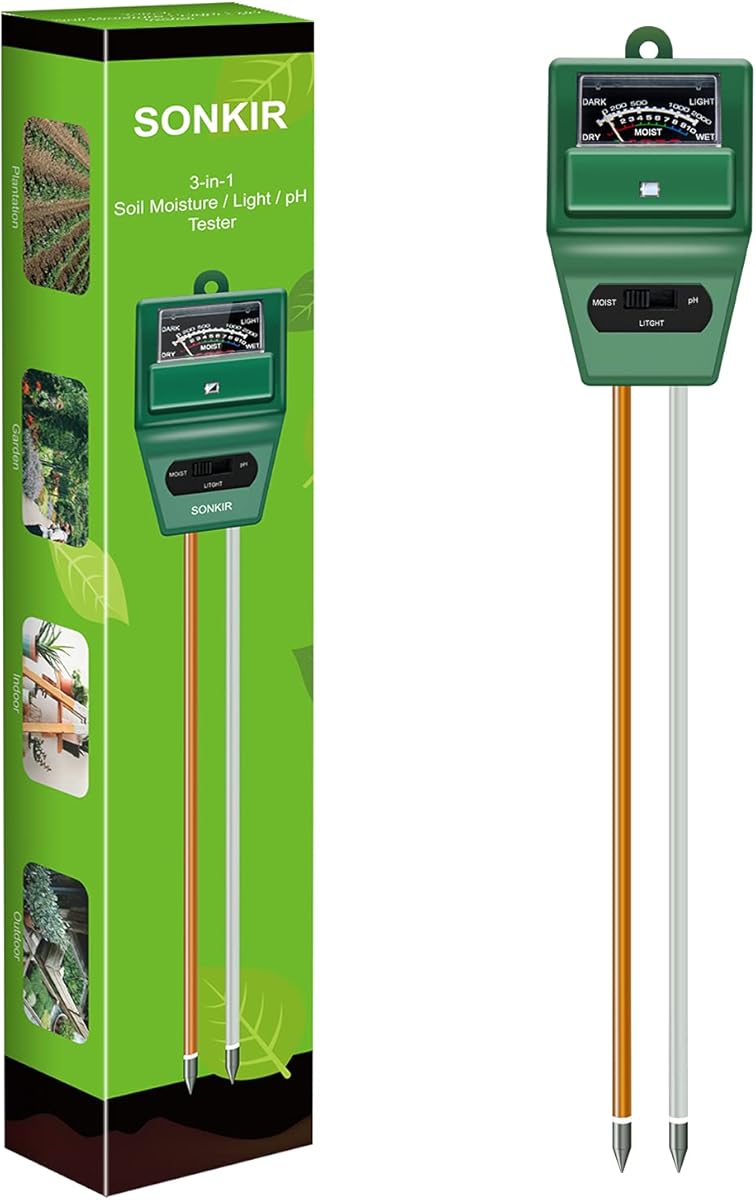
SONKIR Soil pH Meter
4.1Editor score
No battery required
Three-in-one testing
Compact portable design
This comprehensive guide compares the top Bluetooth Soil Ph Meters available in October 2026, evaluating accuracy, features, and ease of use for modern
Modern gardening demands precision and data-driven decisions to ensure plant health and optimal growth. Bluetooth Soil Ph Meters offer a seamless way to monitor soil conditions directly from your smartphone. These devices provide real-time insights into pH levels, moisture, and nutrients without the hassle of manual logs or guesswork.
We evaluated ten leading models based on accuracy, connectivity, battery life, and user feedback. Our analysis covers budget-friendly options and professional-grade tools suitable for home gardens, hydroponics, and large-scale agriculture. Each product was assessed for its ability to deliver reliable readings in diverse soil types and environmental conditions.
Every pick highlights unique strengths, from solar-powered probes to advanced app integration. While prices vary significantly across models, all selected tools meet rigorous standards for performance. Keep in mind that pricing and availability change frequently, so check current listings before making your final purchase decision today.
4.1Editor score

4.4Editor score

4.0Editor score
This side-by-side comparison outlines the key specifications and capabilities of every model reviewed. It helps you quickly identify which device aligns with your specific gardening needs and technical requirements without digging through lengthy descriptions.




The Moisture Meter for Plants stands out as a top contender in the Bluetooth Soil Ph Meters market. With a rating of 4.4 stars, users appreciate its ability to deliver quick and accurate readings for multiple soil parameters. It simplifies plant care by combining pH, moisture, temperature, light, and fertility checks into one handheld device.
We may earn a commission when you buy through this link, at no additional cost to you.
This device features 2025 probe technology that reduces waiting time to just ten seconds for precise results. The large screen with white backlight ensures you can read data clearly even in low-light conditions or dense foliage. Its fertility function helps determine optimal watering times, making it ideal for both novice and experienced gardeners.
While it is not designed for direct liquid testing, the instructions clearly advise moistening dry soil before insertion to prevent damage. The battery warning system ensures you are never caught off guard during critical checks. Overall, its balance of functionality and ease of use makes it a reliable choice for daily garden monitoring.
If you want a versatile tool that covers all basic soil needs without needing multiple devices, this is the one to buy. The satisfaction guarantee provides peace of mind if you encounter any issues. It remains a strong recommendation for anyone looking to optimize plant health through data-driven care.
It measures moisture, pH, temperature, light, and fertility to give a complete picture of soil health at a glance.
The large LCD display with white backlight allows for easy reading in any lighting condition without straining your eyes.
We may earn a commission when you buy through this link, at no additional cost to you.
The Digital Soil pH Meter with App offers a modern approach to monitoring soil health through smartphone connectivity. While specific user ratings vary, its design focuses on convenience and data tracking. It supports automatic data storage and Bluetooth connection, allowing users to track pH levels over time without manual logging.
We may earn a commission when you buy through this link, at no additional cost to you.
A conical steel probe protects the sensitive electrode from dirt and damage, ensuring durability even in tough soil conditions. The device also features Automatic Temperature Compensation to maintain accuracy across varying environmental conditions. A backlight helps with reading in dark corners of greenhouses or shaded gardens.
Although primarily marketed for soil, this device is versatile enough to test various liquids like pool water, wine, and yogurt. The HOLD button locks readings for easy recording. However, ensure you verify app compatibility with your specific device before purchasing to avoid connectivity issues.
If you need a device that bridges physical testing with digital tracking for hydroponics or mixed use, this is a strong candidate. Its waterproof design and protective probe make it rugged enough for daily use. Just ensure the app meets your data analysis needs before finalizing your purchase.
Connects via Bluetooth to an app that automatically stores and organizes your pH data for easy historical analysis.
The steel conical design shields the pH electrode from dirt and physical damage during insertion into dense soil.
We may earn a commission when you buy through this link, at no additional cost to you.
For gardeners with large plots, the 7-in-1 Wireless Soil Moisture Meter offers a scalable solution. It supports up to 32 expandable probes and one controller, allowing you to monitor multiple beds without constant manual testing. The solar-powered probes eliminate battery replacements for individual sensors.
We may earn a commission when you buy through this link, at no additional cost to you.
The controller automatically refreshes data every 20 minutes and provides separate readings for air and light conditions. This helps track microclimates across your garden effectively. The split design lets you view data while standing, which reduces strain compared to bending over a single handheld unit.
However, user feedback suggests that connectivity or calibration issues can arise, leading to lower overall ratings. Ensure you follow setup instructions carefully to maintain probe-controller pairing. This system is best suited for those willing to invest time in a permanent monitoring setup rather than quick checks.
If you manage a greenhouse or multiple raised beds, this multi-point system offers convenience long-term value. It removes the need to walk around repeatedly inserting a single tester. Consider your technical comfort level and garden size before committing to this more involved system.
One controller supports up to 32 probes so you can monitor many locations simultaneously without extra equipment.
Dedicated solar probes reduce maintenance by eliminating the need for frequent battery replacements in the field.
We may earn a commission when you buy through this link, at no additional cost to you.
The SONKIR Soil pH Meter is a practical choice for those seeking simplicity without extra cost. It does not require batteries, relying on a mechanical system that generates power from soil moisture to drive the reading. This feature ensures it works as long as there is enough moisture to activate the sensor.
We may earn a commission when you buy through this link, at no additional cost to you.
It switches between moisture, pH, and light levels with a single button. The design is sturdy and built for long-term use in various environments. Its compact size makes it easy to carry in a gardening apron or pocket. It is an excellent entry point for basic soil health checks.
Keep in mind that if the soil is very dry, the meter might not move until the soil is moistened. There is no backlight for night use. However, for day use, it provides reliable baseline data. It avoids electronic complexity that can lead to failure or maintenance costs.
Choose this if you want a dependable tool that does not depend on batteries or charging. It is perfect for quick checks on lawns or indoor plants. While it lacks advanced features, its core functionality is robust and effective for general gardening needs.
No need to buy or replace batteries as the device uses soil moisture to power the internal meter directly.
One-button switching allows easy transition between testing moisture, pH, and light levels without complicated setup.
We may earn a commission when you buy through this link, at no additional cost to you.
The Digital pH Meter for Soil by YINMIK focuses on ease of use for potted plants and home gardens. It uses a tapered plastic dibber to protect the electrode and make insertion into hard or compact soil easier. This design reduces the risk of breaking the sensitive tip during testing.
We may earn a commission when you buy through this link, at no additional cost to you.
It connects to a mobile app for automatic data storage of up to 1000 readings. You can add notes to each measurement to track trends over time. The package includes calibration buffer powders which are essential for maintaining accuracy. This feature ensures long-term reliability with minimal maintenance.
While the app is a bonus, the device works well as a standalone unit for quick checks. It is suitable for various soil mixes like coco coir and potting mixes. The digital readout avoids the ambiguity of analog pointers. Ensure you calibrate it regularly for consistent results.
If you manage multiple pots or want to track changes in your plants, this model provides great utility. The included calibration kit adds value right out of the box. It balances simplicity with enough tech features to help serious hobbyists monitor plant health accurately.
The tapered plastic dibber protects the pH electrode from damage while making insertion into dense soil easier.
Download the app to automatically store up to 1000 data points with optional notes for each sample location.
We may earn a commission when you buy through this link, at no additional cost to you.
This combo kit includes both a dedicated pH meter and a moisture tester, offering specialized tools for each parameter. The moisture meter uses FDR technology for accurate detection, while the pH pen provides direct digital readings. Together they cover the most critical aspects of soil health effectively.
We may earn a commission when you buy through this link, at no additional cost to you.
The stainless steel dibber ensures the probe survives tough soil conditions without damage. Calibration solutions are included to ensure accurate start-up performance. The kit is also suitable for hydroponic nutrient testing which is a plus for mixed systems. Users appreciate the reliability of both devices.
Carrying two devices may be less convenient than an all-in-one model, but each unit is optimized for its task. The digital readouts are clear and easy to interpret. Regular calibration is recommended to maintain precision over time. It is a strong choice for those who prioritize accuracy over minimalism.
If you want reliable separate tools for pH and moisture, this kit delivers excellent value. The included accessories make it ready to use immediately. It is particularly helpful if you have specific pH and moisture thresholds you need to monitor consistently.
Separate pH and moisture meters ensure that each measurement method is optimized for maximum accuracy and reliability.
The FDR method for moisture detection provides more precise readings than older mechanical analog meter technologies.
We may earn a commission when you buy through this link, at no additional cost to you.
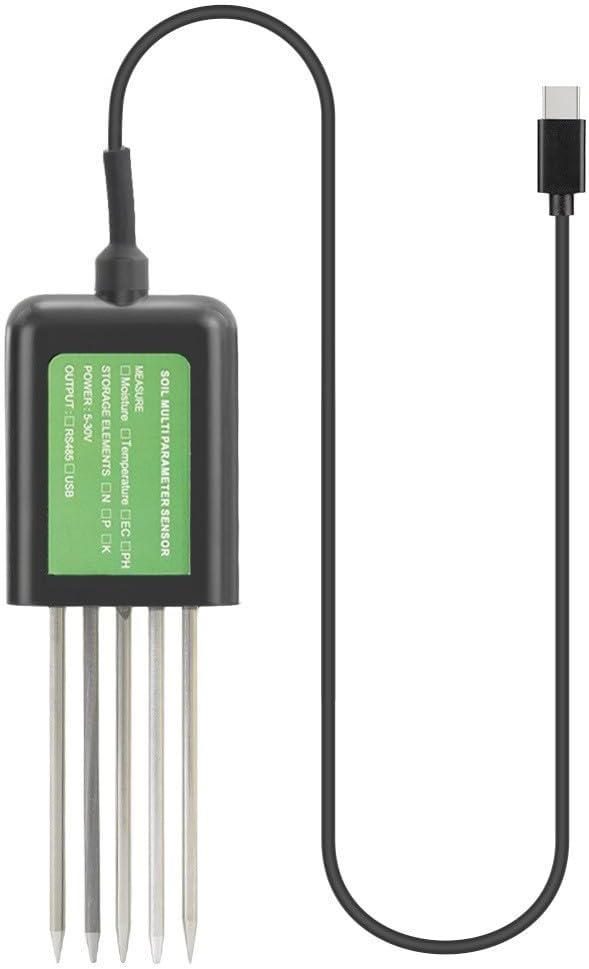
This USB Soil Sensor offers comprehensive analysis including NPK nutrients which are rarely found in basic meters. It connects directly to an Android device via USB to view and export data. The IP68 rating ensures it can withstand prolonged exposure to soil and moisture without damage.
We may earn a commission when you buy through this link, at no additional cost to you.
The battery-free design means you do not need to worry about power during a session. However, user ratings suggest potential issues with the app or connectivity. It may require troubleshooting to get consistent readings. This device is best for tech-savvy users who want detailed nutrient data.
For research or professional farming, tracking nitrogen, phosphorus, and potassium levels is vital. This device supports that need with a single tool. Ensure your Android device is compatible before purchasing. It is a specialized tool rather than a general consumer gadget.
If you need detailed nutrient data without a large investment, this sensor provides a good starting point. The USB connection allows easy data transfer for analysis. It is a niche option for those focused on soil chemistry and agricultural optimization.
Measures NPK nutrients to help you manage fertilizer needs accurately and reduce unnecessary chemical applications.
Connects directly to Android devices to view and export data without needing separate Bluetooth pairing or apps.
We may earn a commission when you buy through this link, at no additional cost to you.
The Bluelab OnePen is a premium tool designed for professional growers who need precise and fast readings. It offers Bluetooth data sync and in-app tracking for long-term monitoring. The replaceable double-junction pH probe extends the device's lifespan and ensures consistent accuracy over time.
We may earn a commission when you buy through this link, at no additional cost to you.
It is IP68 rated and floats, making it safe to use in hydroponic tanks or pools. Readings are lightning fast which saves time in high-volume testing environments. The ergonomic design makes it comfortable to hold during extended use. It represents top-tier engineering for critical plant health checks.
While it is more expensive than other options, the durability and accuracy justify the cost for serious users. It is not necessary for casual indoor plants but excels in hydroponics and commercial setups. If you need reliability and advanced features, this is the choice to consider.
Select this if you require professional-grade performance and data integration. It simplifies workflow by combining temperature, EC, and pH in one unit. The investment pays off through consistent results and reduced replacement costs in the long run.
Built to IP68 waterproof standards with a floating design that can survive drops into liquid hydroponic setups.
The double-junction probe is replaceable to maintain accuracy over time without replacing the whole expensive device.
We may earn a commission when you buy through this link, at no additional cost to you.
The Kelway HB-2 is a robust mechanical meter known for its industrial reliability. It requires no external power or batteries to function, making it a simple tool for large area testing. Its design focuses on accuracy and durability rather than digital features.
We may earn a commission when you buy through this link, at no additional cost to you.
It measures pH and moisture using a direct probe method. Users can take numerous readings quickly without worrying about power failures. The film coating on the probe is durable and easy to maintain. It has stood the test of time in professional agriculture.
While it lacks the convenience of digital displays, it offers consistent performance. It is ideal for environments where electronics might fail or where simplicity is preferred. For those who prioritize function over features, this remains a solid choice. Ensure you handle it with care to avoid bending the probe.
If you need a no-frills tool that just works, the Kelway HB-2 delivers. It is perfect for daily farm use where robustness is key. It avoids the complexities of batteries and charging, ensuring you are always ready to test.
Requires no external power source so it works anytime without batteries or charging interruptions.
Built with industrial grade materials to withstand daily use in harsh agricultural conditions for many years.
We may earn a commission when you buy through this link, at no additional cost to you.
This 7-in-1 Soil Tester provides extensive data including NPK nutrients and conductivity. It features a large full-color interface and a robust data storage function. You can export data to a computer via Excel for detailed analysis. It suits professional agriculture and environmental testing needs.
We may earn a commission when you buy through this link, at no additional cost to you.
The clip-on design allows you to attach the tool to belts or backpacks for effortless portability. Its accuracy is reported with a high availability rate which is crucial for reliable results. The device is built to be durable and reliable in various settings.
While it is expensive, the depth of information justifies the cost for advanced users. If you need to track nutrient levels over time for crop optimization, this tool is invaluable. Ensure you have a workflow that utilizes its data export capabilities to maximize its value.
If you need comprehensive soil data for large-scale operations, this model stands out. It goes beyond basic pH and moisture to give a full nutrient profile. For serious agriculture, this detailed insight helps optimize yields and reduce waste effectively.
Supports data export to computer via Excel for detailed analysis and record keeping.
Measures NPK, pH, temperature, moisture, and conductivity in one device for a full soil profile.
We may earn a commission when you buy through this link, at no additional cost to you.
Choosing the right tool involves considering your specific gardening scale, technical comfort, and the parameters you need to monitor regularly. This guide breaks down the key factors to ensure you invest in a device that meets your needs.
Identify which soil characteristics are most important for your plants. While basic meters offer pH and moisture, advanced models include temperature, light, and NPK nutrients. Choosing a device that matches your plant's needs prevents wasted money on unused features.
Focus on the metrics that impact your specific crops most. If you grow hydroponics, EC or pH might be critical. If you grow flowers, light and moisture may be more relevant.
Bluetooth soil ph meters with app integration allow you to track trends over time. This is essential for long-term soil management and comparing changes after fertilization or watering. Ensure the app supports your device and offers useful data visualization.
Choose Bluetooth models if you need historical records or remote monitoring. Without connectivity, you must manually log every reading which can be tedious over time.
The probe is the most critical component as it touches the soil directly. Look for probes made of stainless steel or those with protective coatings like plastic dibbers. These resist corrosion and physical damage when inserted into hard or rocky soil.
Prioritize a sturdy probe tip. A fragile electrode can break easily in dense soil leading to device failure. Replaceable probes are a plus for long-term maintenance.
Most devices require batteries while some rely on solar power. Bluetooth models typically need batteries for communication. If you prefer not to manage batteries, look for solar probes or mechanical meters that do not require power at all.
Consider how often you are willing to replace batteries. For frequent use, rechargeable options or mechanical alternatives reduce hassle significantly.
Accuracy depends on regular calibration. Some kits include calibration powder or solutions while others require you to buy them separately. Ensure the device supports standard calibration methods to keep your readings trustworthy over time.
Always check if calibration supplies are included. Without them you may need extra steps to ensure your first reading is accurate enough.
If you plan to use the device outdoors in rain or submerged in water, look for IP68 ratings. This ensures the electronics survive moisture and dust without failure. Waterproof devices are essential for hydroponic or pool testing.
Verify the IP rating before buying. A non-waterproof device could be damaged by a sudden rainstorm during use.
Basic meters are inexpensive but lack data features. Advanced Bluetooth models offer more but cost more. Decide how much you value digital features versus simple functionality to set a reasonable budget.
Invest in higher-end tools if you need professional-grade accuracy or data tracking. Otherwise a simple model may suffice.
Choose brands with a history of reliability and customer support. Established brands often provide better firmware support and warranties. This ensures you are not left with a device that is unsupported.
Research user feedback for the specific model. Consistent reports of quality issues can be a red flag regardless of the price.
To start, insert the probe into moist soil at least 10 centimeters deep. Avoid touching rocks or roots with the probe tip as this can skew the results. Wait for the reading to stabilize before noting the data.
After each use, wipe the probe clean with a soft cloth to remove soil residue. For deeper cleaning, use a mild cleaning solution or the included brush if provided. Allow the probe to air dry completely before storing it away.
Calibrate your device every few weeks using the provided buffer powders or solutions. Regular calibration ensures your readings remain accurate over time. Store the device in a cool dry place to protect the electronics from extreme conditions.
Not all models support both operating systems. Some apps are Android-exclusive while others require iOS. Always check the compatibility requirements on the product listing before purchasing to ensure it works with your specific phone.
For accurate results, calibrate your device every two to four weeks. If you use it frequently or notice inconsistent readings, calibrate before each major testing session. Regular maintenance keeps your data reliable for decision-making.
Most devices require some moisture to generate a reading. If your soil is extremely dry, moisten the area slightly before inserting the probe. This ensures the sensor can detect conductivity and gives a more accurate result.
Battery life depends on usage frequency but typically lasts several weeks on a single charge or set of batteries. Bluetooth communication drains more power than display-only devices, so expect to recharge or replace batteries regularly if you use it daily.
Yes, many modern soil meters can test hydroponic solutions if they are waterproof. Check the product specs for IP ratings and liquid compatibility. Always clean the probe thoroughly after testing liquids to avoid residue buildup.
If the readings fluctuate wildly or fail to stabilize, the probe may be damaged. Inspect the tip for bends or corrosion. If the device shows a low battery warning but the batteries are new, it might indicate probe failure or sensor issues.
Some advanced models support exporting data to Excel via USB or app integration. Check if the product supports this feature before buying. If you need detailed records, look for models that explicitly mention data export capabilities.
Many 7-in-1 models include light intensity sensors so you do not need a separate device. Check if your chosen model covers light if this is a priority. Otherwise a dedicated light meter is a good addition to your toolkit.
We have reviewed ten excellent options ranging from budget-friendly mechanical meters to premium Bluetooth-enabled tools. Each model offers distinct advantages depending on your gardening style and technical needs. Selecting the right one ensures your plants get the care they deserve based on accurate data.
Prioritize accuracy and connectivity if you need to track changes over time. For casual gardeners, simpler models may suffice without the extra cost. Consider your budget and how often you plan to test to find the best balance.
Remember that prices and availability fluctuate often. Check current listings for the most up-to-date offers before finalizing your purchase. Investing in a reliable tool now will pay dividends in healthier plants and better harvests throughout the season.