
Pyle Premium Direct Injection Audio Box
4.5Editor score
Passive DI Unit
Input Attenuator Included
Hum Eliminator Feature
A bass direct box is essential for musicians who need to connect their instruments to mixing consoles or recording interfaces. It converts unbalanced signals to balanced ones, reducing noise and hum over long cable runs. Choosing the right model ensures your tone remains clear and professional whether you are on stage or in the studio.
We have evaluated ten top-rated direct boxes based on build quality, signal integrity, and versatility. Our comparison includes both passive and active units designed specifically for bass guitars and other low-frequency instruments. Each product was assessed for its ability to handle impedance matching and eliminate interference during performance.
Each pick in this list highlights specific strengths such as durability, cost-effectiveness, or advanced features like phantom power. You will find detailed reviews and specifications to help you make an informed decision. Please note that prices and availability can change, so verify current details before purchasing.
4.5Editor score

4.7Editor score
4.8Editor score
As an Amazon Associate we earn from qualifying purchases.
The following table provides a side-by-side comparison of all ten selected bass direct boxes. It highlights key specifications and features to help you quickly identify which model fits your specific audio needs and budget requirements.




The Radial ProDI Passive Direct Box stands out as a top choice for professional musicians and audio engineers. It boasts a 4.7 rating from users who appreciate its rugged construction and clean sound output. This passive unit uses a custom transformer to ensure high fidelity without needing external power.
We may earn a commission when you buy through this link, at no additional cost to you.
Its I-beam construction provides exceptional durability, making it suitable for touring and studio use. The transformer ensures that your bass signal is converted efficiently to a balanced mic level. This reduces noise and hum significantly, which is critical for low-frequency instruments like bass guitars.
While it is heavier and more expensive than budget options, the investment pays off in reliability. Users report that the signal remains consistent even over long cable runs. The ground lift switch is also effective at eliminating interference caused by ground loops.
If you need a direct box that will last for years without issues, the Radial ProDI is highly recommended. It is ideal for those who prioritize sound quality and durability over cost. This model is perfect for professional gigs where equipment failure is not an option.
The steel I-beam chassis protects internal components from physical damage during transport.
This custom transformer ensures minimal signal loss and high-fidelity audio conversion.
We may earn a commission when you buy through this link, at no additional cost to you.
The Pyle Premium Direct Injection Audio Box offers a cost-effective solution for bassists on a budget. With a 4.5 rating, it provides basic functionality like hum elimination and input attenuation. It is designed to connect guitars and basses to balanced XLR systems easily.
We may earn a commission when you buy through this link, at no additional cost to you.
This unit includes an input attenuator which helps prevent signal overload from high-output instruments. The hum eliminator feature is useful for reducing noise in unbalanced setups. It is compact and lightweight, making it easy to carry in a gig bag.
However, the build quality is not as robust as professional models. Users should handle it with care to avoid damage. The connectors may wear out faster with heavy use compared to higher-end options.
For beginners or occasional players, this box is a great starting point. It gets the job done without breaking the bank. If you need something reliable for infrequent practice or small gigs, this is a solid choice.
This unit provides essential DI features at a very accessible price point for beginners.
Includes an attenuator to manage signal levels and a hum eliminator for cleaner audio.
We may earn a commission when you buy through this link, at no additional cost to you.
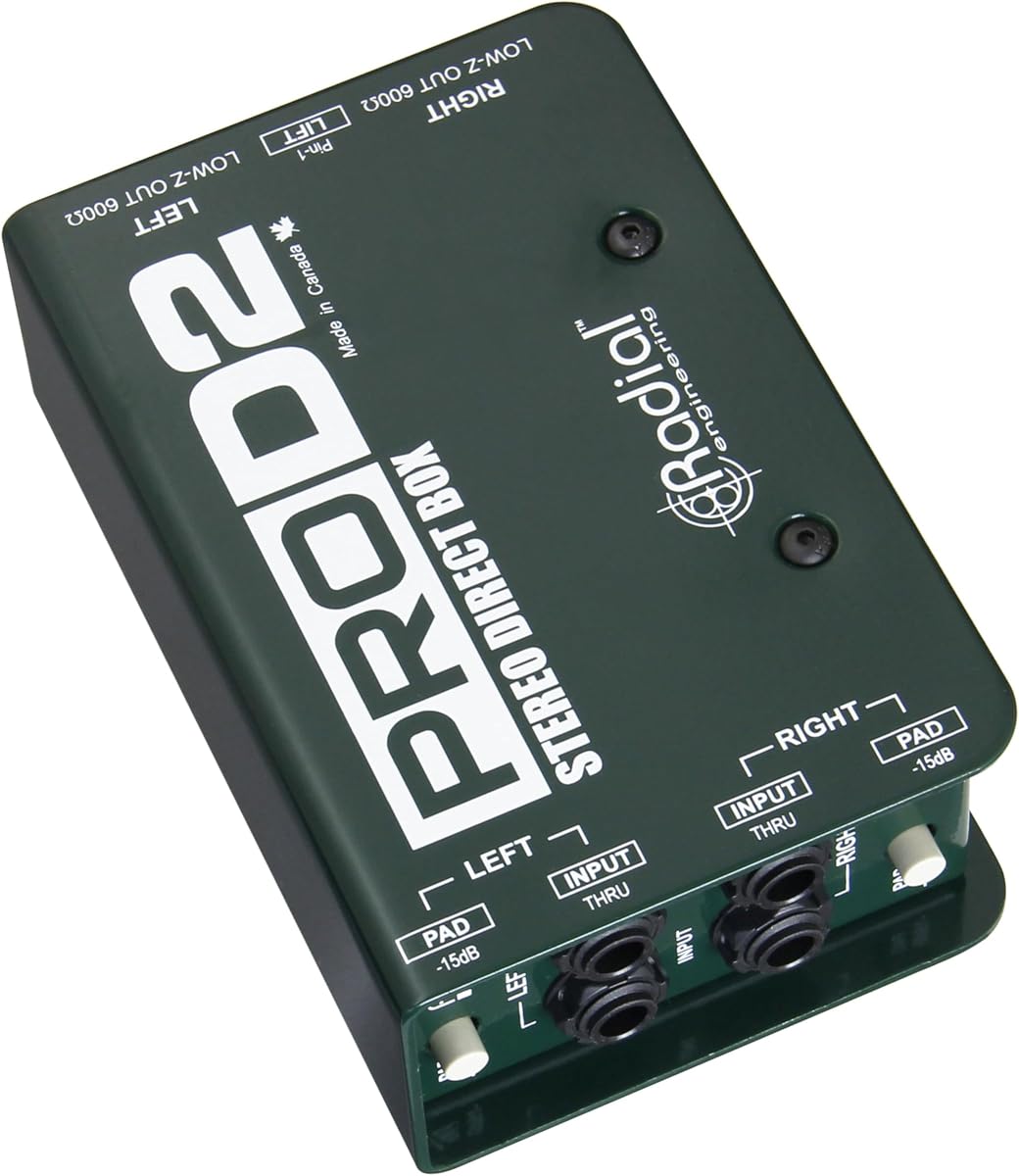
The Radial ProD2 Passive 2 Channel Direct Box is a premium choice for musicians needing stereo or dual-channel functionality. It holds a 4.8 rating due to its high-quality isolation transformers and durable construction. This box allows you to run two instruments simultaneously with clarity.
We may earn a commission when you buy through this link, at no additional cost to you.
Each channel features a dedicated isolation transformer which prevents ground loops and noise. The 15dB pad helps manage high-level signals to avoid distortion. It is built to withstand the rigors of touring and professional recording environments.
The price reflects its premium status, which may not be necessary for simple mono setups. Additionally, while passive, it is robust enough for active environments where phantom power might be present. Users appreciate the flexibility it offers for keyboardists and multi-instrumentalists.
If you need a reliable dual-channel solution that maintains stereo separation, this is the top pick. It is suitable for professional studios and live stages where audio fidelity is paramount. Investing in this unit ensures you have a versatile tool for complex setups.
Connect two instruments at once without sacrificing sound quality or channel separation.
Transformers in each channel effectively isolate signals to reduce noise and hum.
We may earn a commission when you buy through this link, at no additional cost to you.
The Pyle PDC21 Direct Injection Audio Box is a robust unit designed for clean audio transmission. It features an all-steel chassis which adds durability compared to plastic alternatives. This box includes a hum eliminator and ground lift adapter to reduce interference.
We may earn a commission when you buy through this link, at no additional cost to you.
It is suitable for connecting keyboards, guitars, and basses to main PA systems. The impedance transformer ensures balanced signals for long cable runs. Users find it helpful for sampling old records or connecting consumer stereo systems.
While it shares many features with other Pyle models, the steel construction is a notable upgrade. It is a good mid-range option for those who want more strength than budget units offer. However, it lacks advanced controls found in professional gear.
This model is ideal for home recording or small venue use. It provides reliable performance without a high cost. If you need a sturdy box that handles unbalanced-to-balanced conversion well, this is a good candidate.
The all-steel chassis ensures the unit can withstand regular handling and transport.
Includes specific features like hum eliminators to clean up noisy signal paths.
We may earn a commission when you buy through this link, at no additional cost to you.
The Whirlwind IMP 2 Direct Box is praised for its excellent sound quality in an economical package. It uses a TRHL transformer that is riveted to the chassis for durability. This design ensures a reliable connection that resists physical stress during use.
We may earn a commission when you buy through this link, at no additional cost to you.
It converts unbalanced instrument signals to balanced mic level outputs effectively. Users appreciate its small footprint which fits easily on crowded pedalboards or racks. It is a great choice for those needing professional quality without high costs.
One limitation is the lack of a ground lift switch which might be needed for noisy environments. Also, the layout is simple which might lack flexibility for advanced users. Despite this, its performance is consistent and trusted by many professionals.
If you want a simple, no-nonsense box that sounds great, this is a strong option. It is perfect for bassists who need a single-channel solution. The build quality is impressive for the price point.
The transformer is riveted to the chassis instead of glued for long-term durability.
A small design that fits easily on pedalboards without taking up space.
We may earn a commission when you buy through this link, at no additional cost to you.
The PYLE-PRO PDC22 Direct Box is a versatile option that offers two channels for connectivity. It includes a hum eliminator and input attenuator for basic signal management. The steel chassis provides a degree of durability against wear and tear.
We may earn a commission when you buy through this link, at no additional cost to you.
This unit is useful for connecting multiple instruments to a mixing system. It supports both balanced and unbalanced connections. Users find it helpful for live sound recording applications where quick connections are needed.
However, it is still a budget unit so expect simpler controls. It may not offer the same level of isolation as premium brands. The two channels are useful but should not be expected to handle complex routing.
For those needing multiple inputs at a low cost, this is a reasonable choice. It is suitable for home studios or small gigs. Ensure you check connector compatibility before purchasing.
Allows for connecting two instruments or processors to a single box.
Features basic controls like attenuators to manage input signal levels effectively.
We may earn a commission when you buy through this link, at no additional cost to you.
The Bolanle DB2 Passive 2-Channel DI Box is designed for bassists and guitarists needing stereo output. It features a ground lift switch and signal attenuation switch with multiple settings. This makes it versatile for different instruments and studio setups.
We may earn a commission when you buy through this link, at no additional cost to you.
It ensures clear, accurate sound for live performances and studio mixing. The XLR balanced output maintains signal integrity over long distances. Users find it useful as a reamp box or stereo DI for keyboards.
The durable design is scratch-resistant and rust-proof for touring. However, the price is higher than single-channel budget boxes. The build is solid but does not reach the premium level of brands like Radial.
If you need two channels without breaking the bank, this is a strong candidate. It works well for studio recording and live use. Check the attenuation settings to see if they fit your needs.
The attenuation switch allows you to prevent signal overload across various inputs.
XLR outputs ensure superior anti-interference for both studio and live environments.
We may earn a commission when you buy through this link, at no additional cost to you.
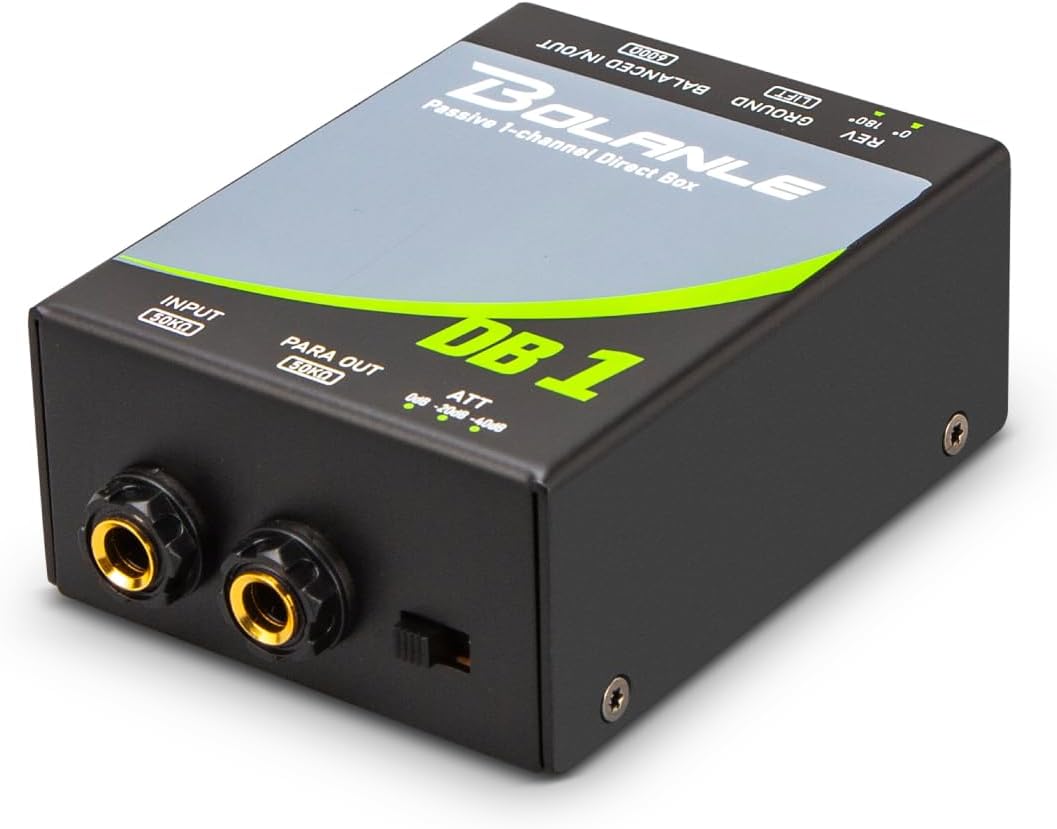
The Bolanle DB1 Passive 1-Channel DI Box provides high-fidelity signal conversion without external power. It includes a built-in feedback eliminator and hum eliminator for clean recordings. The dual mode functionality allows for adjusting signal levels and preventing overload.
We may earn a commission when you buy through this link, at no additional cost to you.
It offers both balanced XLR output and parallel output for guitar amps. This makes it easy to connect to various devices without compromising sound quality. The scratch-resistant design is built to withstand frequent use and touring.
While it lacks multiple channels, it is a reliable unit for mono setups. The lack of power supply makes it simple to use anywhere. Users appreciate the balanced output for long cable runs.
For bassists who need a simple, passive unit for live or studio work, this is a good choice. It is cost-effective and durable. Verify it meets your output requirements before purchasing.
Requires no power supply making it easy to use anywhere without batteries.
Includes a parallel output for direct connection to guitar amps simultaneously.
We may earn a commission when you buy through this link, at no additional cost to you.
The Bolanle J22 Direct Active Stereo DI Box stands out with three power options including USB. It runs stereo keyboards or dual-output synths through a single compact unit. The dual XLR outputs maintain full stereo separation for accurate sound.
We may earn a commission when you buy through this link, at no additional cost to you.
It includes a ground lift switch to break ground loops and reduce interference. The metal housing is designed to withstand the road and harsh environments. Users find it versatile for live stages and rehearsal rooms.
While it requires power, the flexibility of battery or USB ensures it works anywhere. It is priced affordably compared to boutique DI boxes. The active design may not be suitable for passive-only setups.
If you need an active box with multiple power options, this is a strong contender. It is ideal for keyboardists and multi-instrumentalists. Check power availability at venues to ensure compatibility.
Supports phantom power, battery, and USB ensuring it works in any setting.
Dual outputs maintain left/right separation for accurate stereo reproduction.
We may earn a commission when you buy through this link, at no additional cost to you.
The Radial Pro48 Active 48-Volt Compact Direct Box is a professional-grade unit for active setups. It features a -15dB pad for passive guitars and basses. The compact design fits easily in racks or pedalboards without sacrificing performance.
We may earn a commission when you buy through this link, at no additional cost to you.
It ensures high-resolution sound conversion for studio and live applications. Users appreciate the reliability of the Radial brand. The phantom power support makes it ideal for modern mixing consoles.
As an active unit, it requires power to function which limits use in passive-only setups. However, for those with phantom power available, it offers excellent sound quality. It is built to professional standards.
If you need a compact active box for professional environments, this is a top choice. It is suitable for touring and recording. Ensure your console provides 48V power for this unit.
The compact form factor fits easily in racks and small pedalboards.
Uses phantom power to deliver high-resolution active signal conversion.
We may earn a commission when you buy through this link, at no additional cost to you.
Selecting the right direct box depends on your specific needs regarding power, channels, and build quality. This section outlines key factors to consider before making your purchase.
Passive units do not require external power and use transformers to convert signals. They are simple and reliable but may not handle high impedance as well as active models. Active units require power but provide better signal conditioning for weak sources.
Consider how many inputs you need for your setup. Single-channel boxes are sufficient for bassists but dual-channel models allow for stereo keyboards or multiple instruments. Ensure the outputs support your desired routing configuration.
Look for metal chassis and durable connectors that can withstand touring. Steel construction often provides better shielding against interference. The weight may vary so consider portability for live performance needs.
Verify that the inputs and outputs match your instruments and mixer. Standard 1/4 inch and XLR connectors are common. Some units offer parallel outputs which can be useful for connecting to guitar amps simultaneously.
Features like ground lift switches and attenuators help manage noise and levels. Ground lift eliminates hum caused by ground loops. Attenuators prevent clipping from high-level signals which is crucial for bass guitars.
Active boxes may need batteries, phantom power, or USB. Ensure you have access to these power sources at your venue. Passive units are more versatile as they require no external power source.
Prices vary widely from budget models to professional units. High-end boxes offer better sound quality and durability but cost more. Determine your priorities to find a balance between cost and performance.
Transformers are key to converting impedance and isolating signals. Custom transformers in higher-end models often provide clearer sound. Check reviews to ensure the transformer does not color the tone negatively.
Connect your bass to the input using a standard instrument cable. Plug the balanced output into your mixer or interface using an XLR cable. Ensure all connections are secure to avoid signal dropouts during performance.
A direct box converts the unbalanced high-impedance signal from your bass to a balanced low-impedance signal. This allows you to connect your bass directly to a mixer or recording interface. It also helps reduce noise and hum over long cable runs.
Yes, a direct box is highly recommended for recording to ensure clean signal levels and impedance matching. It allows you to capture a direct tone of your instrument without interference. This is crucial for achieving professional sounding tracks.
Most direct boxes are designed to handle guitars as well as basses. They work by matching impedance which applies to most electric instruments. Check the specific frequency response if you need specialized tone shaping.
Phantom power is voltage supplied by mixers to power active devices. Active direct boxes require this to function correctly. Passive boxes do not need phantom power but will work if it is present.
Ground lifting switches disconnect the ground connection to eliminate hum loops. Activate this switch if you hear a buzzing noise when connected to a mixer. It is a simple fix for many noise issues in live setups.
It depends on your setup and needs. Passive boxes are simpler and do not need power making them reliable. Active boxes handle impedance better and can provide more control. Choose based on your specific requirements.
High-quality direct boxes aim to preserve tone while converting signals. Poor units may color the sound or add noise. Look for units with custom transformers to ensure transparency.
A pad reduces the input signal level to prevent clipping. This is useful when connecting high-output instruments. It ensures clean sound even with aggressive playing styles or effects.
We have explored ten top options ranging from budget-friendly units to professional-grade gear. The Radial ProDI and ProD2 stand out for durability and sound quality. For budget-conscious players, the Pyle Premium and Bolanle models offer solid value.