
Superflex 3D Printer Resin
4.4Editor score
Fast printing speed
Balanced softness
ISO certified safe
This guide compares the top flexible resins for 3D printing to help you choose the best material for your projects based on flexibility, strength, and print
Flexible resin for 3D printing opens up a world of possibilities for creators who need parts that can bend, stretch, or absorb shock. Unlike rigid materials, these specialized photopolymers mimic rubber or TPU properties, allowing for functional prototypes and durable end-use parts.
We have evaluated the leading flexible resins on the market by analyzing their shore hardness, elongation at break, print speed, and overall durability. Our comparison focuses on real-world performance metrics that matter most to hobbyists and professionals alike.
Each pick in this guide highlights unique strengths, from budget-friendly options to high-performance engineering materials. Prices and availability change frequently, so always check the current listings before making your final purchasing decision.
4.4Editor score
4.7Editor score
4.2Editor score
The following table provides a side-by-side comparison of the ten top flexible resins, highlighting their key specifications and ideal use cases to help you find the perfect match for your printer and project needs.



The Superflex 3D Printer Resin stands out as an affordable entry point for those needing flexible parts. With a rating of 4.4 stars, it delivers consistent results for users looking to simulate rubber properties without breaking the bank.
We may earn a commission when you buy through this link, at no additional cost to you.
Its standout feature is the rapid print speed, capable of laying down 50um layers in just 1.7 seconds on monochrome LCD printers. This speed boosts productivity significantly, making it ideal for farms or users needing multiple iterations quickly.
While it offers excellent shock absorption and cushioning capabilities due to its 80A shore hardness, the smaller bottle size means frequent refills for large projects. Additionally, the clear color might not be ideal if you need opaque black parts immediately.
This resin is perfect for hobbyists and small businesses needing reliable, fast printing for damping or cushioning prototypes. If you prioritize speed and cost-effectiveness, Superflex is a strong contender for your printer.
Prints are completed much faster than standard resins, saving time and electricity costs for high-volume production runs.
Passes ISO 10993-5 tests when properly cured, ensuring the material is safe for handling post-processing and use.
We may earn a commission when you buy through this link, at no additional cost to you.
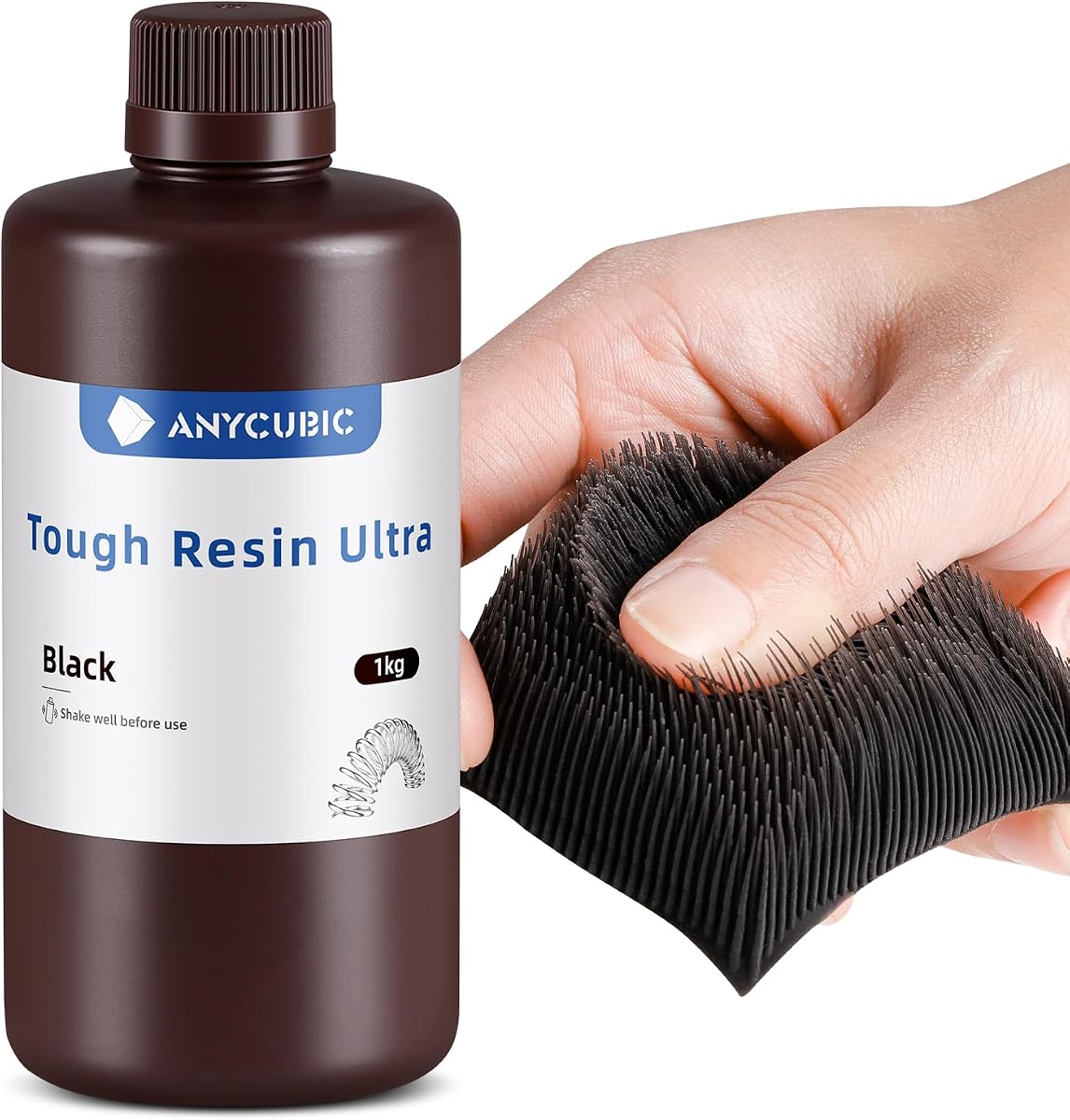
The ANYCUBIC Ultra Tough Resin earns our top spot with a 4.7 rating, offering a blend of impact resistance and flexibility that is hard to match. It excels in creating articulated models and parts that require frequent movement.
We may earn a commission when you buy through this link, at no additional cost to you.
Its resilience is remarkable; parts snap back to shape after deformation and resist damage from drops. The formula is non-irritating to skin, making it safer for wearable items like earphone covers or cosplay accessories.
While it works well as an additive to toughen other resins, mixing colors can sometimes alter the final shade unpredictably. Users must ensure thorough cleaning to avoid stickiness, though the finish is generally smooth.
Buyers seeking a versatile, high-performance resin for wearable or moving parts will find this material exceptionally reliable. Its durability in humid conditions makes it a robust choice for various environments.
The cured surface feels soft and non-irritating, which is critical for items that sit against the skin for long periods.
Enables smooth movement in articulated joints, facilitating interchangeability of parts without cracking or wear.
We may earn a commission when you buy through this link, at no additional cost to you.
Despite a lower average rating, the SUNLU Flexible Resin offers impressive technical specs with 135% elongation at break. It provides a balanced simulation of rubber-like strength and softness for durable prototypes.
We may earn a commission when you buy through this link, at no additional cost to you.
Its high impact resistance means models can withstand drops without breaking, while the low shrinkage rate ensures accurate dimensions after curing. The pleasant, non-pungent odor makes it comfortable for home environments.
However, the lower rating suggests that users might experience variability in print results or require careful tuning of exposure settings. It works well for standard 3D printers but may need optimization for best results.
Those needing a large volume of gray flexible parts at a reasonable price will appreciate this option. Its stability against weak acids makes it suitable for specific industrial applications requiring chemical resistance.
The material resists weak acids and greases, preventing deformation in environments where standard resins might degrade.
Low shrinkage ensures the final printed part matches the design dimensions closely, crucial for fit parts.
We may earn a commission when you buy through this link, at no additional cost to you.
Siraya Tech Tenacious Flex Black brings an enhanced level of rubber-like softness compared to its predecessor. It is praised for its incredible elasticity and ability to withstand extreme bending without permanent deformation.
We may earn a commission when you buy through this link, at no additional cost to you.
The material recovers its shape quickly after compression, making it suitable for dynamic applications like shock-absorbing components or soft grips. Its high impact resistance ensures parts remain durable even under stress.
While it is an excellent additive to increase toughness in other mixes, users should note it behaves differently than the classic Tenacious resin. Exposure times may need adjustment to avoid under or over-curing issues.
For creators needing highly flexible, resilient parts that behave like soft rubber, this resin delivers exceptional performance. Its specialized formulation makes it a top choice for engineering prototypes requiring high elasticity.
Designed for models that move often, such as articulated joints that need to flex repeatedly without fatigue.
The soft, pliable nature works well for seals and gaskets that need to conform to irregular shapes.
We may earn a commission when you buy through this link, at no additional cost to you.
The ANYCUBIC Tough Resin 2.0 focuses on upgrading flexural strength to resist breakage in thin models. It offers a balanced mix of toughness and flexibility that suits industrial spare parts and rigid components.
We may earn a commission when you buy through this link, at no additional cost to you.
Its low-odor formulation improves user comfort during long print sessions, and the reduced volatile organic compounds make it a greener option. Models printed with this resin handle drops better than standard versions.
While it is flexible enough to resist cracking, it is not as soft as dedicated rubber-like resins. Users needing extreme elasticity might find it slightly too rigid for specific cushioning tasks.
Ideal for makers building durable prototypes or industrial models that require precision and resistance to cracking, this resin is a reliable upgrade. Its stability in high humidity ensures consistent performance over time.
Particularly useful for parts subjected to cyclic vibrations, reducing stress marks and peeling issues.
Reduced volatile organic compounds offer a cleaner and safer printing environment for workshop users.
We may earn a commission when you buy through this link, at no additional cost to you.
SUNLU High Toughness Resin provides significant elasticity, boasting elongation five times higher than standard resins. This makes it an excellent choice for structural parts that need to be bendable and unbreakable.
We may earn a commission when you buy through this link, at no additional cost to you.
Its low viscosity and high flowability lead to shorter curing times and easier model formation. Users report high accuracy and crisp details due to minimal distortion during the curing process.
While the grey color is standard for this product line, it may require painting for aesthetic projects. Cleaning is straightforward with alcohol, though proper ventilation is recommended to manage any odor.
For users wanting a robust, flexible material for structural components without the premium price tag, this resin is a strong contender. Its stability ensures that printed parts remain durable and crack-free.
Designed for parts that need to handle stress without breaking, making it ideal for tools and fixtures.
The low shrinkage rate significantly improves the likelihood of successful prints without cracking during wash.
We may earn a commission when you buy through this link, at no additional cost to you.
ELEGOO Tough Resin offers a unique profile with a Shore hardness of 84.7D, which is stiffer than typical flexible resins but still offers significant resilience. It is designed for high-performance models and structural parts.
We may earn a commission when you buy through this link, at no additional cost to you.
Its exceptional toughness allows it to withstand certain tension and stress, recovering quickly from deformation. Parts can be drilled without cracking, which is a key advantage for functional engineering prototypes.
While it is labeled as tough and flexible, its high hardness might be too rigid for applications needing soft rubber properties. However, for tools and fixtures, it provides necessary durability without brittle failure.
If you need a resin for end-use products that must endure physical stress and impact, this is a top choice. Its weather resistance ensures it performs well even in humid or extreme temperature conditions.
Suits projects like jigs, fixtures, and tool casings that require rigidity and resistance to physical damage.
The fine texture and resistance to softening make it reliable for diverse manufacturing environments.
We may earn a commission when you buy through this link, at no additional cost to you.
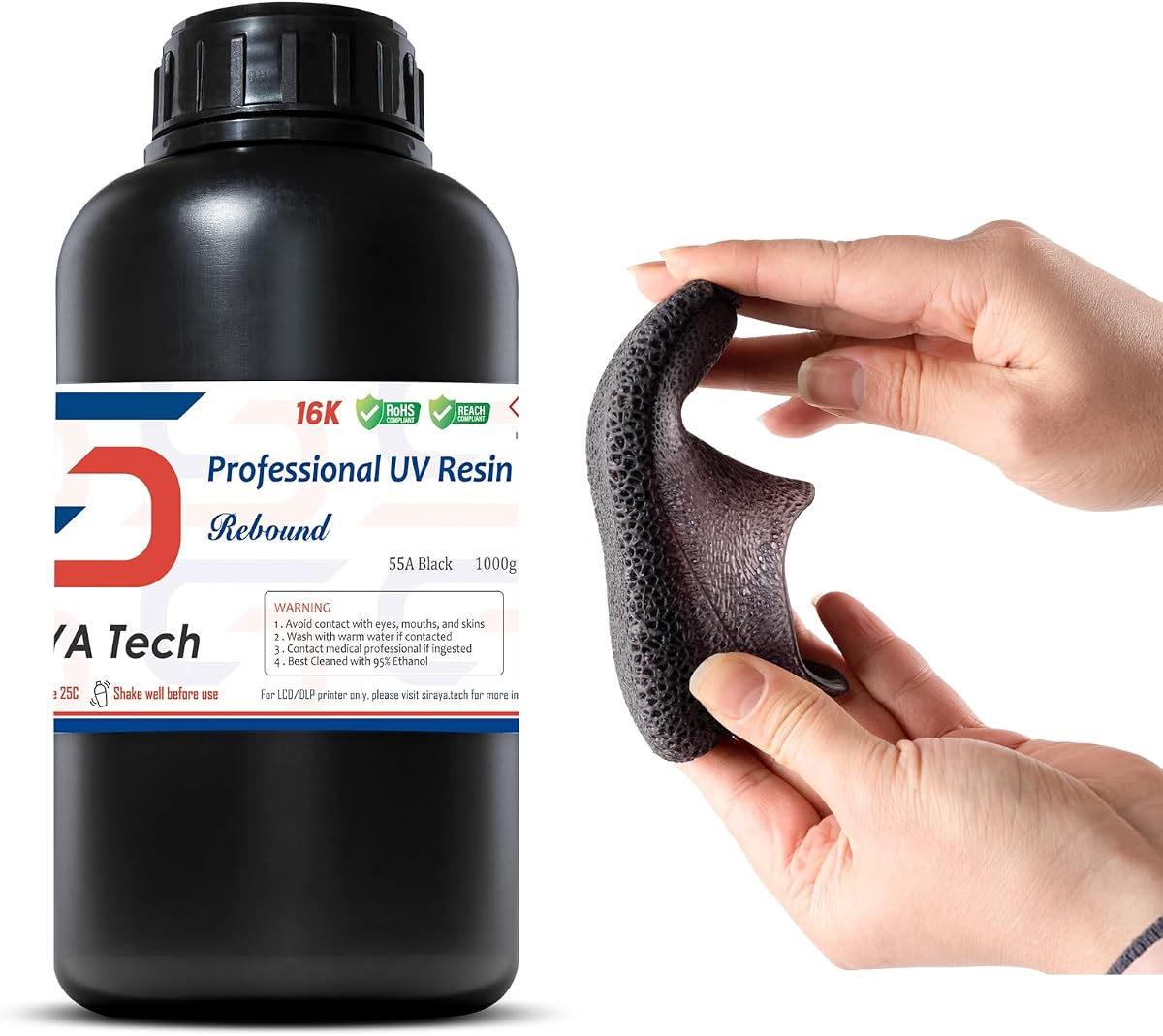
The Rebound 55A resin offers a unique balance of softness and structural integrity with its 55A Shore Hardness. It is designed for applications where quick shape recovery is critical, like shock-absorbing components.
We may earn a commission when you buy through this link, at no additional cost to you.
Unlike other elastomers that need mixing, this prints on standard LCD and DLP printers and cleans with standard isopropyl alcohol. This simplicity makes it accessible for hobbyists wanting advanced material properties.
While initial testing shows good resilience, long-term performance data is still being gathered. Its premium price reflects its specialized nature, but it offers significant value for specific prototyping needs.
Buyers looking for personal protective equipment prototypes or high-elasticity parts will find this material indispensable. Its ease of use and lack of special requirements make it a standout in the flexible category.
No special cleaning or mixing required, simplifying the workflow for standard 3D printing setups.
Well-suited for creating protective gear prototypes where elasticity and rebound performance are vital.
We may earn a commission when you buy through this link, at no additional cost to you.
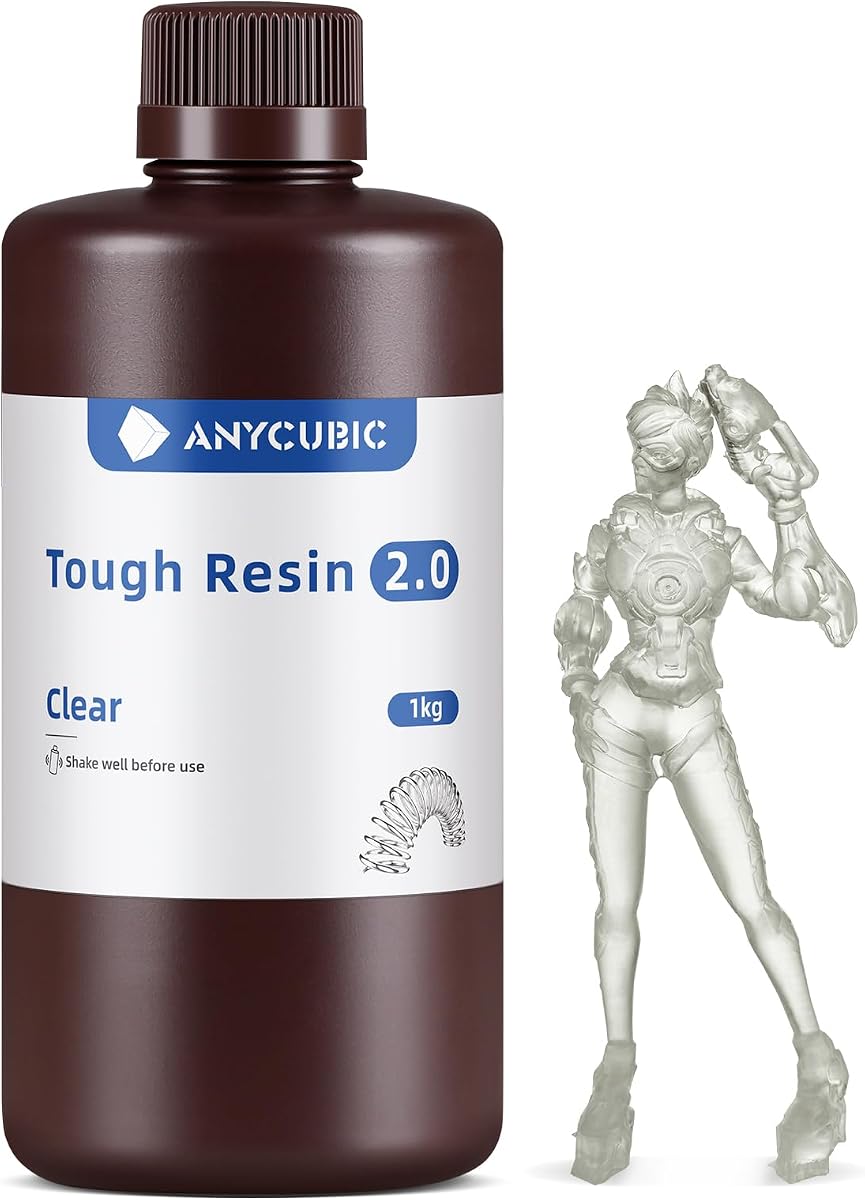
ANYCUBIC Tough Resin 2.0 Clear brings high precision and toughness to clear printing needs. It reduces the risk of breakage in thin models while maintaining exceptional stretch properties.
We may earn a commission when you buy through this link, at no additional cost to you.
Its low-odor formulation creates a pleasant printing environment, and the minimal shrinkage ensures high-quality results for detailed parts. It is widely compatible with most LCD and DLP printers on the market.
While clear resins often show dust or defects more easily, the strength of this material compensates by allowing durable prototypes. Proper post-curing is essential to achieve maximum transparency and strength.
This resin is perfect for technical applications or aesthetic projects where clarity and toughness are required. Its versatile applications make it a solid choice for both industrial and maker designs.
Offers a unique combination of visual clarity and the structural integrity needed for functional clear parts.
Supports intricate designs without breaking, making it suitable for small components and delicate models.
We may earn a commission when you buy through this link, at no additional cost to you.
This resin simulates the toughness of rubber with a 90A Shore Hardness, allowing parts to fold and bend repeatedly without breaking. It is designed for real-world use cases like shoe soles and protective cases.
We may earn a commission when you buy through this link, at no additional cost to you.
Its formula delivers crisp, accurate prints while maintaining flexibility. The tear resistance ensures parts remain functional under repeated stress, making it ideal for functional prototypes and consumer products.
While it is robust, the 90A hardness means it is stiffer than softer options, which might limit its use for very soft cushioning. Proper ventilation is still recommended due to the chemical nature of UV resins.
Engineers and designers looking for reliable, durable flexible parts for wearables or toys will appreciate this option. It bridges the gap between rigid toughness and flexible utility effectively.
Specifically formulated for items like shoe soles and ergonomic grips that face repeated wear and tear.
High precision allows for detailed designs even in flexible parts, which is often a challenge with softer resins.
We may earn a commission when you buy through this link, at no additional cost to you.
Selecting the right flexible resin involves understanding key properties like shore hardness, elongation, and chemical resistance. This guide helps you weigh these factors to match the resin to your specific project needs.
Shore hardness indicates how soft or stiff the cured resin feels. Lower values like 55A or 70A mean softer, more rubber-like parts, while higher values like 90A offer tougher, less flexible structures. Choose based on whether you need a soft cushion or a durable grip.
Always check the shore rating before buying to ensure it meets your softness requirements.
Elongation measures how much the material can stretch before breaking. High elongation percentages mean the part can bend significantly without cracking, which is vital for moving parts or wearables. Look for values above 100% for flexible applications.
Higher elongation values guarantee better resistance to snapping under stress.
Ensure the resin wavelength matches your printer, typically 405nm for modern LCD printers. Some resins are optimized for specific printer types or may require adjusted exposure settings. Always check the compatibility list provided by the manufacturer.
Verify wavelength compatibility to avoid failed prints due to incorrect curing.
Flexible resins can emit odors or irritate skin. Look for low-odor formulations and non-irritating certifications. Proper ventilation and protective gear are essential during handling and post-processing to ensure safety.
Prioritize low-odor and certified safe materials for comfortable printing environments.
If your part will be used in environments with chemicals or oils, check for resistance ratings. Flexible resins that resist corrosion or weak acids will last longer in industrial or outdoor settings.
Choose chemically resistant resins for parts exposed to harsh substances.
Flexible resins often need longer curing times or specific cleaning solutions to achieve optimal properties. Some may require dual-curing methods or specific UV exposure to reach maximum hardness. Follow manufacturer instructions precisely.
Follow proper curing protocols to ensure the part reaches its intended flexibility and strength.
Flexible resins come in various colors but are often opaque. Clear versions might yellow over time or show dust easily. If aesthetics matter, consider painting or selecting a color that fits your design vision.
Select colors that match your project goals or plan for post-print painting.
Price varies based on bottle size and brand. While bulk buys might save money, ensure you have the storage conditions to prevent degradation. Smaller bottles are better for testing before committing to large volumes.
Balance cost and volume to ensure you have enough material without waste.
Before printing, shake the resin bottle thoroughly to ensure all components are evenly mixed. Flexible resins can settle over time, so a good shake ensures consistent viscosity and print quality.
Use proper exposure settings based on the manufacturer's recommendations. Over-curing can make parts brittle while under-curing can leave them sticky. Experiment with test prints to find the perfect balance for your printer.
After printing, wash parts with isopropyl alcohol and cure them under UV light. Flexible parts may need slightly longer curing times to ensure they are fully hardened and durable for long-term use.
Flexible resins are generally safe when handled with proper protective gear like gloves and masks. Always ensure your workspace is well-ventilated to avoid inhaling fumes. Look for low-odor formulations and non-irritating certifications for extra peace of mind.
Flexible resins are designed for LCD, DLP, and SLA printers. They are not compatible with FDM filament printers. Check the resin's wavelength requirement to ensure it matches your printer's light source, usually 405nm.
Avoid over-curing, which can make flexible parts brittle. Follow the recommended exposure times and ensure proper cleaning to remove uncured resin. Post-curing should be done carefully to maintain flexibility.
Flexible resin typically lasts 12 to 18 months if stored properly. Keep the bottle in a cool, dark place away from UV light to prevent premature curing. Seal the lid tightly after each use to avoid contamination.
Mixing is possible but requires care. Use small amounts of flexible resin to boost toughness in standard resins. Ensure both resins have compatible wavelengths and chemical bases to avoid printing issues.
Yes, flexible parts can be painted after full curing. Use flexible paints or primers that can stretch with the part. Properly washed and cured surfaces provide better adhesion for paint and finishes.
Sticky parts usually indicate incomplete curing. Extend your UV exposure time or ensure you are using the correct intensity. Make sure to clean parts thoroughly with alcohol before curing to remove residual resin.
Flexible parts often require supports, especially for overhangs. However, removal can be tricky without tearing. Use minimal supports and design your model to reduce support needs where possible.
Our top picks include the ANYCUBIC Ultra Tough Resin for versatility and the Siraya Tech Rebound 55A for high elasticity. For budget users, the Superflex resin offers excellent value with fast print speeds.
Prioritize shore hardness and elongation based on your project requirements. If you need soft rubber-like parts, go for lower shore numbers, but for durable tools, higher hardness is better.
Always check current prices and availability as they fluctuate frequently. Choosing the right resin ensures your printed parts are functional, durable, and safe for their intended use.