
Sipeed Tang Nano 20K
4.5Editor score
20K LUT4 logic cells
Open source RISC-V
Compact single board design
This guide compares the top FPGA retro consoles for 2026, evaluating performance, compatibility, and features to help you find the perfect device.
FPGA retro consoles offer unparalleled emulation quality through hardware-level processing. These devices recreate original hardware behavior for authentic gameplay experiences across classic systems.
We evaluated ten top models based on FPGA capacity, connectivity options, and developer support. Our analysis covers everything from portable handhelds to powerful desktop boards.
Each pick highlights specific strengths for different user needs. Prices fluctuate frequently so verify current listings before purchasing your ideal retro gaming solution today.
4.5Editor score

4.5Editor score

5.0Editor score
The following table provides a side-by-side overview of specifications and key features across all ten selected FPGA retro consoles for easy comparison.

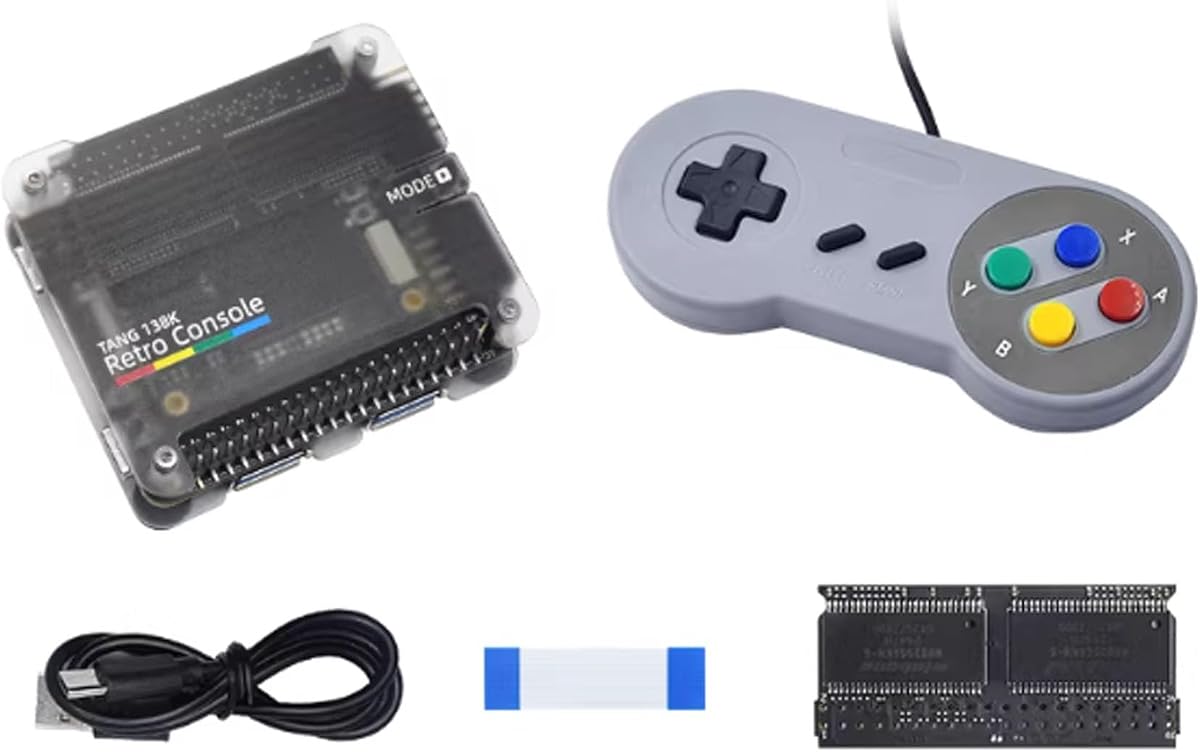


The Sipeed Tang Console 138K stands out as a premier FPGA retro console option. It offers significant logic resources for accurate emulation. Its versatility suits both hobbyists and developers.
We may earn a commission when you buy through this link, at no additional cost to you.
With 138K LUT4 capacity this board handles demanding cores like Amiga or Dreamcast. Dual PMOD ports allow extensive peripheral customization. HDMI output ensures crisp visuals on modern displays.
Users must configure software manually which may challenge beginners. No preloaded ROMs mean you manage your own game library. These steps ensure full control over the system.
Buy this if you want raw FPGA power and expansion. It is ideal for custom hardware projects too. The Pi 5 HAT feature adds extra value for Linux users.
Dual PMOD interfaces enable connections to audio modules or controller extensions easily.
Designed as a PCIe HAT for Raspberry Pi 5 enabling hybrid computing capabilities.
We may earn a commission when you buy through this link, at no additional cost to you.
This console combines powerful FPGA performance with robust development tools. It features a Tang Mega SOM and BL616 MCU for flexible operation. Ideal for those exploring FPGA programming deeply.
We may earn a commission when you buy through this link, at no additional cost to you.
Features include USB3.0 HDMI output and multiple PMOD ports. You can run firmware on the BL616 MCU for debugging purposes. Small size allows easy integration into various setups.
Setting up IDE programming needs some technical familiarity. It is not plug and play like traditional consoles. This barrier exists to provide maximum customization freedom.
Choose this if you want to learn FPGA development. It suits users building custom projects too. The developer kit provides everything needed for experimentation.
USB3.0 ports enable fast data transfer for controllers and storage devices.
Pre-configured cores include NESTang SNESTang and GBATang for classic games.
We may earn a commission when you buy through this link, at no additional cost to you.
This 138K model balances size and performance effectively. It measures just half the size of MiSTer while maintaining high power. Fanless design ensures quiet gaming sessions anywhere.
We may earn a commission when you buy through this link, at no additional cost to you.
RISC-V AE350 hardcore enables Linux system runs. It supports more game cores and applications than smaller boards. Dual 40 pin GPIO add great flexibility for customization.
You might need to buy a battery separately for portability. The setup relies on external controllers not built-in ones. This keeps costs lower for desktop users.
Select this for silent portable capable FPGA solutions. It fits well in small enclosures easily. The RISC-V integration opens many software possibilities too.
Fanless operation allows use in quiet environments without noise.
Dual 40 pin interfaces support custom switches or sensors directly.
We may earn a commission when you buy through this link, at no additional cost to you.
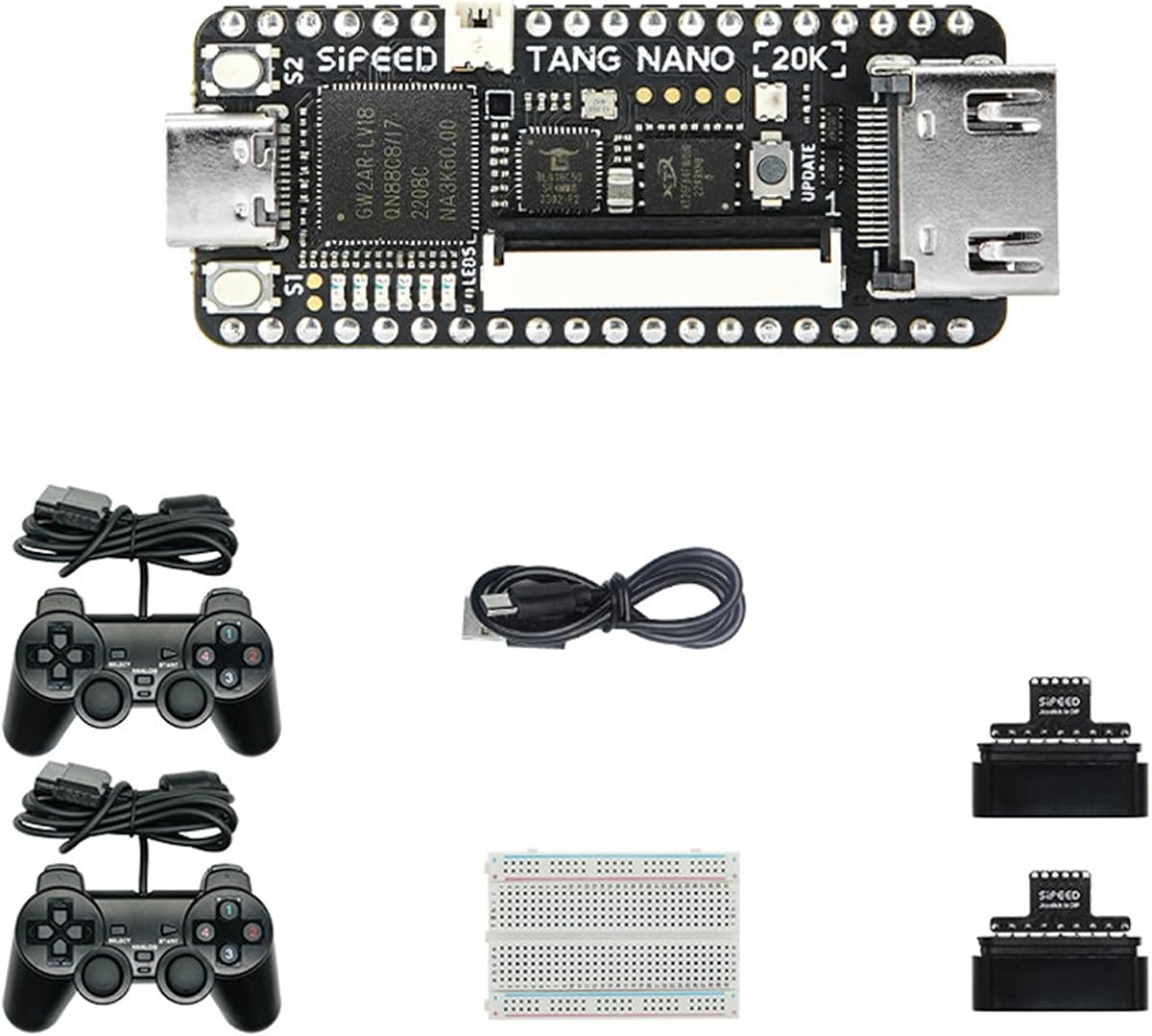
This Tang Nano 20K offers entry into FPGA retro gaming affordably. It provides 20K LUT4 logic cells for classic NES or SNES games. Perfect for beginners exploring hardware coding.
We may earn a commission when you buy through this link, at no additional cost to you.
Features 64Mbits SDRAM for smooth operation. The onboard debugger supports JTAG and USB to UART communication. It enables RGB screen driving too for portable setups.
Logic limit restricts heavier systems like PlayStation emulation. Audio might need external DACs for premium quality. These limits fit budget-conscious hobbyist needs well.
Ideal for students or casual FPGA learners. The open source nature invites community support. You gain powerful tools at minimal financial cost.
Full access to wiki docs and community forums for learning.
Run RISC-V soft cores for educational computing projects.
We may earn a commission when you buy through this link, at no additional cost to you.
This Kit variant simplifies setup for retro players. It comes with RISC-V Linux system pre configured. You save time on initial development and configuration steps.
We may earn a commission when you buy through this link, at no additional cost to you.
BL616 chip provides download and debug capabilities. Two internal PLLs support varied clock needs. DSP units help with accelerated digital computation tasks.
You still need to add controllers manually. Documentation differs based on community contributions online. But the included Linux eases start times significantly.
Pick this for quick Linux retro system starts. It suits those wanting ready software environment. The hardware remains versatile for future custom upgrades.
Preloaded Linux system allows immediate software development tasks.
BL616 MCU simplifies FPGA code upload and error checks.
We may earn a commission when you buy through this link, at no additional cost to you.
This SBC focuses on display capabilities and open design. It supports multiple display outputs simultaneously for unique setups. Perfect for arcade cabinets or multi-screen retro projects.
We may earn a commission when you buy through this link, at no additional cost to you.
USB2.0 HS interface handles controller inputs smoothly. The FPGA chip offers many DSP units for processing. It runs NES emulator cores reliably on 20K LUT4.
You will manage firmware updates via SD card. Storage is limited without external memory expansion. These factors suit dedicated display-centric installations best.
Choose this for arcade cabinet or kiosk builds. The display support is a key differentiator. Open source tools encourage creative hardware integration.
Supports RGB screens and multiple display outputs simultaneously.
USB2.0 HS interface ensures lag-free controller response times.
We may earn a commission when you buy through this link, at no additional cost to you.
This handheld offers instant nostalgia without setup. It comes with over 300 classic 8-bit games preloaded. The credit card size fits easily in your wallet or pocket.
We may earn a commission when you buy through this link, at no additional cost to you.
USB-C connectivity enables head-to-head multiplayer battles. It is a gateway to STEM coding with Arduino IDE. Durable build ensures long lasting use on trips.
Graphics remain limited to 8-bit resolution only. Screen is small but high contrast OLED helps. This fits retro purists who prefer original fidelity.
Buy this for portable coding education or travel. It is a great gift for kids and adults. Community support ensures endless software expansion options.
I2C link cable allows direct console-to-console battles.
Low-power MCU delivers over 8 hours of continuous gameplay.
We may earn a commission when you buy through this link, at no additional cost to you.
This console delivers stunning visuals for retro games. It features 3.95-inch IPS screen with 1024×768 resolution. OCA lamination provides clear contrast and low glare.
We may earn a commission when you buy through this link, at no additional cost to you.
Hall joysticks ensure precise control without drift. 5000mAh battery lasts up to 5 hours play. Allwinner chip solves common frame dropping issues effectively.
It ships without a memory card included. You must add your own SD card manually. This keeps costs down but adds initial setup steps.
Ideal for gamers wanting visual fidelity. The joystick feedback enhances immersion greatly. Multilingual support suits global buyers easily.
1024×768 resolution delivers sharp vibrant classic game visuals.
Dual Hall joysticks provide accurate analog movement control.
We may earn a commission when you buy through this link, at no additional cost to you.
This console is known for out-of-the-box play. It includes a Linux system and preloaded games. You start playing instantly without complex configuration tasks.
We may earn a commission when you buy through this link, at no additional cost to you.
Ambernic hardware ensures smooth emulator performance. Linux OS allows customization of the interface. High customer ratings suggest reliable build quality.
Documentation might be less official than others. Battery performance depends on settings you use. This remains a strong option for beginners.
Select this for plug-and-play retro needs. It simplifies the initial gaming experience significantly. Community support covers most software expansion tasks.
Preloaded games allow immediate launch upon power up.
Linux OS lets you tweak interface settings easily.
We may earn a commission when you buy through this link, at no additional cost to you.
This PRO model is designed for premium enthusiasts. It features drift-free Hall Effect joysticks and custom OLED lighting. The display offers 324 PPI for sharp images.
We may earn a commission when you buy through this link, at no additional cost to you.
USB-C host port allows controller accessories. Battery supports charging while powered off. Linux 4.9 gives full library control to users.
You install ROMs yourself via TF card. It is more expensive than budget options but worth it. Haptic feedback adds immersion to gameplay.
Buy this for high-end portable gaming. The build quality justifies the investment. You get full control over your retro library.
Hall Effect joysticks eliminate mechanical drift for longevity.
USB-C host ports connect external controllers directly.
We may earn a commission when you buy through this link, at no additional cost to you.
Selecting the right FPGA console depends on your technical skills and game preferences.
Logic capacity measured in LUT4 cells determines which game cores you can run. Higher counts like 138K support complex systems like PlayStation or Dreamcast. Lower counts like 20K suit 8-bit classics like NES. Consider your target library before buying.
Choose higher capacity for diverse retro needs.
Ports like PMOD USB-C or GPIO let you connect controllers or sensors. Some boards include HDMI for TV displays while others use screens. Check if the device meets your connectivity needs. Expansion adds versatility to your setup.
Prioritize ports matching your preferred accessories.
Linux systems offer flexibility but require setup skills. Preinstalled games simplify use but may lack customization. Decide if you want a custom or plug-and-play experience. OS choice affects maintenance and updates.
Linux suits developers while presets suit casuals.
Size and battery life matter for handheld use. Some boards are desktop only while others fit pockets. Look for battery options if you travel. Compact designs add convenience everywhere.
Check physical dimensions for your travel needs.
Active communities provide cores firmware and troubleshooting. Open source projects often have better long term support. Check forums and wikis before buying. Strong support saves time fixing issues.
Research community activity for long term ease.
Resolution and panel type affect visual experience. IPS screens give wide angles for handhelds. HDMI ensures crisp output on TVs. Good display reduces eye strain during play.
Match screen specs to your viewing habits.
Hall Effect joysticks avoid drift compared to mechanical ones. Vibration motors add tactile feedback for immersion. Button layouts should fit your hands well. Quality controls enhance the gaming feel.
Look for durable switches and ergonomic layouts.
Internal storage limits how many games you keep. SD or TF slots allow expansion. Check supported sizes for your library. More space means fewer swapping hassles.
Verify card slot limits before purchase.
First initialize the software by flashing the latest firmware via USB or microSD. Follow official guides to avoid errors during setup.
Second organize your ROMs into folders matching emulator names for easy launching. Use legal backups of games you own.
Third maintain the device by keeping vents clear of dust and avoiding extreme temperatures. Charge batteries fully before long trips to prolong lifespan.
FPGA consoles use hardware logic to mimic original hardware behavior resulting in zero latency and perfect compatibility. Software emulators often have timing inaccuracies. This makes FPGA ideal for arcade and speedrun precision.
Basic users can run preloaded cores without coding. Developers can modify firmware using FPGA tools. Most consoles include wikis for guidance. Skills depend on how much customization you want.
The Sipeed Tang Console 138K works as a PCIe HAT for Raspberry Pi 5. This hybrid setup adds GPIO access for Linux. It is unique among the listed options.
Most support USB controllers via standard protocols. Some include PMOD for custom wiring. Check the specific port list. Compatibility is broad for standard USB devices.
Many support USB controllers for local multiplayer. The Arduboy FX-C offers unique USB-C link cable multiplayer. You may need external controllers for split screen play.
Updates usually happen via microSD card or USB connection. Official wikis provide the latest files. Always backup settings before flashing new versions.
You should use backups of games you physically own. ROMs are copyright protected. The console itself does not include games unless stated.
Desktop boards like Tang Console support HDMI 1080P. Handhelds use internal screens with 1024×768 resolution. Check specs for your display expectations.
These top picks cover everything from beginner handhelds to developer boards. Each offers unique strengths in capacity and connectivity.
Prioritize logic capacity for complex games or simplicity for casual use.
Always check current listings for pricing changes before ordering.