
EVISTR L357
4.2Editor score
64GB storage capacity
Voice activated recording
PCM noise reduction
This guide compares the top handheld recorders for journalists in 2026, evaluating audio quality, battery life, and ease of use for field reporting needs.
Journalists need reliable tools to capture clear audio in challenging environments. A quality handheld recorder ensures interviews and field recordings remain professional and usable for broadcast or digital publishing workflows.
We evaluated ten top models based on sound quality, battery duration, and portability. Each device offers unique features like voice activation, AI transcription, or external mic inputs to suit various reporting scenarios.
Every selection includes detailed pros, cons, and expert insights to help you choose. Prices and availability change frequently, so verify current details before purchasing to ensure you get the best deal.
4.2Editor score
4.2Editor score

4.7Editor score
The following table provides a side-by-side comparison of all ten selected recorders. It highlights key specifications like storage, battery life, and unique features to help you quickly identify the best fit for your reporting needs.




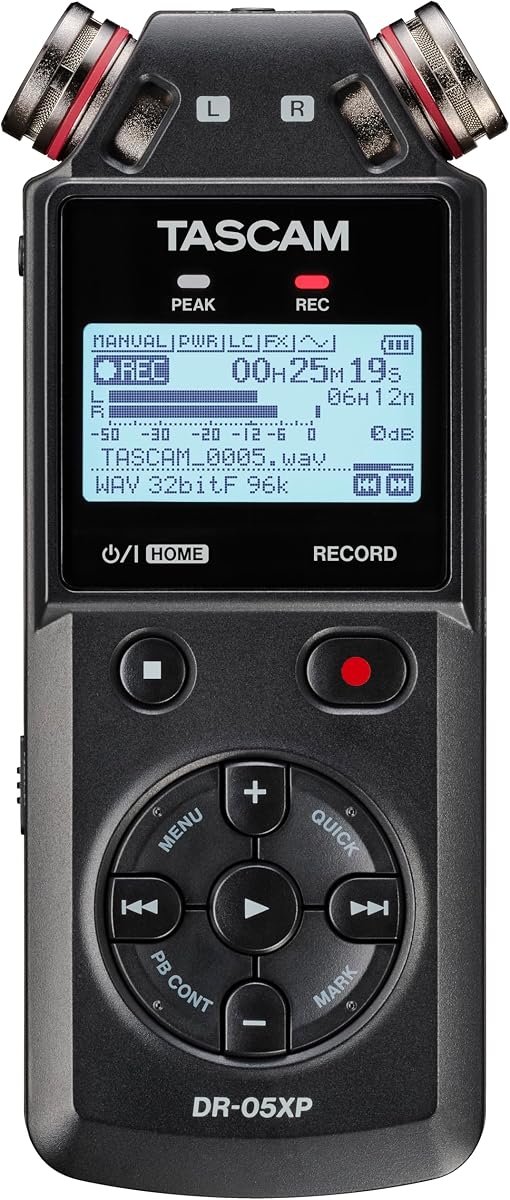
The TASCAM DR-05XP stands out as the premier choice for journalists seeking professional audio quality without the bulk of larger units. With a 4.2 rating, it delivers reliable performance for interviews and field recordings.
We may earn a commission when you buy through this link, at no additional cost to you.
Its standout feature is the 32-bit float recording, which effectively eliminates the risk of clipping even in loud environments. This ensures that critical dialogue remains clear and usable for broadcast purposes. The integrated USB-C interface allows you to use the device as an audio interface for your computer, expanding its utility beyond simple recording.
While the battery life is impressive at up to 17.5 hours, you may need to purchase AA batteries separately. Some users find the button layout slightly awkward, but the benefits of high-fidelity audio and robust connectivity outweigh this minor ergonomic issue.
Journalists who prioritize audio fidelity and need a versatile tool for both field recording and computer interfacing will find this device indispensable. It is a professional choice that balances performance with portability effectively.
The 32-bit float capability ensures that your recordings never clip, preserving dynamic range even when sound levels fluctuate wildly during interviews.
The USB-C connection supports direct transfer to computers and functions as an audio interface for streaming or live recording sessions.
We may earn a commission when you buy through this link, at no additional cost to you.
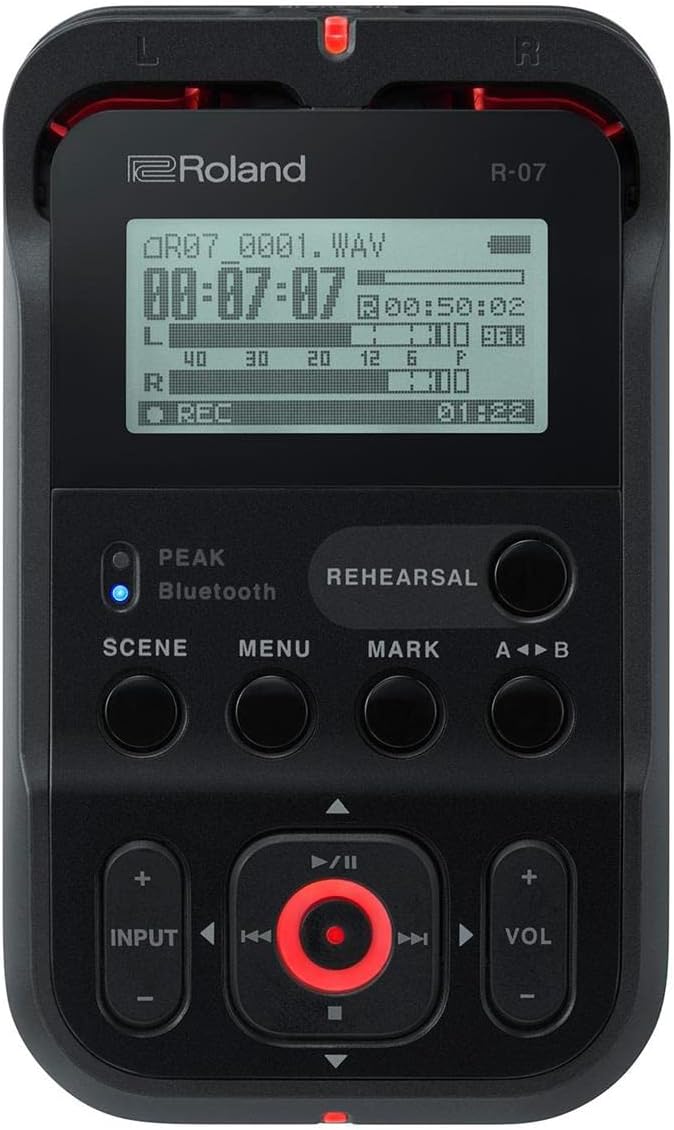
The Roland R-07 is designed for journalists who need high-resolution audio combined with modern connectivity features. Rated at 4.2, it offers a robust set of tools for capturing crisp audio in various settings.
We may earn a commission when you buy through this link, at no additional cost to you.
One of its strongest features is Bluetooth control and low latency wireless monitoring. This allows you to check levels and playback audio using a connected smartphone or speaker without removing the recorder from its case. The simultaneous recording to MP3 and WAV ensures you have a backup file ready for quick sharing.
The device is powered by AA batteries which can last up to 30 hours of playback, though continuous recording lasts about 16 hours. Some users note the unit is slightly heavier than ultra-compact models, which might be a consideration for all-day carry.
If you need to monitor audio remotely or require high-resolution formats for post-production, the Roland R-07 is an excellent investment. Its balance of analog durability and digital connectivity makes it a strong contender.
Use Bluetooth to listen to recordings and control the device from your phone, ideal for verifying audio quality in the field.
Record in high-quality WAV while simultaneously capturing an MP3 for immediate upload or sharing with editors.
We may earn a commission when you buy through this link, at no additional cost to you.
The EVISTR L357 is an ideal budget option for journalists who need basic yet reliable recording capabilities. With a rating of 4.2, it offers impressive storage and sound quality for its low price point.
We may earn a commission when you buy through this link, at no additional cost to you.
Its 64GB internal memory is a standout feature, allowing for thousands of hours of recording without needing an SD card. The voice activation function ensures that silence is not recorded, saving battery and storage space. PCM intelligent noise reduction helps maintain clarity even in noisy environments.
While it lacks some of the advanced connectivity options of premium models, it covers all the basics effectively. The battery lasts up to 32 hours of continuous recording, which is sufficient for most daily reporting needs.
For journalists on a tight budget or those needing a secondary backup recorder, the EVISTR L357 is a smart choice. It prioritizes storage and battery life over advanced features.
With 64GB of built-in memory, you can record for days without worrying about running out of space for interviews.
Voice activation ensures the recorder only runs when sound is detected, optimizing battery usage and file management.
We may earn a commission when you buy through this link, at no additional cost to you.
The Tonfarb 64GB recorder is designed for ease of use and reliability. With a 4.0 rating, it serves as a practical tool for quick documentation and note-taking in the field.
We may earn a commission when you buy through this link, at no additional cost to you.
Its biggest strength is the one-click recording feature, which allows you to capture audio instantly even when the device is powered off. This is crucial for journalists who need to seize moments without fumbling through menus. The built-in 64GB TF card provides ample storage for extensive fieldwork.
The device includes password protection, adding a layer of security for sensitive interview notes. While the interface is simple and may lack advanced editing tools, it ensures you can get the job done efficiently.
If your priority is speed and security over high-fidelity audio, the Tonfarb 64GB is a solid choice. It is perfect for quick dictations and informal interviews.
Start recording with a single physical button press even when the device is off, ensuring you never miss a breaking story.
Password protection keeps your recorded files private and secure from unauthorized access in public spaces.
We may earn a commission when you buy through this link, at no additional cost to you.
The Zoom H5 is a powerhouse for journalists who require professional-grade audio flexibility. Boasting a 4.7 rating, it is widely recognized for its ability to adapt to complex recording scenarios.
We may earn a commission when you buy through this link, at no additional cost to you.
Its interchangeable input capsules allow you to change microphone patterns to suit different environments, from close-up interviews to wide ambient recordings. The ability to connect external microphones via XLR inputs gives you the freedom to integrate high-end audio gear. The safety net feature records a backup track at a lower volume to prevent clipping.
While it is more expensive and larger than standard handhelds, the versatility justifies the cost for serious reporters. The 4-track simultaneous recording is useful for multi-source interviews or field soundscapes.
Journalists who view audio as a critical part of their storytelling will appreciate the Zoom H5. It is a professional tool that grows with your skills.
Swap capsules to change microphone patterns, allowing you to capture stereo, surround, or specific directional audio.
The safety net feature records a secondary low-level track to ensure you never lose a clip during sudden loud noises.
We may earn a commission when you buy through this link, at no additional cost to you.
The Tascam DR-40 remains a popular choice for journalists needing dedicated XLR inputs for external microphones. With a 4.6 rating, it offers a reliable and robust solution for professional recording tasks.
We may earn a commission when you buy through this link, at no additional cost to you.
Its dual XLR inputs allow you to plug in professional microphones directly, ensuring high-quality audio capture. The 4-track recording capability lets you manage multiple audio sources independently. The design is straightforward, focusing on core recording features without unnecessary complexity.
While it may lack the latest connectivity options like Bluetooth or USB streaming found in newer models, its build quality and audio performance are undeniable. It is a workhorse device that gets the job done consistently.
For journalists who need to interface with external mics and require a solid, no-fuss recorder, the Tascam DR-40 is a timeless option. It balances performance and practicality.
Connect professional microphones directly without extra adapters, simplifying your setup for field interviews.
Record up to four tracks simultaneously, giving you flexibility in post-production for layered audio.
We may earn a commission when you buy through this link, at no additional cost to you.
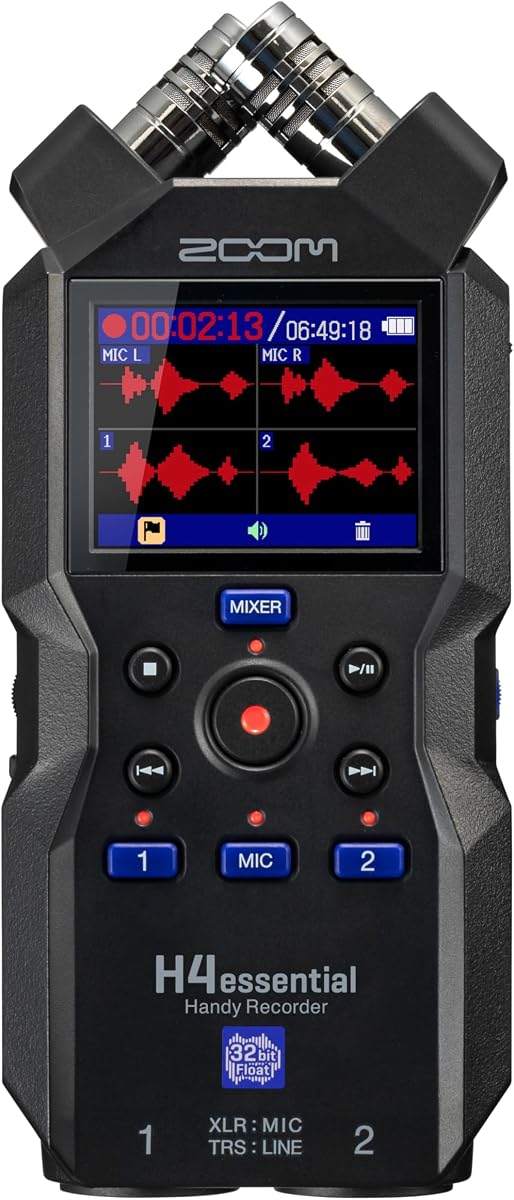
The Zoom H4 Essential is designed to make professional recording accessible to everyone. Rated at 4.4, it combines essential features with an emphasis on user-friendly navigation.
We may earn a commission when you buy through this link, at no additional cost to you.
A unique feature is the spoken menu guidance, which makes the device easier to navigate for visually impaired users. It supports 4-track recording and connects via USB-C for streaming, making it versatile for both field and studio use. The interface is streamlined, reducing the learning curve for new users.
While it is a more affordable version of the H4, it retains the core audio quality Zoom is known for. The lack of some advanced features found in higher-end models is a fair trade-off for the price.
Journalists looking for an accessible and straightforward recorder will find the H4 Essential appealing. It brings professional audio within reach of a wider audience.
Audible menu navigation ensures that all users can operate the recorder effectively without needing to read the screen.
Connect directly to a computer to use as a microphone for live streaming or remote interviews.
We may earn a commission when you buy through this link, at no additional cost to you.
The Pocket AI Recorder is a modern solution for journalists who need to process audio quickly. With a 4.6 rating, it offers unique AI features that go beyond traditional recording.
We may earn a commission when you buy through this link, at no additional cost to you.
It automatically transcribes and summarizes your recordings, turning audio into structured notes. The MagSafe compatibility allows for hands-free recording, freeing your hands for note-taking or other tasks. Its battery lasts up to 4 days on a single charge, ensuring it lasts through long reporting trips.
While many advanced features require a subscription, the core tools are included out of the box. The ability to extract key insights from recordings instantly is a game-changer for productivity.
Journalists focused on efficiency and quick turnarounds will love the Pocket AI Recorder. It is a smart assistant that helps you focus on the story rather than the data.
The device analyzes your audio and generates structured summaries, saving hours of manual transcription work.
Attach to your phone or clothing via MagSafe for discreet and stable recording without holding a device.
We may earn a commission when you buy through this link, at no additional cost to you.
The Zoom H1 Essential is a minimalist recorder for journalists who need a simple, portable device. With a 4.0 rating, it focuses on delivering clear audio without complicated menus.
We may earn a commission when you buy through this link, at no additional cost to you.
Its compact design fits easily in a pocket, making it ideal for quick capture or ambient sound recording. It functions as a USB microphone when connected to a computer, extending its utility for remote work. The controls are straightforward, allowing for instant recording without setup.
While it lacks the advanced inputs of larger models, it is a great secondary device for travel. It delivers quality audio for its size and price point.
Journalists who need a lightweight backup or a tool for quick ideas will find this recorder useful. It is a simple tool that does one thing well.
The small size ensures you can carry it everywhere, ready to capture unexpected audio moments.
The intuitive interface lets you start recording immediately, perfect for breaking news scenarios.
We may earn a commission when you buy through this link, at no additional cost to you.
The Zoom H2 Essential offers unique features like multiple recording patterns and Bluetooth sync. Rated at 4.4, it provides a versatile experience for capturing diverse audio environments.
We may earn a commission when you buy through this link, at no additional cost to you.
Its three built-in microphones support nine selectable patterns, allowing you to adjust the stereo width for different situations. The 32-bit float recording ensures high dynamic range. Bluetooth sync allows you to connect multiple units for multi-point recording, useful for large events.
The device includes accessible menu navigation in multiple languages, making it inclusive for diverse users. While the buttons are small, the audio quality and versatility make it a compelling choice.
Journalists who need specific microphone patterns or plan to record with multiple devices will appreciate the H2 Essential. It offers unique features that are hard to find elsewhere.
Change the recording angle to suit the environment, from narrow focus on interviews to wide capture for crowds.
Use Bluetooth to synchronize multiple recorders for coordinated multi-angle recordings without cables.
We may earn a commission when you buy through this link, at no additional cost to you.
Selecting the right recorder involves balancing audio quality with usability. The following factors will help you determine which features are most critical for your reporting style.
Audio quality is paramount for professional journalism. Look for devices that support high-resolution formats like 24-bit or 32-bit float, which prevent distortion in loud environments. Ensure the device records in WAV or FLAC for maximum fidelity rather than compressed MP3 only.
Prioritize devices with high bitrates and sample rates to ensure your interviews and field recordings meet broadcast standards.
Field reporters often face days without reliable power sources. A recorder with at least 15 to 20 hours of continuous recording is ideal for long shifts. Check if the device uses replaceable AA batteries or has a rechargeable lithium-ion battery.
Choose a model that offers interchangeable power options or long-lasting performance to avoid downtime during critical reporting.
Modern journalism requires seamless integration with other devices. USB-C connectivity is essential for fast file transfers and acting as an audio interface. Bluetooth features can assist with remote monitoring, though wired connections remain more stable for live streams.
Ensure the recorder offers versatile ports to connect external microphones or computers for immediate file management.
While internal mics are convenient, external options provide flexibility. XLR inputs allow you to use professional microphones for interviews or noisy environments. Look for devices with phantom power support if you plan to use high-end condenser mics.
Select a recorder with robust input options to upgrade your audio setup as your needs grow.
Long recording sessions require ample storage space. Built-in memory is good for quick notes, but SD card slots are essential for extended fieldwork. Check for expandable storage options to handle high-resolution files without constant management.
Opt for a model with high capacity or expandability to avoid interruptions during long events.
You need a recorder that is intuitive and quick to operate. Simple button layouts and clear menus are vital for recording in chaotic environments. Voice activation and one-touch recording features can help capture audio instantly without fumbling.
Choose a device with a user-friendly interface that allows you to focus on the story rather than the technology.
Fieldwork can be demanding on equipment. A durable metal or reinforced plastic build is necessary to withstand daily wear. The device should be compact and lightweight to carry comfortably in a bag for hours.
Prioritize rugged yet portable designs to ensure the recorder survives travel and outdoor conditions.
Features like noise cancellation, built-in speakers, or AI transcription can significantly boost efficiency. Voice activated recording saves space by skipping silence. Some advanced models offer cloud integration for instant backups.
Identify features that solve specific pain points in your workflow, such as noise reduction in crowded places.
Always perform a sound check before critical interviews. Test the levels by recording a short sample and listening for clipping or background noise. Adjust the gain settings to ensure clear audio without distortion.
Keep your device clean and dry. Wipe the exterior with a soft cloth and avoid exposing it to extreme temperatures or humidity. Remove batteries if the device will not be used for an extended period to prevent leakage.
Organize your files regularly. Create a folder structure on your computer to categorize recordings by date or location. Transfer files promptly to prevent data loss and ensure your workflow remains efficient.
32-bit float recording allows the device to capture audio at a extremely high dynamic range without clipping. It is ideal for journalists because it prevents distortion even if sound levels spike unexpectedly, ensuring clean audio in any environment.
Most handheld recorders have excellent built-in microphones. However, using an external mic can improve audio quality in noisy areas or for distance interviews. Check if your recorder has an input jack to support external gear.
Battery life varies by model but typically ranges from 15 to 30 hours of continuous recording. Models using AA batteries allow you to swap them out, while rechargeable units offer convenience for daily use.
Yes, many modern recorders feature USB-C or USB ports that allow them to function as external microphones for computers. This is useful for video calls or live streaming when you need better audio than your built-in mic.
Always choose uncompressed formats like WAV or FLAC for high-quality interviews. These files are larger than MP3 but retain full audio detail. Many devices allow you to record MP3 for quick sharing simultaneously.
Most recorders are not fully waterproof but are water-resistant enough for light rain. To protect your investment, consider a protective case and avoid exposing the device to heavy moisture.
Most devices have a USB connection for direct file transfer to a computer. You can also use SD cards that you can read with a card reader for faster access to large audio files.
Voice activation starts recording only when sound is detected. It saves battery life and storage space by skipping silent periods, making it efficient for long meetings or interviews.
We hope this guide helps you find the perfect tool for your reporting needs. From the versatile Zoom H5 to the budget-friendly EVISTR L357, each option offers unique strengths for capturing audio on the go.
Prioritize audio fidelity and battery life if you work in the field daily. If you need quick transcription, consider models with AI features. The best choice depends on your specific workflow and budget.
Always check the latest prices and availability before purchasing. Technology evolves quickly, so verifying the current status of your chosen model ensures you get the best value.