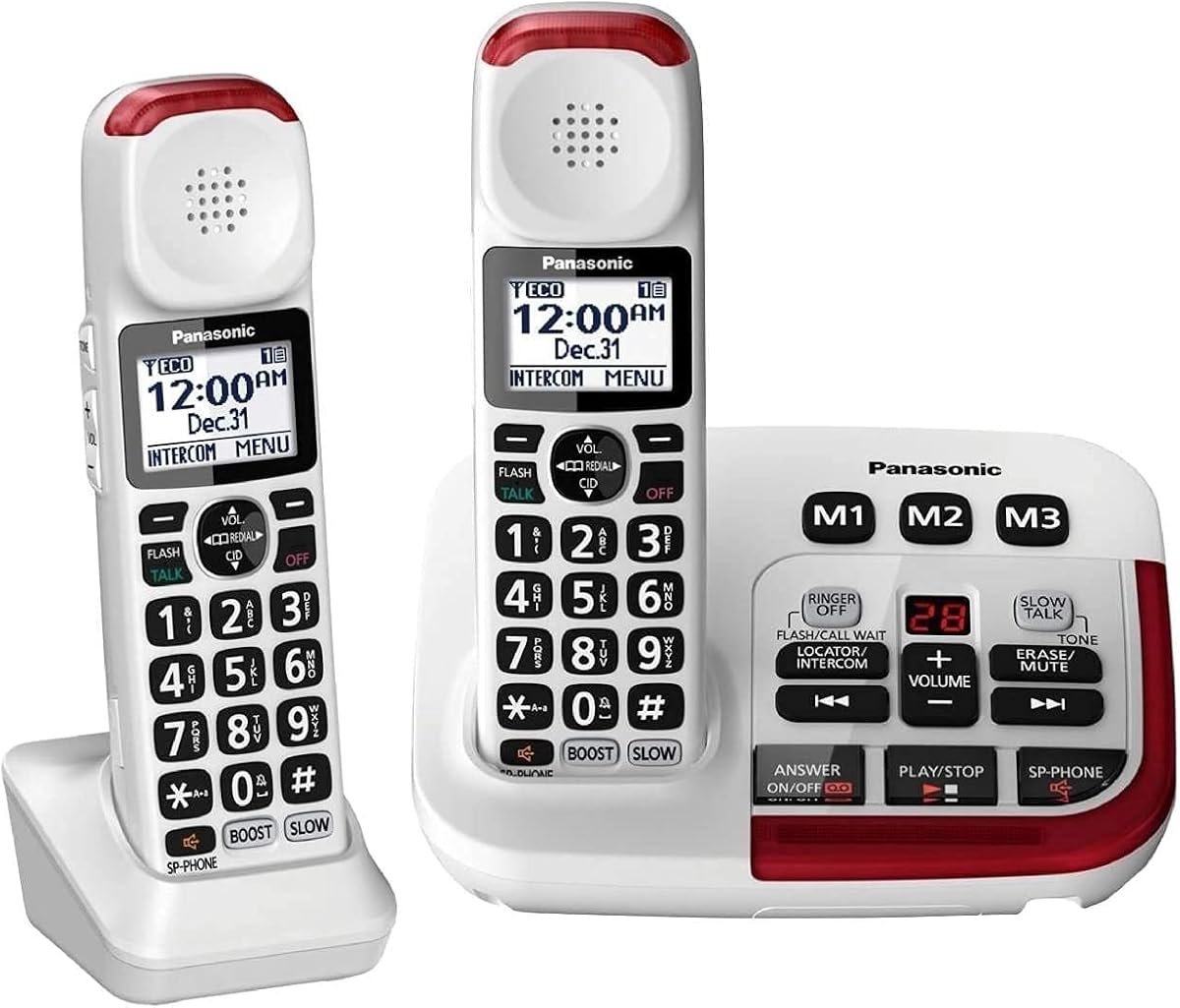
Panasonic KX-TGM420W
4.3Editor score
Volume boost up to 40dB
Noise reduction technology included
Expandable to six handsets
This comprehensive guide compares the top 10 hearing impaired landline phones for seniors, featuring captioned, amplified, and big button models to ensure
Finding the right telephone for those with hearing loss is essential for maintaining independence and staying connected with loved ones. Modern hearing impaired landline phones offer specialized features like amplified sound, large buttons, and visual alerts to bridge the communication gap effectively.
We evaluated ten top-rated models based on sound amplification, ease of use, and accessibility features. Our selection includes captioned telephones, cordless amplifiers, and simple corded units designed to meet diverse needs without compromising on reliability or clarity during calls.
Each pick below highlights specific strengths such as volume boost, hearing aid compatibility, and user-friendly interfaces. While we strive for accuracy, please note that product availability and pricing can fluctuate, so checking current listings before purchase is always recommended for the best deal.
4.3Editor score

4.3Editor score

4.1Editor score
The following comparison table outlines the core specifications of each model to help you quickly identify the best fit for your specific hearing needs and home setup requirements.




The Hamilton CapTel 2400iSPNBT stands out as a top choice for users who rely on visual cues alongside audio to understand conversations. With a robust 4.3 rating, this device combines traditional voice amplification with real-time captioning technology. It ensures that users do not miss any part of the call by displaying text directly on the large touchscreen while they listen.
We may earn a commission when you buy through this link, at no additional cost to you.
Its primary strength lies in the dual approach to communication. The phone offers amplification up to 40dB, which helps those with mild to moderate hearing loss hear the voice clearly. Simultaneously, the captioned telephone feature transcribes the conversation in real time. This is particularly useful for distinguishing names or specific details that might otherwise get lost in background noise or poor signal quality.
One trade-off to consider is the requirement for a high-speed internet connection. Unlike standard landline phones, this model relies on data to function. For users with unreliable internet, this might be a hurdle. However, for most households with stable Wi-Fi, the benefit of reading the conversation far outweighs the setup complexity. The service itself is free for US residents after registration.
This phone is ideal for seniors who want to stay connected without the frustration of asking callers to repeat themselves constantly. It transforms calls into confident interactions by giving the user full context. If you value clarity and want to ensure every word is heard or read, this model is the strongest recommendation in our guide.
The captioning service allows users to read the conversation as it happens, ensuring no details are missed even if audio is unclear.
Users can adjust the caption size and tone control on the screen to match their personal visual and hearing preferences.
We may earn a commission when you buy through this link, at no additional cost to you.
The Panasonic KX-TGM420W is a premium cordless solution designed to tackle the specific challenges of hearing loss in modern homes. It combines a high-capacity base unit with two handsets, ensuring you can hear calls clearly from any room. The strong 4.3 user rating reflects its effectiveness in delivering loud and clear audio that many seniors struggle to find with standard phones.
We may earn a commission when you buy through this link, at no additional cost to you.
Its standout feature is the advanced noise reduction technology. This suppresses background interference like television or traffic, focusing the audio on the voice. The volume booster reaches up to 40dB, providing significant gain for those with deeper hearing loss. Additionally, the slow talk feature helps users process speech by slowing down the speed of incoming messages or calls.
While it is an excellent performer, the system can be complex to set up initially due to the many features like the answering machine and call block. However, once configured, the talk keypad and large buttons make daily use very straightforward. The ability to expand to six handsets makes it a great choice for larger households.
This phone is perfect for users who want the freedom of a cordless phone without sacrificing volume or clarity. If you need a robust system that adapts to different environments and reduces background noise effectively, the Panasonic model is a top-tier investment for long-term communication needs.
This feature filters out background sounds, ensuring the voice on the call remains the priority for easier listening.
Users can slow down the speed of speech when listening to messages, making it easier to understand every word.
We may earn a commission when you buy through this link, at no additional cost to you.
The Panasonic KX-TGM450S is designed for users who need maximum audio output from their landline phone. With a rating of 4.3, it delivers a powerful 50dB volume boost that helps those with significant hearing loss hear conversations clearly. It is also designed to work seamlessly with hearing aids, reducing the need for multiple adjustments during a call.
We may earn a commission when you buy through this link, at no additional cost to you.
One of its most notable features is the loud visual ringer, which produces a 112dB alert. This ensures that even if the sound is missed, the bright red LED light on the base and handset will signal an incoming call. The screen is large and backlit, making it easy to read numbers and caller IDs even in low light conditions.
While it offers superior volume, it comes as a single handset setup which might not suit larger homes that need mobility in multiple rooms. The visual ringer is incredibly loud, which could be a distraction for some users, though it ensures you never miss a call. The slow talk feature remains a great addition for understanding complex messages.
This model is an excellent choice for individuals who prioritize raw volume and visual alerts. If you find standard amplification insufficient, the 50dB boost makes a tangible difference. It is a reliable, powerful tool for maintaining connection, especially when paired with hearing aids for a combined assistive effect.
The bright red LED lights flash on the base and handset to ensure you know when a call comes in.
The phone is optimized to work with hearing aids, minimizing feedback and ensuring clearer sound for assistive users.
We may earn a commission when you buy through this link, at no additional cost to you.
The VTech SN5147 offers a unique hybrid design that combines the reliability of a corded base with the mobility of a cordless handset. Rated at 4.0 stars, it is built specifically for seniors and those with hearing loss. The system ensures that even during a power outage, the corded base remains functional for critical communication.
We may earn a commission when you buy through this link, at no additional cost to you.
It features a powerful 50dB audio assist that amplifies incoming sounds effectively. The ringer is adjustable up to 90dB, accompanied by a visual indicator to ensure no calls are missed. The buttons are oversized and high-contrast, making it easy for those with limited dexterity or vision challenges to dial numbers accurately without squinting.
While the features are robust, the initial setup can be a bit daunting due to the variety of options like smart call blocking and photo dial. However, once set up, the photo speed dial allows users to call loved ones by simply pressing a picture. This simplifies the process significantly for those with memory issues.
This phone is ideal for users who want both stability and mobility. The hybrid nature ensures you are never disconnected due to power issues. If you need a versatile system that balances ease of use with advanced accessibility features like photo dialing and volume assist, the VTech SN5147 is a strong contender.
The corded base works during power outages, ensuring you can still make calls when the wireless system is down.
Assign photos to speed dial buttons so you can call family members by touching their picture instead of dialing numbers.
We may earn a commission when you buy through this link, at no additional cost to you.
The Clarity P300 is a straightforward, reliable choice for those who prefer a simple corded phone without extra digital features. With a 4.0 rating, it focuses on core usability with big buttons and sound amplification up to 26dB. It is ideal for users with mild to moderate hearing loss who do not need complex setups.
We may earn a commission when you buy through this link, at no additional cost to you.
Its main advantage is simplicity. It does not require batteries or wireless signals, as it uses a standard phone jack. The ringer pitch and volume are adjustable, allowing users to customize alerts to their hearing preference. This makes it very accessible for those who might find digital interfaces overwhelming.
While it lacks the high amplification of other models, the 26dB boost is sufficient for many users. The main limitation is that it is not cordless, so you are tethered to the base. However, this wired connection ensures stability and eliminates any signal interference that might degrade call quality.
This phone is perfect for users who want a no-fuss solution that just works. If you need a simple, accessible device that requires minimal setup and offers clear sound for basic conversations, the Clarity P300 is a practical and affordable addition to your home.
The phone connects directly to a standard phone jack, eliminating the need for batteries or complex configuration.
Users can change the pitch and volume of the ringer to ensure alerts are heard comfortably without being jarring.
We may earn a commission when you buy through this link, at no additional cost to you.
The Uvital Big Button Phone is a fantastic budget-friendly option that does not compromise on essential accessibility features. Rated 4.1 stars, it features large buttons and a 120dB ringer that ensures you never miss a call. It is designed for simplicity, making it perfect for seniors with memory issues or limited dexterity.
We may earn a commission when you buy through this link, at no additional cost to you.
It offers 8 one-touch speed dials that can be customized with photos of family members. This means users do not need to remember numbers to call loved ones. The phone also includes a speakerphone option, which allows for hands-free conversations. This is especially helpful for individuals who have difficulty holding the handset due to mobility issues.
Since it does not require batteries, it is always ready to use as long as the phone line is active. The bright red LED flash provides a visual alert alongside the loud sound. However, it lacks a digital display and only works on traditional phone lines, so it is not compatible with VoIP services.
For users who need a reliable, simple phone at an affordable price, this is an excellent choice. It prioritizes the most critical needs like loud ringing and easy dialing. If you are looking for a basic, accessible device to keep seniors connected without a high cost, the Uvital model is highly recommended.
Customize buttons with photos of family so you can call them instantly without memorizing numbers.
With a 120dB ringer, this phone is louder than most standard units, ensuring alerts are heard even in noisy rooms.
We may earn a commission when you buy through this link, at no additional cost to you.
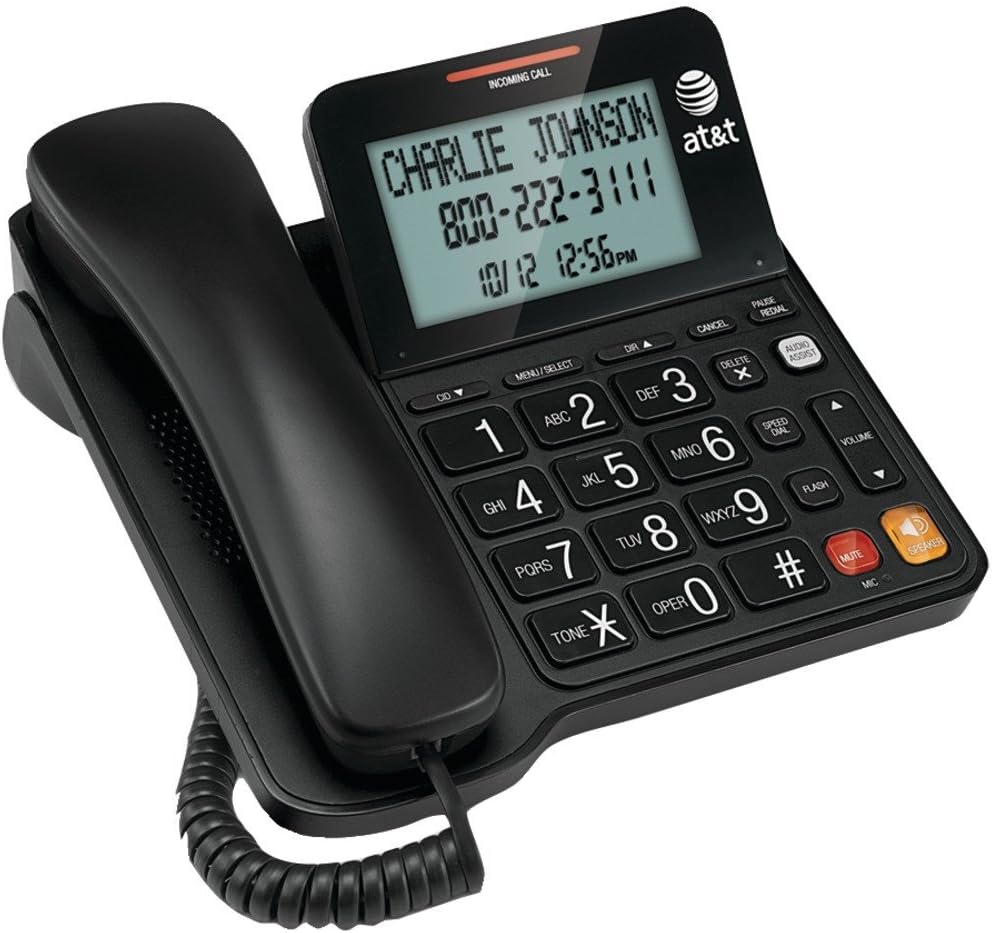
The AT&T CL2940 focuses on making dialing and reading easy with its extra-large buttons and tiltable display. It holds a strong 4.2 rating for its user-friendly design. This phone is ideal for seniors who struggle with vision challenges, as the large buttons reduce the risk of misdials and the display can be tilted for a better viewing angle.
We may earn a commission when you buy through this link, at no additional cost to you.
It includes an audio assist volume boost that amplifies sound for easier hearing. The caller ID feature shows incoming names and numbers, with a history of 50 entries to help screen calls. The speakerphone allows for hands-free conversation, adding to the convenience for users who multitask at home.
While it offers excellent readability and comfort, it does not specify high decibel amplification in its core features, relying on audio assist instead. You will also need batteries for the caller ID function. However, the tilt display and large interface make it very comfortable for daily use without physical strain.
This phone is a great choice for those who prioritize readability and ease of dialing over high-volume amplification. If you want a reliable phone with clear visuals and simple controls, the AT&T CL2940 provides a comfortable and accessible experience for seniors and those with vision challenges.
The screen can be tilted to reduce glare and make it easier to read numbers without squinting.
Store up to 50 incoming names and numbers to help you identify who is calling and decide whether to answer.
We may earn a commission when you buy through this link, at no additional cost to you.
The Clarity XLC3.4+ uses DECT 6.0 technology to provide interference-free calls over a wide range. With a rating of 3.7, it offers strong cordless performance with extra-loud ringer features. The large buttons and talking caller ID make it accessible for users who need audio confirmation of who is calling.
We may earn a commission when you buy through this link, at no additional cost to you.
Its dual power battery system ensures longer talk times and better standby life. This is beneficial for users who make frequent calls. The DECT technology also reduces static and noise, providing a clearer voice connection compared to older analog cordless models. However, the rating suggests some users may have mixed experiences.
One potential issue is that while it has a loud ringer, the amplification during the call might not be as robust as dedicated amplified models. The battery system is good but eventually requires replacement. Despite this, it remains a strong option for households needing a reliable cordless system with accessibility features.
If you need a cordless phone that minimizes interference and offers clear range, this is a solid choice. It is best for those who need accessibility features like talking caller ID and large buttons but prefer a wireless setup. It balances range and accessibility effectively for home use.
The DECT 6.0 frequency ensures the connection remains clear without static or interference from other devices.
The phone announces the caller's name audibly, so you know who is calling before you answer the handset.
We may earn a commission when you buy through this link, at no additional cost to you.
The SWISSVOICE 3355 stands out for its photo memory buttons, allowing users to see exactly who they are calling on large buttons. Rated at 3.4 stars, it is designed for the visually impaired and those with unsteady hands. It is also hearing aid compatible and includes an additional cordless handset for added convenience.
We may earn a commission when you buy through this link, at no additional cost to you.
The ringer is adjustable up to 90dB, ensuring alerts are audible. The call block feature helps prevent unwanted calls from reaching the user. While it has a lower rating than other models, the unique photo dialing feature offers significant value for those who struggle to memorize numbers or recognize voice cues.
One trade-off is the complexity of setting up photo memory and call blocking. Additionally, the lower rating suggests some users may find it less reliable than premium brands. However, for those who prioritize visual identification of contacts, the large buttons with photos are a strong accessibility advantage.
This phone is best for users who need visual cues to make calls confidently. If you want a device that simplifies dialing through photos and supports hearing aids, the SWISSVOICE 3355 offers unique features that make communication easier for those with vision or cognitive challenges.
Press a large button with a photo to call a specific person, making it easy to identify contacts at a glance.
Built-in call blocking prevents unwanted numbers from ringing, reducing stress and interruptions from telemarketers.
We may earn a commission when you buy through this link, at no additional cost to you.
The Clarity E814CC is a powerful bundle designed for households that need to manage multiple phone lines or a corded and cordless mix. Rated at 4.1 stars, it includes an answering machine and dual keypads. This model is best for users who need advanced line management along with basic amplification.
We may earn a commission when you buy through this link, at no additional cost to you.
Its dual-SIM capability allows for two separate lines, which is useful for managing personal and business calls or different family members. The dual keypad ensures that both corded and cordless functions are accessible. However, this complexity means it is less ideal for someone who just wants a simple phone.
The answering machine is a key feature for capturing messages clearly. While it offers good value for a bundle, the setup can be time-consuming. Users should ensure they need multiple lines before purchasing. For those who do, it provides a complete solution for home communication needs.
This phone is ideal for users needing multiple lines or both corded and cordless options in one unit. If you want an all-in-one system with an answering machine and accessibility support, the Clarity E814CC offers the necessary tools. However, ensure your setup requirements match its dual-line capabilities.
Manage two separate phone lines from one system, ideal for households with multiple users or service types.
Includes a built-in machine to record messages, ensuring you never miss a call when away from the handset.
We may earn a commission when you buy through this link, at no additional cost to you.
Selecting the right phone involves considering specific features like volume boost, button size, and alert types to match your hearing needs.
Look for phones with adjustable volume control that offers at least 40dB of amplification. Higher dB levels are crucial for those with severe hearing loss. Ensure the boost applies to both incoming calls and outgoing speech clarity.
Higher amplification ensures you can hear the speaker clearly without straining.
Choose a model with large, high-contrast buttons that are easy to distinguish. This helps users with limited dexterity or vision issues dial accurately. Avoid small or closely packed keys that might lead to frequent misdials.
Large buttons reduce errors and make the phone easier to operate physically.
Phones with visual ringer alerts, such as flashing lights, are vital if you have trouble hearing sound. This ensures you are notified even if the volume is low. Check if the alert is visible on both the base and handset.
Visual alerts ensure you never miss a call due to low sound volume.
Verify that the phone is rated compatible with your hearing aids to avoid feedback noise. Many modern models have a T-coil setting that works seamlessly with assistive devices. This improves clarity during calls without needing external microphones.
Compatibility ensures a clean sound experience when using hearing aids.
Decide whether you need real-time captions or just louder sound. Captioned phones are great for clarity but require an internet connection. If you rely on visual cues for comprehension, a captioned model might be worth the extra setup.
Captioning offers text-based clarity for those who struggle with auditory understanding.
Consider if you need mobility or reliability during power outages. Cordless phones offer freedom of movement but need batteries, while corded models work during power failures. A hybrid model might offer the best of both worlds.
Choose based on your need for mobility versus reliability.
Look for a clear caller ID display to help screen calls effectively. Call blocking features prevent unwanted calls, which is helpful for reducing stress. Ensure the display is large enough to read easily in various lighting conditions.
These features help manage incoming traffic and protect your peace of mind.
Check if the phone comes with an answering machine or speed dial options. These add value and convenience for daily use. Some models also allow for expansion with more handsets if you have a larger home.
Accessories enhance functionality and reduce the need for extra devices.
Connect your phone to a standard wall jack and ensure the volume is set to your preferred level before making a test call. If using amplification features, adjust the gain gradually until voices are clear without distortion.
For cordless models, place the base unit near a power source and ensure the handset is charged regularly. This ensures that alerts and calls remain audible even during long periods of inactivity.
Keep the buttons and display clean to maintain visibility and tactile feedback. Avoid placing liquids near the device to protect its internal components, ensuring it remains functional for years of reliable use.
Yes, many modern amplified phones are designed with hearing aid compatibility to reduce feedback. Look for models that specify T-coil support to ensure a seamless connection with your device. This feature is crucial for clear sound without whistling during calls.
For seniors, a volume boost of at least 40dB is generally recommended for moderate hearing loss. This level ensures voices are loud enough to be understood without distortion. Higher boosts up to 50dB may be necessary for more severe cases.
Yes, captioned phones like the Hamilton CapTel require a high-speed internet connection to function. The service uses data to transmit real-time captions for calls. Without internet, the phone may not work as intended.
To set up photo speed dial, assign a photo to a large button in the phone's menu using the user guide. This allows you to call contacts by pressing a picture instead of a number. It simplifies the process for those with memory or vision challenges.
Yes, traditional corded phones usually work during power outages as they draw power from the phone line itself. Cordless models rely on batteries which may deplete. If you live in an area with frequent outages, a corded option is safer.
Most hearing impaired phones feature flashing LED lights on the base or handset to signal incoming calls. Some models also offer high-contrast displays. These alerts ensure you are notified even if the ringer is too loud for your comfort.
Most traditional phones require a standard PSTN landline to work. While some advanced models support VoIP, basic amplified models often do not. Always check the product description to confirm compatibility with your internet phone service.
For cordless phones, batteries typically last one to two years before needing replacement. Check the user manual for specific recommendations. Keeping a spare set on hand ensures you can swap them out when the charge time increases.
We have reviewed the top 10 options ranging from high-tech captioned models to simple affordable units. The Hamilton CapTel stands out for clarity, while the Uvital offers a budget-friendly alternative with essential features.
When choosing, prioritize the features that matter most to you. If you struggle with visual cues, look for a model with large buttons or photo dial. If sound is your main issue, ensure you select a phone with high decibel amplification.
Please remember that availability and pricing can change frequently. Always check the current listing for the latest details before making your purchase to ensure you get the best value and features available today.