
WWZMDiB 6 Pcs 5MM LDR Light Sensor 5516 Photoresistor LM393 3 Pin 3.3-5V Compatible with for Arduino Raspberry Pi ESP32
4.4Editor score
Affordable 6 pack kit
Includes LM393 comparator
Adjustable sensitivity threshold
This guide compares the top light sensors for Arduino projects including photoresistors and digital modules for accurate ambient light detection and automation.
Light sensors are essential components for any maker working with Arduino to detect ambient light levels for various automation tasks. Choosing the right sensor ensures your projects respond accurately to environmental changes without unnecessary complexity or cost.
We have evaluated ten top-rated light sensor modules based on accuracy, ease of use, compatibility with popular boards like ESP32 and Raspberry Pi, and customer feedback to provide a reliable shortlist.
Each product in this list offers unique features ranging from simple analog outputs to precise digital readings. Please note that prices and availability may change frequently on the retailer platform.
4.4Editor score
5.0Editor score
4.7Editor score
The following table provides a side-by-side comparison of the ten selected light sensor modules highlighting their key specifications and ideal use cases for your next project.


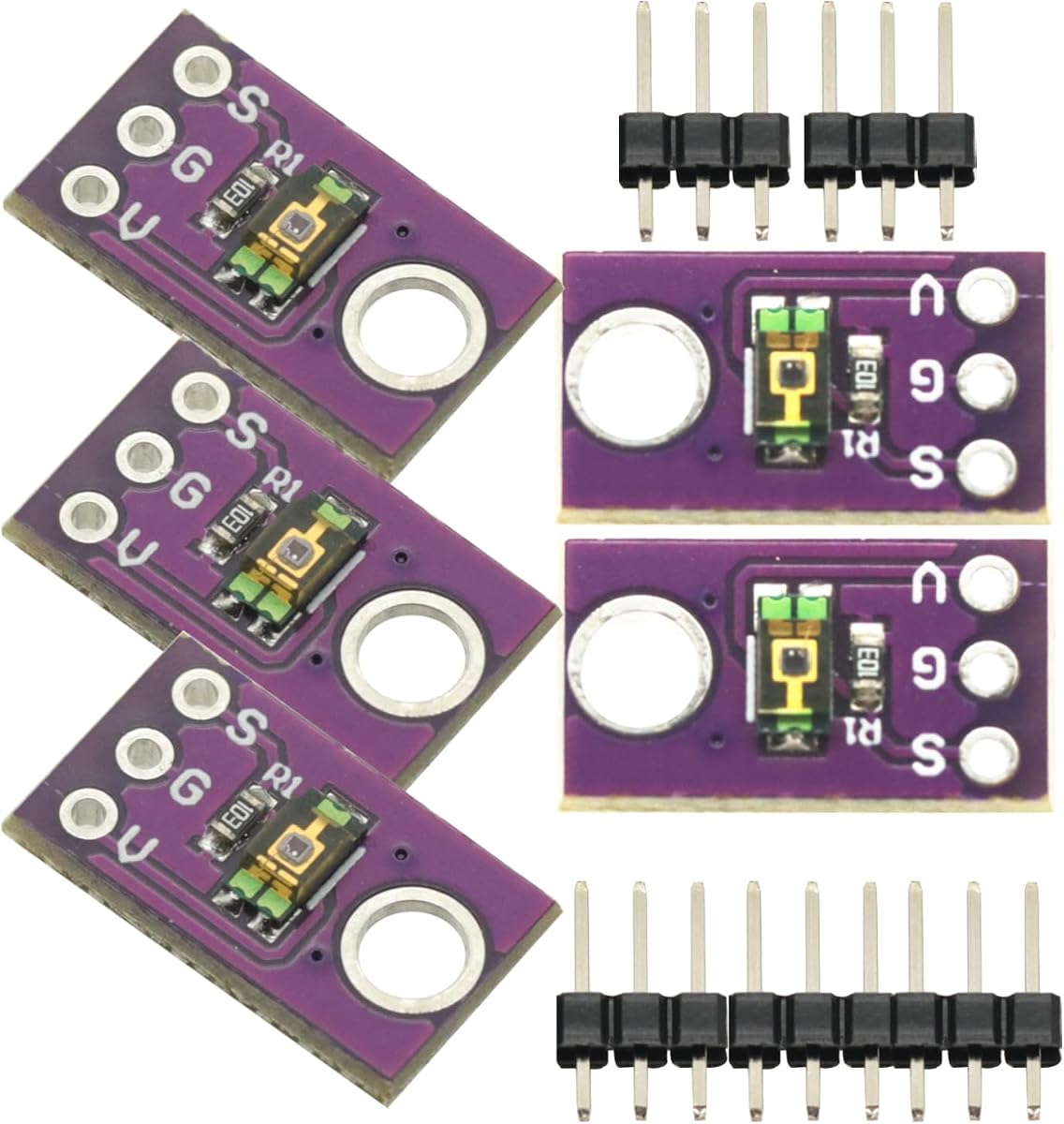
This professional module stands out with a perfect 5.0 rating offering precise ambient light detection ideal for display backlight dimming and industrial lighting control tasks.
We may earn a commission when you buy through this link, at no additional cost to you.
The TEMT6000 sensor core ensures high accuracy allowing your Arduino projects to adjust screen brightness or keypad lighting automatically based on environmental conditions.
While highly specialized for dimming tasks it might require specific drivers for some users but the performance benefits make this trade-off well worth the effort.
You should buy this if you need a reliable professional grade sensor for display interfaces or industrial automation needing precise light level responses.
Perfectly suited for adjusting screen brightness automatically to match ambient light conditions saving power and improving user comfort.
Provides the stability and accuracy required for industrial lighting control systems ensuring safety and efficiency in work environments.
We may earn a commission when you buy through this link, at no additional cost to you.
This budget-friendly kit provides six LDR sensors combined with LM393 comparators making it an accessible starting point for hobbyists needing light detection capabilities.
We may earn a commission when you buy through this link, at no additional cost to you.
The inclusion of voltage comparators allows for clean digital switch outputs while the potentiometer enables adjustable brightness thresholds for flexible automation projects.
Basic analog sensors may lack the precision of dedicated digital modules but for cost effective ambient detection this kit delivers strong value for money.
Buy this if you need multiple sensors for a batch of projects and want an affordable solution that supports both digital and analog input modes.
The built-in potentiometer lets you easily adjust the light sensitivity to suit your specific project requirements without external components.
Supports both digital switch signals for alarms and analog readings for gradual brightness control offering versatile integration possibilities.
We may earn a commission when you buy through this link, at no additional cost to you.
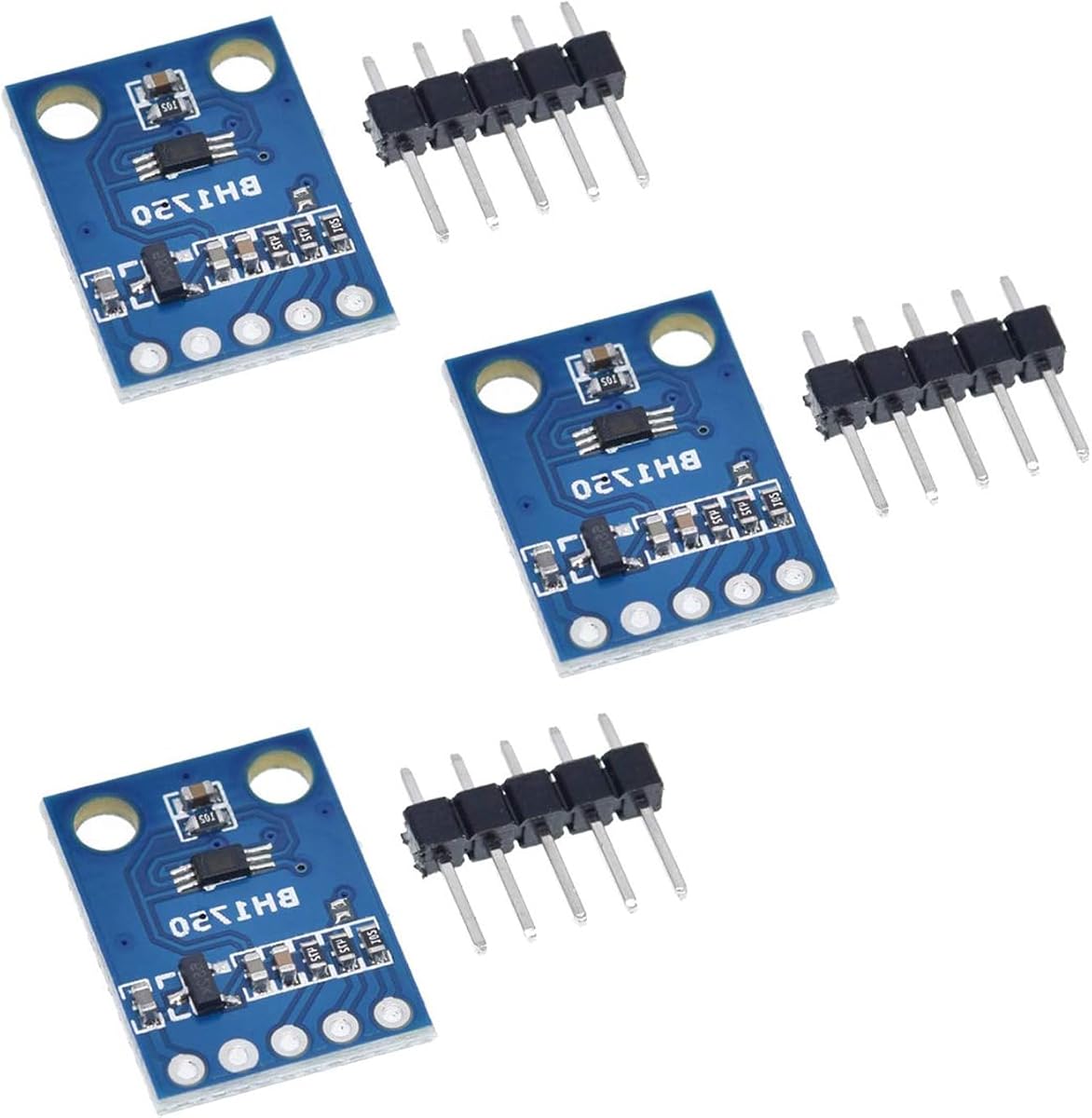
This premium pack features the BH1750FVI chip known for high accuracy digital light intensity measurements making it ideal for projects requiring precise ambient data.
We may earn a commission when you buy through this link, at no additional cost to you.
The compact size and versatile power range ensure easy integration into various boards while the digital output simplifies data reading compared to analog alternatives.
Though requiring specific I2C wiring knowledge and costing more than basic LDRs the precision and reliability of this module justify the investment for advanced users.
Choose this premium option when accuracy is critical for your application such as automated lighting control or environmental monitoring systems needing stable readings.
The BH1750FVI chip from ROHM delivers industry-leading accuracy ensuring your light detection data is reliable and consistent across environments.
Supports 3 to 5V power inputs allowing compatibility with both 3.3V and 5V microcontroller systems without voltage regulators.
We may earn a commission when you buy through this link, at no additional cost to you.
HiLetgo offers a trusted version of the GY-302 module using original BH1750FVI chips to ensure accurate light intensity measurements for Arduino users reliably.
We may earn a commission when you buy through this link, at no additional cost to you.
The compact dimensions allow for easy integration into tight spaces while the standard power requirements make it compatible with most common microcontroller setups.
While it shares similarities with other GY-302 modules the brand trust and consistent quality control make it a dependable choice for serious hobbyists.
Opt for this if you prefer a recognized brand name and need a reliable digital light sensor for general purpose illumination monitoring projects.
HiLetgo is known for consistent quality control ensuring your module works as expected without unexpected failures during critical project stages.
Designed to work with standard 3 to 5V supplies simplifying your power budgeting and wiring complexity for most development boards.
We may earn a commission when you buy through this link, at no additional cost to you.
This module uses photodiodes for directional light detection allowing it to sense light sources in fixed directions making it ideal for line tracking or seeking applications.
We may earn a commission when you buy through this link, at no additional cost to you.
The adjustable sensitivity and both digital and analog outputs provide flexibility in how you integrate it into projects ranging from simple alarms to complex robotics.
While directional sensing requires careful aiming it offers a clear advantage over omnidirectional sensors when you need to detect specific light paths accurately.
Consider this module for robotics or automation projects where directionality matters such as line follower robots or light seeking mechanisms.
Photodiodes sense light primarily from the front allowing precise detection of light beams or directional sources for navigation tasks.
Supports digital switching for binary detection and analog voltage for nuanced brightness monitoring to suit various coding needs.
We may earn a commission when you buy through this link, at no additional cost to you.
This high volume pack offers thirty standard 5mm photoresistors making it perfect for stocking up on basic components for multiple small scale DIY projects.
We may earn a commission when you buy through this link, at no additional cost to you.
The GM5539 resistors feature a spectral peak of 540nm which aligns well with visible light detection ensuring accurate readings in normal indoor lighting.
Since these are raw resistors you will need to design your own voltage divider circuits but the quantity makes them ideal for prototyping many sensors.
Buy this if you need a bulk supply of basic photoresistors for building custom circuits or teaching electronics concepts without complex modules.
Thirty pieces provide ample stock for multiple projects reducing the need for frequent reordering and saving money over time.
Raw resistors allow full control over your circuit design giving you flexibility to tailor performance to specific needs.
We may earn a commission when you buy through this link, at no additional cost to you.
Teyleten Robot modules provide robust LDR based light detection with built in LM393 comparators simplifying integration for light operated switch applications.
We may earn a commission when you buy through this link, at no additional cost to you.
The digital output allows direct connection to microcontrollers enabling easy detection of environment light intensity changes without complex analog processing.
While standard LDRs have slower response times than photodiodes they are sufficient for ambient monitoring tasks requiring reliable threshold based automation.
Select this pack if you need multiple sensor modules for relay control or simple light threshold detection across several devices.
The digital output pins allow direct connection to your controller logic simplifying wiring and code for threshold triggering.
Designed to drive relay modules directly enabling automated lighting control without extra intermediate hardware components.
We may earn a commission when you buy through this link, at no additional cost to you.
This versatile module supports Arduino ESP32 ESP8266 and Raspberry Pi boards offering flexibility for makers working with different microcontroller ecosystems.
We may earn a commission when you buy through this link, at no additional cost to you.
With both digital and analog outputs you can choose between simple threshold detection or nuanced brightness measurements depending on your project needs.
Adjustable threshold potentiometers make calibration simple allowing you to tune the sensor to your specific lighting environment easily.
Ideal for mixed ecosystem projects where you need consistent performance across different boards without managing multiple module types.
Designed to work with popular 5V and 3.3V boards ensuring seamless integration into diverse hardware setups.
The onboard potentiometer allows quick sensitivity adjustments making it easy to adapt to different lighting conditions.
We may earn a commission when you buy through this link, at no additional cost to you.
A massive 50 piece pack of GL5516 resistors offers excellent value for makers needing to build dozens of sensors for large scale automation.
We may earn a commission when you buy through this link, at no additional cost to you.
The resistance values provide standard light detection performance making them suitable for general purpose light control projects across various platforms.
With a high customer rating this product proves reliable for hobbyists and educators who need large quantities of basic light sensors.
Choose this bulk option if you are running a workshop or building many units requiring cost effective basic light detection components.
Fifty pieces reduce cost per unit significantly ideal for bulk deployments and classroom education kits.
Typical GL5516 resistance specs ensure predictable performance for most ambient light detection needs without complex calibration.
We may earn a commission when you buy through this link, at no additional cost to you.
This module uses photodiodes for light detection offering better response speed compared to standard LDRs for automotive and fast changing environments.
We may earn a commission when you buy through this link, at no additional cost to you.
The wide voltage range allows connection to both 3.3V and 5V systems making it suitable for diverse microcontroller setups and power sources.
Designed with smart car applications in mind it provides the stability and sensitivity needed for headlight control or parking assist systems.
Ideal for automotive projects where response speed and voltage flexibility are critical for reliable light based automation.
Specifically designed for car applications ensuring durability and performance suitable for automotive electronic systems.
Photodiodes react faster to light changes than LDRs making them better for detecting moving light sources or rapid changes.
We may earn a commission when you buy through this link, at no additional cost to you.
Selecting the right light sensor depends on your project needs accuracy requirements and budget constraints.
Light sensors come as photoresistors LDRs or digital photodiode modules LDRs are simple and cheap but less precise while photodiodes offer faster response and better accuracy for automation tasks.
Choose LDRs for budget projects and photodiodes or digital modules when precision and response speed matter.
Output can be analog providing continuous voltage values or digital giving binary high low signals. Analog requires ADC reading but digital is simpler to interface with basic logic thresholds.
Digital outputs suit alarm triggers while analog works better for dimming or proportional control.
Check if the module supports 3.3V or 5V systems since many boards like ESP32 use 3.3V logic. Modules supporting both provide maximum flexibility across your hardware options.
Ensure voltage compatibility to avoid damaging your microcontroller or getting incorrect readings.
Digital modules with chips like BH1750 offer accurate light intensity readings in Lux whereas LDRs only estimate brightness roughly. Precision matters for calibration sensitive applications.
Select high precision chips when exact light levels must be measured consistently.
Physical dimensions and mounting holes affect how easily you can install the sensor. Compact modules fit tight enclosures while bolt holes provide secure attachment options.
Consider space constraints and mounting needs before purchasing to avoid redesigns.
Buying in bulk reduces cost per unit but requires more design effort. Single modules with boards are easier to use but cost more for multiple instances.
Balance budget against quantity to find the best value for your project scale.
Connect the sensor power pins to your board 3.3V or 5V supply and ground ensuring stable power delivery for reliable readings.
Use the provided libraries or write simple code to read analog or digital output values and map them to your desired lighting thresholds.
Protect sensors from direct sunlight or moisture when installed outside by using appropriate enclosures to extend their lifespan.
Photoresistors are raw components requiring external circuits for reading while digital modules include built in circuitry for direct output. Modules are easier to use but photoresistors are cheaper for bulk projects.
Yes the BH1750 uses I2C communication requiring a dedicated library to read accurate Lux values. Most Arduino IDEs have compatible libraries available for easy integration.
Absolutely most listed sensors support 3.3V or 5V power and logic levels compatible with ESP32. Just ensure voltage regulators are used if needed for 5V components.
Digital sensors provide clear binary signals that simplify logic in code reducing the need for analog conversion. This leads to faster and more reliable responses in automated systems.
Adjust the onboard potentiometer while observing the output pin voltage or read the analog value to find your target light level. Save this threshold value in your code.
Standard modules are not waterproof so you must enclose them in weatherproof cases for outdoor installations. Direct sunlight exposure can also saturate sensors limiting accuracy.
We have highlighted ten top picks ranging from budget LDR kits to precision digital modules to suit every maker's needs.
Prioritize accuracy and voltage compatibility when selecting a sensor to ensure your project performs reliably across different environments.
Always check current prices and availability since these values change frequently on retailer platforms before making your final purchase decision.