
Intel BX80677I57400 7th Gen Core Desktop Processors
4.5Editor score
LGA 1151 Socket
HD Graphics 630
Turbo Boost 2.0
Discover the top cheap Intel processor options for budget builds. We compare performance features and value across ten reliable desktop CPU models for 2026.
Finding the right cheap Intel processor can transform your computing experience without breaking the bank. Whether you need a system for office work, light gaming, or home entertainment, selecting a cost-effective CPU is essential for balancing performance and cost.
We have carefully evaluated ten distinct Intel processor models to help you make an informed decision. Our analysis focuses on core counts, clock speeds, compatibility, and overall value to ensure you get the most reliable hardware for your specific workload needs.
Each pick highlights unique strengths ranging from entry-level efficiency to modern multi-core performance. Please note that availability and pricing can fluctuate frequently, so always verify the latest details before finalizing your purchase to ensure you get the best deal available today.
4.5Editor score

4.8Editor score

4.2Editor score
This side-by-side comparison outlines the key specifications and capabilities of each selected processor to help you quickly identify the model that best fits your budget and performance requirements.


The Intel BX80677I57400 represents an excellent entry-level option for those seeking a cheap Intel processor without sacrificing basic stability. With a strong rating and proven compatibility, it serves well for general computing tasks where high-end performance is not the primary concern.
We may earn a commission when you buy through this link, at no additional cost to you.
Its standout qualities include support for Intel HD Graphics 630 and Turbo Boost 2.0 technology which allow for smooth handling of everyday applications and light multimedia work. The LGA 1151 socket ensures compatibility with a wide range of motherboards making upgrades or builds straightforward.
Trade-offs involve older architecture which may limit maximum clock speeds compared to newer models. However for users needing a reliable system for web browsing office work or home media centers these limitations are minimal and acceptable given the cost savings.
Anyone looking to assemble a budget PC for non-demanding tasks should consider this model. It provides a solid foundation that balances affordability with functional performance ensuring your system runs efficiently without unnecessary expense.
This processor delivers reliable speed for daily tasks while keeping costs minimal for budget-conscious builders.
Support for the 100 and 200 series chipsets allows flexible motherboard choices for various build scenarios.
We may earn a commission when you buy through this link, at no additional cost to you.
The Intel Core i5-14400F stands out as the top recommendation for users seeking a balance between price and power. Its high rating reflects widespread satisfaction among builders who need strong performance for gaming and productivity without overspending on flagship models.
We may earn a commission when you buy through this link, at no additional cost to you.
Key strengths include its hybrid architecture featuring six performance cores and four efficiency cores alongside sixteen threads total. This design ensures efficient workload distribution while maintaining clock speeds up to 4.7 GHz. support for both DDR4 and DDR5 memory offers flexibility in system configuration.
One trade-off is the requirement for a discrete graphics card since this model lacks integrated graphics. While most gamers use dedicated GPUs this may limit its appeal for basic office setups. Additionally some users may need to update their motherboard BIOS for full compatibility.
This processor is ideal for gamers and content creators who want modern capabilities at a reasonable price. Its robust performance ensures smooth multitasking and rendering tasks making it a versatile choice for mid-range builds.
Combining performance and efficiency cores optimizes power usage and boosts overall system responsiveness.
Support for both DDR4 and DDR5 memory standards allows users to choose based on budget and performance needs.
We may earn a commission when you buy through this link, at no additional cost to you.
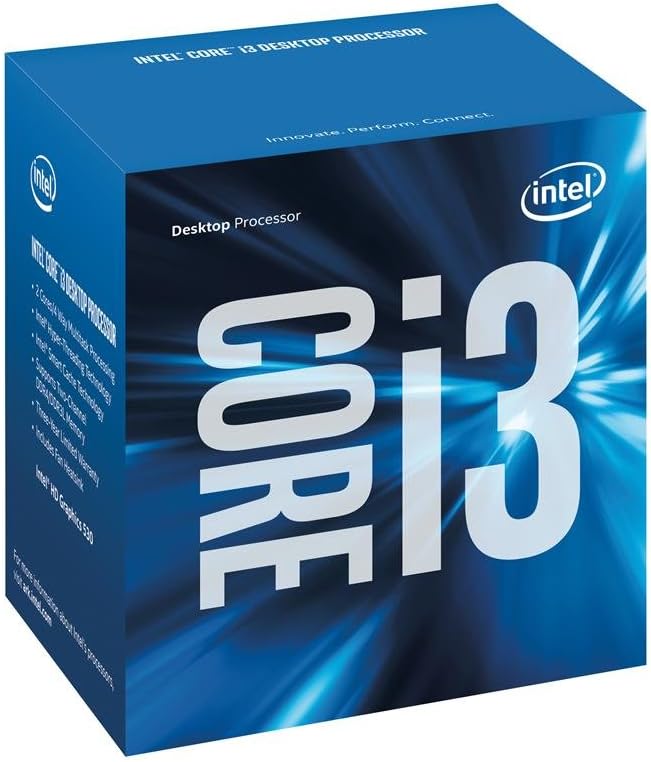
The Intel Boxed Core i3-6100 is a classic choice for budget builds requiring reliable performance for everyday computing. Its solid rating indicates consistent satisfaction among users who need a cost-effective processor for home or office environments.
We may earn a commission when you buy through this link, at no additional cost to you.
This processor features a 3.7 GHz base clock and Hyper-Threading technology which allows it to handle multiple tasks efficiently. The included integrated graphics eliminate the need for a dedicated GPU making it a complete solution for entry-level systems.
While it offers dependable performance its limited core count and older architecture restrict its ability to handle demanding modern applications. For users focused on web browsing and document editing these constraints are negligible and do not hinder daily productivity.
Individuals looking to upgrade an older system or build a simple PC will find this processor a sensible choice. It delivers stability and efficiency without requiring significant investment in other components.
Its socket compatibility allows easy integration into existing setups with minimal adjustments to hardware.
Built-in graphics capabilities reduce overall build costs while supporting basic display needs effectively.
We may earn a commission when you buy through this link, at no additional cost to you.
The Intel Celeron G-5900 serves as an ultra-budget solution for basic computing needs. Its moderate rating reflects its suitability for light tasks where cost is the primary driver over high performance.
We may earn a commission when you buy through this link, at no additional cost to you.
Featuring two cores and a 3.4 GHz clock speed this processor handles web browsing and document work adequately. The 58W power draw ensures low energy consumption and the support for Intel Optane Memory allows for faster system responsiveness when paired with compatible drives.
Trade-offs include limited multi-threading capabilities and lower clock speeds which may slow down heavy applications. However for users managing simple workloads these limitations are acceptable given the extremely low price point.
This processor is best suited for students or home users needing a basic machine for essential tasks. It provides a functional foundation without requiring significant financial outlay.
Low power consumption reduces electricity bills and generates less heat for a cooler system environment.
Compatibility with Intel Optane Memory enhances boot times and application loading on supported systems.
We may earn a commission when you buy through this link, at no additional cost to you.
The Intel BX80677G3930 is a 7th Gen Celeron designed for cost-conscious users requiring basic system functionality. Its strong rating highlights its effectiveness as a starter processor for light daily usage scenarios.
We may earn a commission when you buy through this link, at no additional cost to you.
It supports Intel HD Graphics 610 and operates on the LGA 1151 socket ensuring compatibility with 100 and 200 series chipsets. This allows for a complete system build without needing additional graphics hardware which keeps the total cost low.
Although it offers reliable performance its older generation means it lacks the speed and features of newer models. For users not demanding high frame rates or heavy multitasking these constraints are not significant barriers.
This CPU is recommended for home media centers or office kiosks where simplicity and cost matter most. It delivers consistent results without the complexity of high-end features.
Integrated HD graphics provide sufficient display output for standard resolution monitors and video playback.
Budget-friendly pricing makes this an ideal choice for those prioritizing essential functionality over raw speed.
We may earn a commission when you buy through this link, at no additional cost to you.
The Intel Celeron G1840 offers legacy compatibility for users working with older systems or needing a budget component for basic tasks. Its rating reflects steady performance in environments where modern speed is less critical.
We may earn a commission when you buy through this link, at no additional cost to you.
Key features include Quick Sync Video for faster media conversion and Intel Device Protection with Boot Guard. These technologies ensure secure and efficient operations even on older hardware platforms making it suitable for specialized use cases.
One trade-off is the requirement for Z87 or Z97 motherboards which may necessitate BIOS updates for compatibility. For most modern builds this limits its utility but for specific legacy systems it remains a viable cheap Intel processor choice.
This model is best for those maintaining older office networks or home systems. It provides essential performance while maintaining cost efficiency for long-term usage.
Quick Sync Video technology accelerates transcoding tasks for efficient media handling on standard PCs.
Device Protection with Boot Guard enhances system security by preventing unauthorized firmware execution.
We may earn a commission when you buy through this link, at no additional cost to you.
The Intel Core i3-14100 brings modern architecture to the budget segment with impressive clock speeds and efficiency. Its high rating confirms its success as a reliable option for users needing current gen features without premium prices.
We may earn a commission when you buy through this link, at no additional cost to you.
With four performance cores and eight threads this processor delivers robust performance for daily tasks and light gaming. The integrated UHD Graphics 730 ensures display capability without a dedicated card while DDR4 and DDR5 support offers memory flexibility.
Trade-offs include fewer total cores compared to higher-end models and a mid-range cache size. For typical home or office use these are minor considerations that do not significantly impact everyday experience.
This processor is recommended for users building a cost-effective PC with modern standards. It ensures longevity and compatibility with newer software and hardware components.
14th generation design provides better power efficiency and performance per watt than previous models.
Support for DDR4 and DDR5 allows builders to choose based on availability and cost constraints.
We may earn a commission when you buy through this link, at no additional cost to you.
The Intel Core Ultra 9 285K represents a leap forward in desktop performance with its hybrid architecture and core density. Its rating reflects satisfaction among users seeking top-tier capability for demanding workloads and future-proof systems.
We may earn a commission when you buy through this link, at no additional cost to you.
Featuring twenty-four cores and threads with clock speeds up to 5.7 GHz this CPU excels at multitasking and rendering. The integrated graphics and support for PCIe 5.0 ensure it handles modern workflows efficiently while running cooler than predecessors.
Trade-offs include the requirement for 800 series motherboards which means new motherboard costs. For users upgrading from older platforms this represents an investment but delivers significant performance gains in return.
This processor is ideal for professionals and enthusiasts who need maximum speed and efficiency. It ensures your system remains capable of handling advanced tasks for years to come.
New architecture optimizes power usage to deliver high speeds with reduced thermal output.
PCIe 5.0 support ensures compatibility with the latest high-speed storage and expansion cards.
We may earn a commission when you buy through this link, at no additional cost to you.
The Intel Core i7-14700K is built for gaming enthusiasts needing high frame rates and rapid responsiveness. Its rating highlights its effectiveness in delivering smooth gameplay and handling multitasking scenarios effortlessly.
We may earn a commission when you buy through this link, at no additional cost to you.
With twenty cores and up to 5.6 GHz clock speeds this processor ensures games run without bottlenecks. The included integrated graphics provide backup display options while DDR5 platform support reduces load times and enhances overall system speed.
Trade-offs include higher heat generation under load which necessitates robust cooling solutions. While it demands attention to thermal management the performance benefits make it a compelling choice for serious gamers.
This CPU is recommended for those building a high-end gaming rig. It offers the speed and multi-core power needed to run demanding games smoothly and consistently.
Optimized for gaming workloads to provide smooth frame rates and responsive controls during intense play.
Support for DDR5 memory cuts load times and increases data throughput for better system performance.
We may earn a commission when you buy through this link, at no additional cost to you.
The Intel Core i9-14900K is the flagship option for users demanding the absolute best in desktop performance. Its moderate rating reflects its specialized nature catering to power users who prioritize raw speed over cost efficiency.
We may earn a commission when you buy through this link, at no additional cost to you.
Leading with clock speeds up to 6.0 GHz and twenty-four cores this processor delivers unmatched responsiveness for gaming and creative work. The support for DDR5 platforms ensures faster data transfer and shorter load times for the most demanding applications.
Trade-offs involve a higher price point and increased power consumption compared to lower-end models. For most casual users this investment is unnecessary but for professionals it justifies the cost with superior output.
This CPU is best for those requiring maximum performance for professional workflows. It ensures your system can handle the heaviest tasks with ease and speed.
Up to 6.0 GHz provides exceptional single-thread performance for fast processing and quick reactions.
With thirty-two threads this processor handles simultaneous heavy workloads without performance drops or lag.
We may earn a commission when you buy through this link, at no additional cost to you.
Selecting the right processor involves understanding core requirements and budget constraints to ensure optimal system performance and longevity.
Core count determines how many tasks your processor can handle simultaneously. More cores generally mean better performance for multitasking and content creation but increase cost. For budget builds two to four cores may suffice while ten or more are ideal for heavy workloads.
Look for a core count that matches your primary use case to avoid overspending or underpowered hardware.
Clock speed measured in GHz indicates how fast each core can execute instructions. Higher speeds improve responsiveness for gaming and single-threaded applications. Turbo Boost technology allows cores to run faster temporarily under load for peak performance.
Prioritize higher base and boost speeds for tasks that rely on single-core performance.
The processor socket must match your motherboard to ensure physical and electrical compatibility. Older sockets like LGA 1150 or 1151 limit future upgrades while newer ones like LGA 1200 or 1700 offer modern features. Always verify socket type before purchasing.
Choose a socket that aligns with your motherboard to avoid installation issues or upgrade limits.
Integrated graphics eliminate the need for a dedicated graphics card reducing overall system cost. This is useful for basic office tasks or media playback. However gaming or video editing requires a discrete GPU regardless of processor graphics capabilities.
Confirm if integrated graphics meet your display needs or if a separate card is necessary.
Modern processors support DDR4 or DDR5 memory which affects data transfer speeds. DDR5 offers higher bandwidth but is costlier. Ensure your processor supports the memory type you plan to use for optimal system stability and performance.
Verify memory compatibility to ensure your chosen processor works with your RAM modules.
Power consumption or TDP affects cooling requirements and energy costs. Lower TDP means less heat and potentially quieter operation. High-performance chips draw more power and may need stronger cooling solutions to maintain stability.
Consider power draw when selecting a cooling solution and power supply unit.
The chipset determines feature support like PCIe lanes and overclocking. Some motherboards require BIOS updates for new processors. Check chipset compatibility to ensure all features function correctly and upgrades remain possible later.
Match your processor to a compatible chipset to unlock full functionality and future upgrade paths.
Balancing price with performance ensures you do not overspend on unused capabilities. Entry-level chips suit basic tasks while mid-range offer best value for gamers. Flagship models cost more but deliver maximum speed for professionals.
Assess your needs to select a processor that offers the best performance per dollar.
Proper installation involves aligning the processor pins correctly with the socket and securing the retention arm gently. Ensure thermal paste is applied evenly between the processor and cooler to maintain optimal heat dissipation and prevent overheating.
Regularly clean dust from cooling fans and heatsinks to avoid heat buildup. Monitor system temperatures using software tools and adjust fan curves if necessary to keep the processor within safe operating limits.
Keep your system updated with BIOS and driver patches to ensure stability and performance. Avoid running unnecessary background processes that may cause unnecessary thermal stress on the processor over long periods.
A cheap Intel processor is reliable when it offers sufficient core count and speed for your specific needs. Look for models with good thermal management and proven compatibility to ensure stability without paying for unused high-end features.
Entry-level processors may struggle with demanding modern titles but mid-range options often handle them well. Check game minimum requirements and consider pairing the processor with a dedicated GPU for smoother gameplay experiences.
Integrated graphics are sufficient for web browsing media streaming and basic office applications. They eliminate the need for a dedicated GPU making the system cheaper and simpler for standard household tasks.
Check the processor socket type and chipset requirements against your motherboard specifications. Manufacturers list compatible CPUs in their support documents so verify these details before purchasing to ensure fit.
Upgrades depend on socket compatibility and chipset limits. Modern sockets allow easier swaps but older boards may limit you to same-generation chips. Plan future needs to minimize the need for motherboard replacements.
Power consumption impacts cooling and electricity costs. Efficient processors produce less heat and run quieter which is ideal for home or office environments. Always match your power supply to the total system draw.
P-cores handle heavy tasks while E-cores manage background processes efficiently. This hybrid design optimizes performance by directing workloads appropriately allowing better multitasking without increasing power usage unnecessarily.
BIOS updates enable motherboard compatibility with newer processors. Manufacturers release firmware patches to improve system support so always check update requirements before installing a CPU to ensure it works correctly.
Our guide presents ten reliable options ranging from entry-level chips to modern mid-range processors. Each model offers distinct strengths suitable for different budget levels and performance needs ensuring you find a fit for your project.
Prioritize core count and compatibility based on your primary use cases to maximize value. Avoid overspending on features you will not use and focus on processors that deliver reliable performance for your tasks.
Prices and availability fluctuate frequently so verify current details before buying. A careful check ensures you secure the best deal and maintain confidence in your final purchase decision.