
Bambu Lab A1
4.7Editor score
High-Speed Precision
Full-Auto Calibration
Easy and Quiet
This guide compares the top 3D printer for small business models based on speed, reliability, material support, and multi-color capabilities to help you choose.
Choosing the right 3D printer for small business operations requires balancing speed, reliability, and material versatility. As technology evolves, modern machines offer unprecedented control and efficiency for prototyping and production.
We evaluated ten leading models based on real-world performance, ease of use, and advanced features like multi-color printing and automated calibration to find the best options for entrepreneurs.
Each pick highlights specific strengths such as build volume, speed, and software integration while noting potential trade-offs so you can match a printer to your specific workflow needs.
4.7Editor score

4.2Editor score

4.0Editor score
This side-by-side comparison highlights key specifications across all ten models so you can quickly identify which machine aligns with your business requirements and production goals.




The Bambu Lab P1S Combo is designed for users seeking high throughput without sacrificing quality. With an enclosed design and support for up to 16 colors via the AMS, it delivers vibrant prints suitable for prototyping and small-batch production.
We may earn a commission when you buy through this link, at no additional cost to you.
Its CoreXY motion structure enables speeds up to 500mm/s with high acceleration, reducing wait times significantly. Features like automatic bed leveling and auto calibration ensure consistent results even with advanced filaments like ABS or ASA.
While the AMS unit adds to the initial cost, the ability to switch materials without pausing justifies the investment for businesses needing color variations. Some users may find the reliance on cloud connectivity limiting if local control is preferred.
This machine is ideal for entrepreneurs prioritizing speed and reliability. Its user-friendly setup and robust performance make it a top choice for those ready to scale their 3D printing operations quickly.
The CoreXY structure minimizes vibration and allows rapid acceleration, ensuring consistent quality even at high speeds.
Connect the AMS to switch between 16 colors seamlessly, enabling complex designs without manual filament swaps.
We may earn a commission when you buy through this link, at no additional cost to you.
The FLASHFORGE Creator 5 Pro stands out for industrial-grade multi-material printing with four independent toolheads and a near-zero waste system. This design eliminates purge waste during color changes, drastically reducing material costs.
We may earn a commission when you buy through this link, at no additional cost to you.
A fully enclosed frame with an active heated chamber up to 65°C prevents warping in advanced filaments like ABS and PC. The CoreXY structure supports speeds up to 600mm/s while maintaining precision through linear rails.
While highly capable, the system requires more complex setup compared to simpler printers. The cost is higher, but the material savings and industrial durability justify the investment for serious production environments.
Ideal for businesses needing robust parts and complex multi-material prints, this model offers unmatched flexibility. Its safety features including air filtration make it suitable for professional workspaces.
The FlashSwap system switches nozzles without flushing filament, cutting waste and operational costs significantly.
The 65°C chamber enables reliable printing of engineering materials like ABS and PC without warping issues.
We may earn a commission when you buy through this link, at no additional cost to you.
The Snapmaker U1 combines speed and efficiency with four independent toolheads that swap in just five seconds. This drastically reduces print times and waste compared to traditional multi-color systems.
We may earn a commission when you buy through this link, at no additional cost to you.
Its rigid CoreXY motion system supports speeds up to 500mm/s while maintaining accuracy across the build volume. Smart calibration features ensure dimensionally accurate prints with minimal manual adjustment.
Though the build volume is slightly smaller than some competitors, the speed and waste reduction make it highly efficient. The software is intuitive, though new users may need time to explore advanced features.
This printer is perfect for small businesses needing high productivity and multi-material capabilities. Its reliability and fast tool changes make it a strong choice for iterative prototyping and short runs.
The SnapSwap mechanism reduces tool changes to five seconds, validated through over one million swaps with zero failures.
By swapping toolheads instead of purging filament, this model reduces material waste by up to five times.
We may earn a commission when you buy through this link, at no additional cost to you.
The Bambu Lab P1S offers the speed and enclosure of the Combo without the AMS unit. It is a reliable workhorse for businesses needing consistent prints with minimal maintenance or setup time.
We may earn a commission when you buy through this link, at no additional cost to you.
Its enclosed design improves performance with advanced filaments like ABS and ASA. Automatic bed leveling ensures high-quality results even if you are new to 3D printing or need consistent production runs.
While it lacks the multi-color capabilities of the Combo, its simplicity and speed make it ideal for functional parts. The cost savings compared to the Combo make it a smart choice for mono-color production.
This model is recommended for businesses focusing on strength and precision over color. Its rapid setup and robust build make it a great addition to any small workshop environment.
The fully enclosed body maintains stable temperature for successful prints with advanced materials like ABS and ASA.
Setup takes just 15 minutes, allowing users to focus on printing rather than assembly and calibration.
We may earn a commission when you buy through this link, at no additional cost to you.
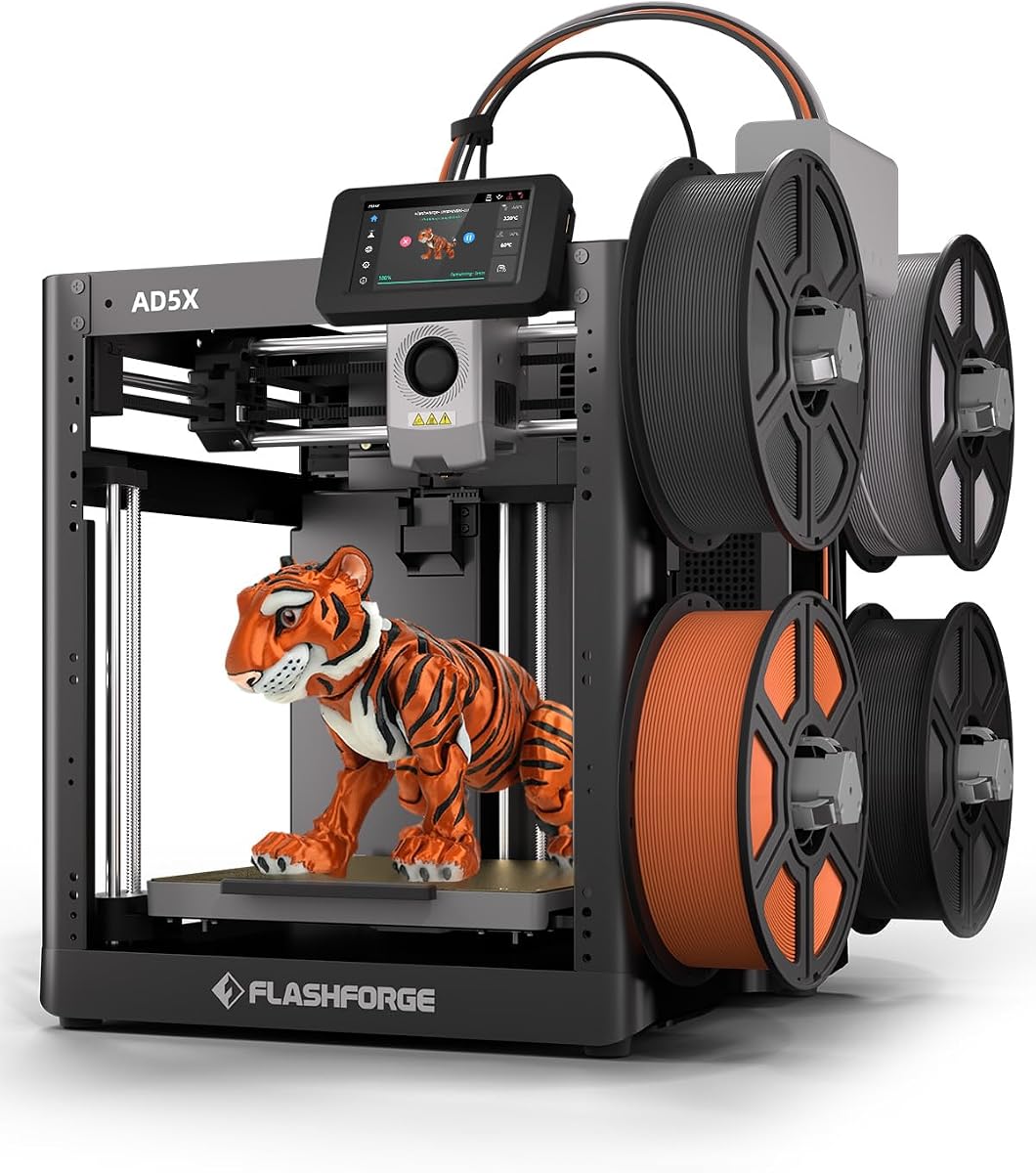
The FLASHFORGE AD5X delivers impressive speed and precision with a CoreXY structure reaching 600mm/s. Its 300°C extruder and multi-color support make it versatile for detailed and rapid prototyping tasks.
We may earn a commission when you buy through this link, at no additional cost to you.
Features like 1-click auto leveling and vibration compensation ensure quality prints with minimal fuss. The build volume is standard but sufficient for many small business applications requiring high accuracy.
While the build volume is smaller than some industrial models, the speed and extruder capability compensate well. Some users report occasional software issues, but the hardware performance remains strong.
This printer is a solid choice for businesses prioritizing speed and detail. Its balance of features and cost makes it an attractive option for those expanding their production capabilities.
CoreXY architecture enables stable high-speed printing up to 600mm/s without sacrificing precision or quality.
A 300°C direct drive extruder supports a wide range of filaments, enhancing material flexibility for diverse projects.
We may earn a commission when you buy through this link, at no additional cost to you.
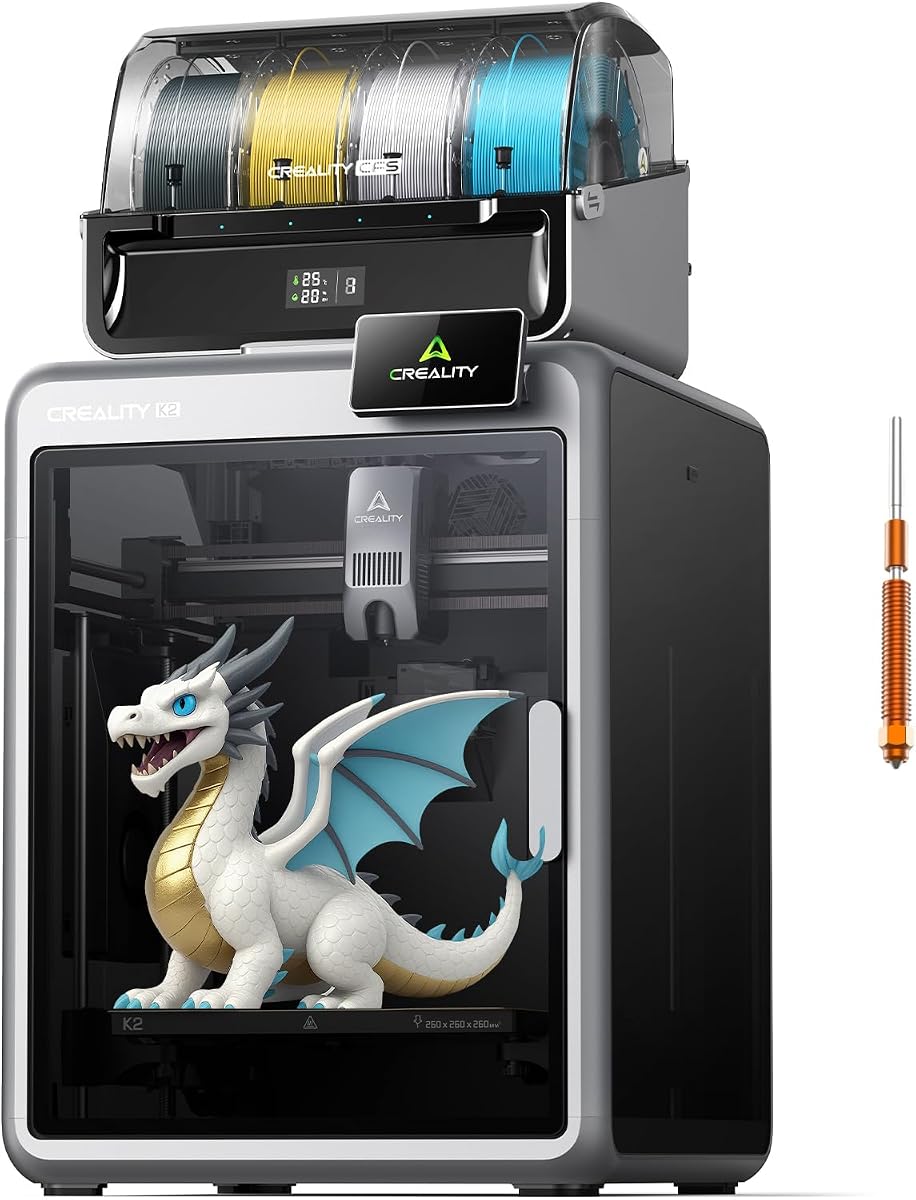
The Creality K2 Combo introduces a quiet multi-color printing solution with CFS support for up to 16 colors. Its pre-assembled design and smart AI camera make it accessible for teams wanting quick deployment.
We may earn a commission when you buy through this link, at no additional cost to you.
Silent Mode ensures minimal noise, while step-servo motors adjust torque dynamically for precision and speed. This combination makes it suitable for environments where noise control is important alongside production needs.
The complexity of managing CFS units and smart features may require an initial learning period. However, the build quality and speed compensate well for teams willing to invest in setup.
Ideal for offices or quiet workspaces needing vibrant prints, this model balances usability and advanced features. It is a smart choice for businesses prioritizing quiet operation and reliability.
Dynamic balancing and step-servo motors ensure operation quieter than a laptop typing, suitable for shared spaces.
The Filament System enables automatic selection and switching, streamlining multi-color workflows efficiently.
We may earn a commission when you buy through this link, at no additional cost to you.
The Creality K2 Plus Combo offers a large build volume suitable for printing bigger parts or batch production. Its 60°C chamber and dual AI cameras provide robust monitoring and material support for advanced projects.
We may earn a commission when you buy through this link, at no additional cost to you.
Step-servo motors deliver 600mm/s speeds with high acceleration, ensuring rapid production even on large prints. The active chamber temperature control prevents warping, making it ideal for engineering filaments like ASA.
While the price is higher, the large volume and automation justify the cost for businesses needing scale. The AI features add convenience but require familiarity to use effectively.
This machine is perfect for businesses expanding production needs. Its combination of speed, size, and reliability makes it a powerful asset for growing manufacturing operations.
A 350mm build volume allows large objects or batches to be printed without partitions, saving time and complexity.
One camera monitors the chamber for failures, while another optimizes flow rate at the toolhead for quality.
We may earn a commission when you buy through this link, at no additional cost to you.
The FLASHFORGE Adventurer 5M prioritizes ease of use with features like one-click auto leveling and rapid nozzle changes. Its high-speed CoreXY structure makes it a practical tool for rapid prototyping and routine production.
We may earn a commission when you buy through this link, at no additional cost to you.
The 280°C direct extruder and vibration compensation ensure quality output. Remote monitoring via the app allows users to track progress without being physically present, adding convenience for busy teams.
While it lacks multi-color capabilities, its simplicity and speed make it suitable for focused applications. The build volume is standard, which may limit options for larger parts compared to industrial models.
This model is ideal for teams valuing simplicity and speed. Its reliable performance and user-friendly design make it a great addition for consistent and efficient printing tasks.
Nozzles can be changed in three seconds, reducing downtime and simplifying maintenance tasks for users.
The Flash Studio app lets users monitor and adjust prints remotely, ensuring flexibility for busy schedules.
We may earn a commission when you buy through this link, at no additional cost to you.
The Bambu Lab A1 offers incredible speed and precision for beginners and small teams with its full auto calibration and high acceleration. Its user-friendly interface and quiet motor make it accessible for office environments.
We may earn a commission when you buy through this link, at no additional cost to you.
With a speed up to 10,000 mm/s² acceleration, it delivers quick results without requiring extensive manual setup. The open frame design allows good visibility but may limit use of some advanced filaments compared to enclosed models.
While the build volume is limited, the cost-effectiveness and speed make it ideal for startups. Its reliability and ease of use mean less time is spent on maintenance and more on production.
This printer is perfect for those new to 3D printing or needing a quick secondary unit. Its value and performance provide a strong entry point for growing small businesses looking for efficiency.
The printer manages all calibration processes automatically, ensuring precise Z-offset and bed leveling every time.
Active noise canceling ensures a quiet environment, making it suitable for offices and shared workspaces.
We may earn a commission when you buy through this link, at no additional cost to you.
The Creality K2 (A) Combo focuses on intelligent filament management with auto identification and relay capabilities. Its 600mm/s speed and 16-color support make it a strong contender for businesses needing reliability and quality.
We may earn a commission when you buy through this link, at no additional cost to you.
The pre-assembled design reduces setup time, and the built-in air purifier filters VOCs for a safer workspace. Local storage and Wi-Fi connectivity add convenience for managing prints remotely.
While the software setup can be complex, the smart features streamline filament use once configured. The noise level is managed well, though some users may prefer quieter operation.
This model is ideal for businesses needing efficient filament handling and multi-color options. Its balance of speed and intelligence makes it a practical choice for productive and safe printing.
RFID reads filament info and auto relay ensures dry and ready material, reducing manual handling and waste.
VOCs are filtered to create a safer workspace, essential for small businesses with limited ventilation.
We may earn a commission when you buy through this link, at no additional cost to you.
Choosing a 3D printer for business requires weighing factors like speed, reliability, and material versatility to ensure it meets production demands effectively.
For small businesses, speed is crucial to reduce lead times and increase output. Look for models with CoreXY structures and accelerations exceeding 10,000 mm/s² to maintain high speeds without sacrificing precision.
Prioritize machines capable of 500mm/s or more to ensure efficient batch production and rapid prototyping capabilities.
Multi-color printing allows for more functional prototypes and end-use parts without manual painting. Systems like AMS or CFS enable seamless switching between 16 colors or different materials.
Consider whether your business needs color variety or just functional prototypes before investing in multi-toolhead or filament systems.
A larger build volume provides flexibility for printing bigger parts or multiple smaller items in one batch. Enclosed chambers are essential for printing engineering materials like ABS or ASA without warping issues.
Evaluate your typical part sizes to determine if an open or enclosed frame is necessary for your production environment.
Automation features like auto bed leveling and flow compensation reduce manual intervention and ensure consistent quality. These are critical for businesses relying on reliable output without constant monitoring.
Look for printers with full auto calibration to minimize setup time and reduce the risk of failed prints.
Advanced business applications require printers capable of handling engineering filaments. Check for extruders with temperatures up to 300°C and chambers that reach 60°C to ensure material versatility.
Ensure the printer supports a wide range of filaments including TPU, PETG, and carbon-fiber reinforced options if needed.
Smart software and remote monitoring via apps allow for better workflow management. Look for features like AI cameras and live progress updates to manage production efficiently.
A user-friendly interface and robust slicing software are essential for reducing errors and improving productivity.
Reliable printers minimize downtime and maintenance costs. Models with auto calibrations, durable frames, and easy-access parts are preferable for busy business environments.
Check warranty options and user support to ensure long-term reliability and quick resolution of any technical issues.
Safety is paramount in enclosed spaces. Features like HEPA filters and carbon systems reduce exposure to VOCs and fumes during printing.
Ensure your chosen printer includes adequate ventilation or filtration for a healthy and compliant workspace environment.
Start by calibrating your printer regularly using auto leveling tools to ensure consistent first layers. This prevents wasted material and failed prints that can disrupt production schedules.
Keep the printer enclosed and clean by wiping down the bed and extruder regularly. Use high-quality filaments and store them in a dry environment to prevent moisture-related print failures.
Update firmware and software to take advantage of new features and bug fixes. Regular maintenance ensures the printer performs at peak efficiency and extends its operational lifespan.
The most important feature is reliability combined with speed. Small businesses need consistent output to meet client demands without frequent downtime. Features like auto calibration and fast print speeds ensure efficient production.
Yes, many modern printers support multi-color printing through systems like AMS or CFS. These systems allow switching between multiple filaments during a print, enabling complex and vibrant designs without manual intervention.
Choose an enclosed frame if you plan to print engineering materials like ABS or ASA. Enclosed chambers maintain stable temperatures and prevent warping. Open frames work well for basic materials like PLA and are generally more affordable.
Auto calibration is worth the investment for small businesses to reduce setup time and minimize failed prints. It ensures consistent quality across multiple jobs, saving labor hours and materials in the long run.
Regular maintenance includes cleaning the print bed, lubricating moving parts, and checking filament quality. Updating firmware and checking belts and motors ensure reliable performance and extend the printer's life.
Modern business printers can reach speeds up to 600mm/s with high acceleration. This rapid throughput allows for quick prototyping and batch production, significantly reducing lead times for manufacturing.
The Bambu Lab P1S Combo and FLASHFORGE Creator 5 Pro lead the pack for speed and multi-material capabilities, making them ideal for growing businesses needing versatility.
Prioritize reliability, automation, and filament support when selecting a machine. These features ensure your printer remains a productive asset for years to come.
Always check current availability and features before purchasing. Technology evolves rapidly, and staying informed ensures you invest in the most effective solution for your needs.